
What it usually looks like
- The same drain or the main line backs up every three to six months
- Clearing works for a while, then the slowdown creeps back
- Backups cluster in late fall and winter
- Multiple fixtures slow down together before a backup
- Drain cleaner or a rented snake buys a few weeks each time
- Gurgling returns a few weeks after the line is cleared
Likely causes, most common first
Tree roots re-entering through a cracked or offset joint
A cable cuts the roots off at the pipe wall, and they grow back from the same crack. Cedar, fir, maple and laurel roots around older Port Orchard, Bremerton and Tacoma homes find concrete, clay and Orangeburg sewer joints easily. A line that clogs every winter after the rains start is almost always roots.
A belly or sag in the line
Where the pipe has settled in soft or disturbed soil, a low section stays full of water. Solids drop out there and build up until the line closes. Cabling pushes the pile along but the belly refills. Common under driveways, where trenches were backfilled poorly, and in the clay soils that heave around here.
Scale and tuberculation in cast iron or galvanized drain pipe
Old iron drains grow a rough crust of rust nodules inside. The usable diameter shrinks and every passing bit of paper and grease snags on it. The pipe clogs a little sooner each time. Descaling or replacement is the fix, not another cabling.
Grease coating a kitchen branch line
A cable bores a hole through a grease-lined pipe and leaves the lining. Within weeks the hole closes. Kitchen lines that clog repeatedly need hydro jetting to strip the wall clean, and a change in what goes down the sink.
A full or failing septic tank
On septic, the main line is only as free as the tank it drains into. If the tank is overdue, the outlet baffle has failed or the drainfield is saturated, the line backs up no matter how clean it is. Cabling a septic home's main repeatedly without checking the tank is a mistake we fix often.
Missing or improper venting
A drain without proper venting siphons traps and drains slowly, which lets solids settle. It looks like a recurring clog but the fix is in the vent system, often an issue in remodels where a vent was never extended.
An object lodged in the line
A toothbrush, a toy or a wipe wedged at a fitting catches everything that follows. The cable clears the buildup but not the object. The camera finds it.
Safe things to check yourself first
- Write down the dates of the last several clogs and which fixtures were involved. A pattern by season or by fixture narrows the cause a lot.
- Note whether the problem is one fixture or the whole house. One fixture is a branch problem; everything at once is the main line or the septic tank.
- If you are on septic, find out when the tank was last pumped. More than three to five years for a family home is overdue.
- Look at what goes down the kitchen sink and the toilets. Grease, coffee grounds, wipes and feminine products are the usual repeat offenders.
- Find your sewer cleanout and look in it after a clearing. Water standing in the cleanout a week later means the line is already slowing.
- Stop using chemical cleaners. They do not reach the cause and they damage old pipe.
Stop and call if
- The interval between clogs is shrinking
- Sewage is backing up into a tub, shower or floor drain
- There is a soft, sunken or unusually green strip in the yard over the sewer line
- The house is on septic and the tank area has standing water or odor
- A previous plumber mentioned roots, a belly or a broken pipe and it was never followed up
How we diagnose and fix it
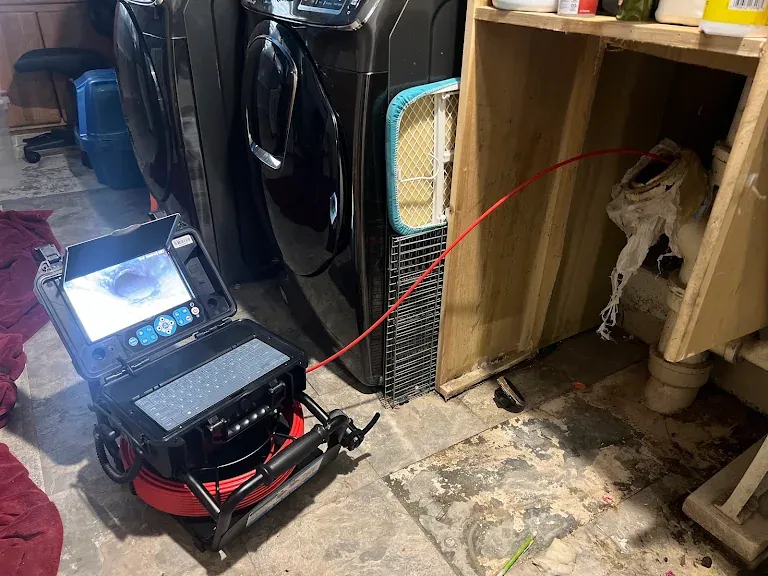
- Clear the line fully with the right cable and head, then run a camera through it while the pipe is open to find the actual cause and show you the footage with the distance from the cleanout.
- Hydro jet grease-lined and sludge-filled lines to strip the pipe wall clean rather than tunneling through it.
- Descale cast iron drains mechanically when the pipe is sound but rough inside, which restores diameter without excavation.
- Locate roots, bellies, offsets and breaks on the surface with a sonde and quote a spot repair or a section replacement with new cleanouts.
- Replace failing cast iron, galvanized or Orangeburg drains with PVC where the camera shows the pipe is past saving.
- Check venting, confirm whether the tank is the problem on septic homes, and refer you to a septic pumper when that is the next step instead of cabling again.
Around Kitsap, Pierce and Mason counties
Recurring clogs follow the housing stock here. The 1950s to 1970s homes near PSNS, in older Port Orchard, Manchester and Tacoma's older neighborhoods have cast iron under the slab and concrete or Orangeburg out to the street, with big trees planted when the house was built. Those lines clog every fall when the rain drives root growth. In Mason County and on the Key Peninsula, the repeat offender is usually the septic tank, and the fix is a pumper, not a plumber. Either way, one camera inspection ends the guessing and the quarterly phone call.
Questions people ask
Why didn't the last plumber find the cause?
Many drain services clear the line and leave, because that is what was asked for. Without a camera, nobody knows why it clogged. We offer a camera inspection on every repeat clog for exactly this reason.
Is it cheaper to just keep snaking it?
For a year or two, maybe. Over the life of the house, no. Each clearing is a modest service call, but they add up, and the underlying defect gets worse. A root-cracked joint eventually collapses, and then the repair happens on an emergency schedule.
Will hydro jetting fix roots permanently?
Jetting cuts roots cleaner than a cable and clears the fine hair roots a cable misses, so the interval stretches out. It does not close the crack they come through. Permanent means repairing the joint or lining the pipe.
Do root-killing chemicals work?
Copper sulfate and foaming root treatments slow regrowth in some lines and are reasonable as maintenance between inspections. They do not remove existing roots or fix the pipe, and they are not appropriate on septic systems.
How often should a main line be cleaned if I am not ready to repair it?
If the camera shows roots but a sound pipe, a yearly cleaning in late summer, before the rains, keeps most lines open through winter. We can put you on a schedule and bring the camera each time to watch for change.