Hydro jetting works on a different principle than a cable machine. A cable cuts a passage through whatever is blocking the pipe. A jetter sends water backward out of the nozzle at high pressure, which pulls the hose forward and strips grease, mineral scale, sand, sludge and fine roots off the pipe wall as it goes. The debris washes back to the cleanout and the line is left at close to its original diameter.
We jet residential sewer laterals in Port Orchard, Bremerton, Gig Harbor and Belfair, kitchen lines in restaurants near the ferry terminals and the Navy bases, and parking lot storm drains that flood every time an atmospheric river parks over the Olympics. The price is flat and approved on your phone before the pump starts.
What hydro jetting removes that a cable leaves behind
Picture the inside of a kitchen drain after twenty years. The pipe wall is coated in a layer of cooled fat and soap that has hardened to the texture of candle wax. A cable with a grease head punches through the middle and the sink drains again, but the coating stays on the wall and the opening narrows back down within weeks. The jetter removes the coating itself.
Cast iron drains in the older neighborhoods around the shipyard, Manette and Charleston grow a crust of rust scale on the inside that a cable skates over. Jetting with a chain or rotary nozzle breaks that scale loose so the pipe drains properly again, often buying years before a replacement is needed. It is also the only reliable way to clean a line well enough for a camera to show the true condition of the pipe.
Sewer laterals on wooded lots in Olalla, Seabeck and the Key Peninsula fill with fine root hair. A cutting head on a cable shears the main roots but leaves a beard of fibers that catches paper and starts the next clog. A root nozzle on the jetter cuts and flushes at the same time, which is why jetted lines tend to stay open longer between visits.
Our jetting truck and how we use it
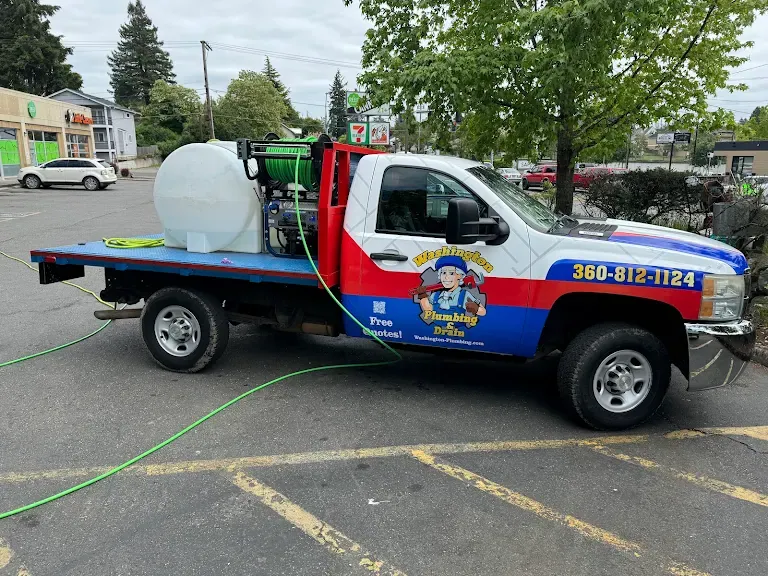
The rig is a dedicated flatbed with a large onboard water tank, which matters on rural properties in Mason County and north Kitsap where there may be no hose bib near the cleanout or the house is on a well that cannot keep up with a jetter's demand. We arrive with our own water and do not run your pressure tank dry.
Pressure and flow are matched to the pipe. A 2 inch kitchen branch gets a small nozzle at modest pressure; a 4 or 6 inch main gets a larger nozzle with more flow to carry debris back. Running a main line nozzle in a small branch line can blow a joint apart in old pipe, so the match is not optional.
We feed the hose from the downstream end whenever possible, usually an exterior cleanout, so loosened material washes toward the sewer or septic tank instead of back into the house. If there is no cleanout we discuss adding one, because jetting through a roof vent or a pulled toilet is slower and messier for everyone.
- Penetrating nozzles for pushing through a full blockage
- Rotary and chain nozzles for scale in cast iron
- Root-cutting nozzles for sewer laterals
- Flushing nozzles for sand and silt in storm drains
When we recommend jetting and when we do not
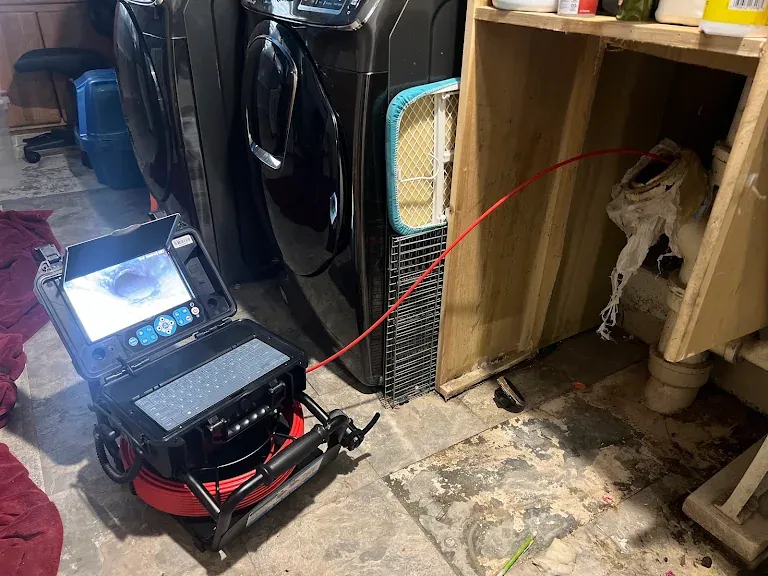
Jetting is the right tool for grease, scale, silt, sludge and repeat clogs. It is the wrong tool for a line that has already collapsed, a bellied pipe holding water, or a lateral made of Orangeburg fiber pipe that is soft enough to tear. That is why we usually want a camera in the line either before jetting or right after. If the camera shows the pipe is broken, cleaning it harder will not help you, and we would rather quote the repair than sell you a jetting job that fails in a month.
We also ask about septic. Jetting a septic home's main line is fine, but the debris we flush ends up in the tank, and a tank that is already full or has a failing outlet baffle will send it right out to the drainfield. We would rather you had the tank pumped first than cause a drainfield problem that costs far more than a drain cleaning.
For a single slow bathroom sink or a tub full of hair, jetting is more machine than the job needs. A small cable clears those quickly and at a lower flat rate. We will tell you which one you need rather than defaulting to the bigger truck.
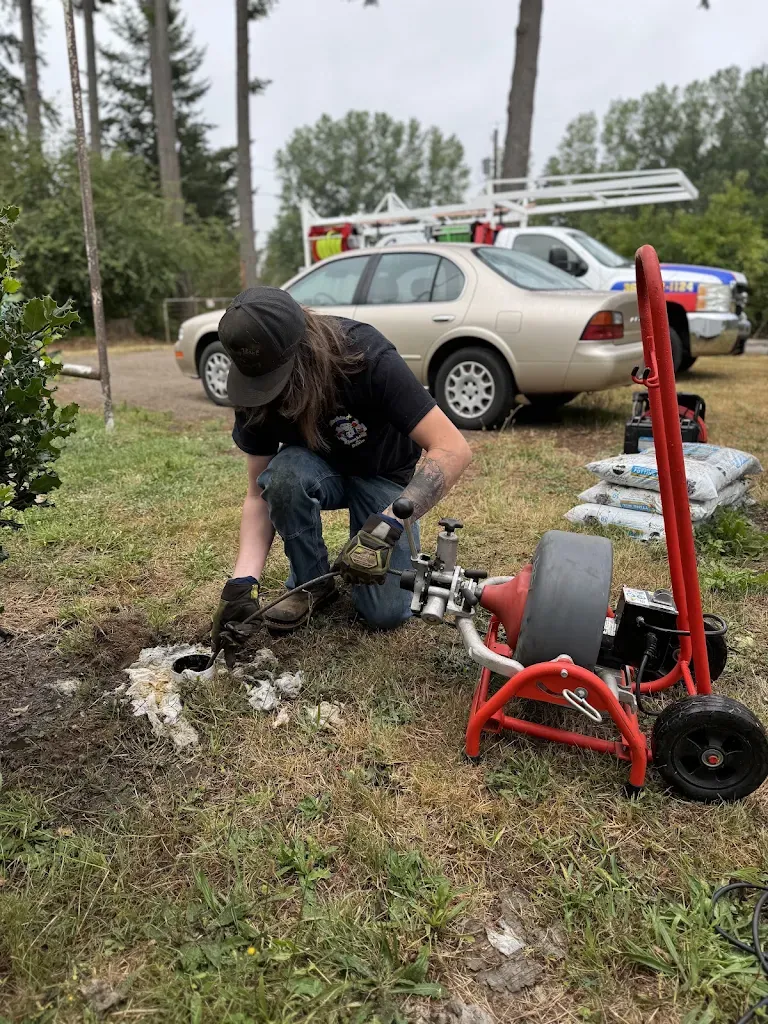
Jetting kitchen lines, laundry lines and floor drains
Kitchen drains are the most common residential jetting call. Houses near Sinclair Inlet and in East Bremerton with original 1-1/2 inch galvanized kitchen lines are a special case, because the pipe is both narrow and rough inside. Jetting opens those lines well, but we are careful with pressure on steel that may be thin, and we tell you plainly when the line has reached the point where replacement makes more sense than another cleaning.
Laundry standpipes collect lint, detergent residue and the fine grit that comes off work clothes from the shipyard and the base. They clog slowly, then overflow during a spin cycle. A jetter cleans the standpipe and the branch to the main in one pass. Floor drains in garages, shops and utility rooms gather sand and concrete dust, which a cable just pushes further in. Water carries it out.
Storm drains, catch basins and commercial lines
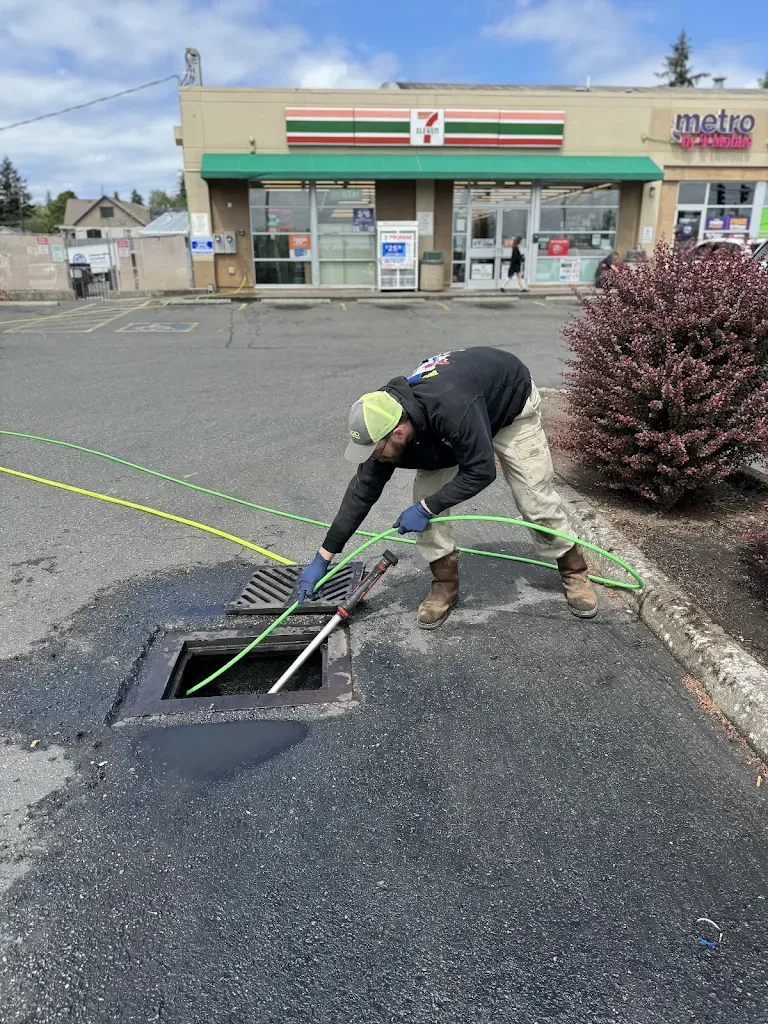
Parking lot catch basins and the pipes between them fill with fir needles, gravel, leaves and silt, and they do it fastest in November. We jet storm lines for convenience stores, apartment complexes, churches and small commercial properties across Kitsap County so the lot does not become a pond during the next big rain. Jetting from basin to basin flushes the sediment to a point where it can be vacuumed or removed.
Restaurant kitchen lines between the floor sinks and the grease interceptor need scheduled jetting to stay open. We set up quarterly or semiannual service for businesses that cannot afford a backup on a Friday night, and we keep notes on each line so the next visit is faster.
Flat-rate pricing and what you are paying for
A jetting job is priced by access and by the length and size of the line, not by the hour. You know the number before we unroll the hose. If a camera inspection is part of the job we tell you that up front, and if the camera finds a break we hand you a separate written estimate for the repair and let you decide on your own time.
Most residential jetting jobs are more than a basic cable call but still well under what a sewer repair costs. For a line that clogs every few months, one proper jetting plus a camera usually replaces several emergency visits a year.
Signs you need hydro jetting
Call if you notice
- The same kitchen or main line has been cabled more than once in the past year
- Drains are slow in the whole house but a cable only helps for a few weeks
- A restaurant floor sink or prep sink backs up during service
- A camera inspection showed heavy scale in a cast iron drain
- Roots keep returning to the sewer lateral every fall
- Grease smell comes up through a kitchen drain even after cleaning
- A parking lot catch basin overflows during heavy rain
- Sand or silt keeps settling in a floor or yard drain
- A plumber told you the only fix was replacement, and you want the pipe cleaned and filmed first
How a hydro jetting call goes
Describe the history
We ask how often the line has clogged, what has been tried, whether the home is on septic, and whether there is a cleanout. That tells us which nozzles to bring and whether the camera should go in first.
Inspect the access and quote
The plumber locates the cleanout or the best entry point, confirms the pipe size and material, and sends a flat price to your phone before the pump is started.
Camera the line when the pipe is in question
Older cast iron, Orangeburg suspects, and lines with unknown history get a look first. Jetting a broken pipe makes things worse, and we would rather know.
Jet from the downstream end
The hose is fed from the cleanout toward the fixture so loosened material flows out, not in. Multiple passes with the nozzle chosen for the problem, at a pressure matched to the pipe.
Verify and show you
Water is run at full flow and the camera goes back in on main lines so you can see a clean pipe wall and know what, if anything, is left to address.
Set a schedule if the line needs one
For grease lines, root-prone laterals and storm drains we offer maintenance intervals so the next clog never arrives.
Questions we get about hydro jetting
Is hydro jetting safe for old pipes?
Done correctly, yes. We match the nozzle and pressure to the pipe size and material, and we camera questionable lines before jetting. A sound cast iron, ABS or PVC pipe handles jetting without trouble. A pipe that is already cracked or collapsed is not a jetting candidate, and the camera is how we find that out before causing damage.
How is jetting different from snaking?
A cable bores a hole through the blockage. A jetter cleans the inside wall of the pipe with high-pressure water and flushes the debris out. Snaking is faster and cheaper for a simple clog. Jetting is the fix for grease, scale, silt and lines that keep clogging.
Do you need my water to run the jetter?
No. Our jetting truck carries its own water tank, which matters on well properties and on lots with no hose bib near the cleanout. We do not drain your well or pressure tank to clean your sewer.
Can you jet a sewer line on a septic system?
Yes, with one caveat. What we flush out of the line goes into the tank. If the tank is full or the outlet baffle has failed we would rather you had it pumped first, and we will say so rather than risk your drainfield.
Will jetting get rid of tree roots for good?
It removes the roots in the pipe, including the fine hairs a cable leaves behind, and jetted lines stay open longer. But roots came in through an opening, and they will come back through it. The camera shows you where that opening is so you can decide between scheduled cleaning and a repair.
How long does hydro jetting take?
A residential main line from an accessible cleanout is usually done inside a couple of hours including the camera. Restaurant grease lines and storm drains vary with length and how much has built up. We give you a realistic window when we quote.
Do you jet storm drains and catch basins?
Yes. Parking lots, apartment complexes and commercial buildings across Kitsap County call us before the rainy season and after a flood. We jet basin to basin and flush the sediment to a point where it can be removed.
Does the jetting price include the camera inspection?
On main lines we quote the camera as part of the job so you can see the result. On a simple kitchen branch it is optional. Either way, the price is on your phone before we start, with no add-ons after.