Washington Plumbing & Drain locates and repairs service lines across Kitsap, Pierce and Mason counties, from the 1950s galvanized lines around the shipyard in Bremerton to the long polyethylene runs that feed cabins down gravel driveways in Belfair and Tahuya. We dig by hand near foundations and utilities, use a machine where the run is long, and replace with the material that suits the ground and the length.
The hard part of a water line job is almost never the pipe. It is finding the break, getting to it without wrecking the yard, and making a connection at the house and the meter that will hold for forty years. Those are the things this page is about.
How a buried water line fails around Puget Sound
Galvanized steel was the standard service line in homes built from the 1940s into the early 1970s, which covers a lot of Bremerton, Port Orchard, Manchester and old Gig Harbor. Steel in wet, slightly acidic Northwest soil rusts from the outside in while scale builds on the inside. The line narrows for decades, which is why pressure in those homes fades so gradually that owners stop noticing, and then a pinhole opens and the lawn gets soggy.
Copper came next and holds up well, but it has two enemies here. The first is electrolysis where copper touches steel or where a grounding clamp was tied to the water line. The second is our soil. Glacial till is loaded with rocks, and a copper line laid without a sand bed gets worked against a sharp stone every time a truck drives over the driveway until it wears through.
Polyethylene and polybutylene plastic lines are common on 1980s and 90s homes and on rural properties with long runs from a well. Poly is good pipe when its fittings are right. The failures we dig up are almost always at a barbed insert fitting with a rusted steel clamp, or at a spot where the line was kinked during installation. Polybutylene, the gray pipe, degrades over time and is worth replacing on sight.
Finding the leak before anyone picks up a shovel
We start at the meter. With every fixture off, a meter that still turns confirms a leak somewhere between the street and the house. Closing the main shutoff at the house then tells us which side of the valve the leak is on; if the meter stops, the problem is inside, and that is a leak detection job rather than a service line job.
For the line itself we use acoustic listening equipment on the pipe at both ends, walk the probable route looking for the wet patch or the unusually green stripe of grass, and probe the soil where the sound is loudest. On long rural runs we may pressurize the line in sections. On a well, a pump that cycles with nothing running is the same clue as a spinning meter.
Sometimes the line simply cannot be found because it does not run where anyone expects. We have traced service lines that wandered under a neighbor's driveway, through the middle of a septic drainfield, and underneath a slab addition. When a line is old, steel, and buried in a route we cannot repair without damaging something important, we recommend abandoning it and running a new one along a route that makes sense.
Repair the section or replace the whole run
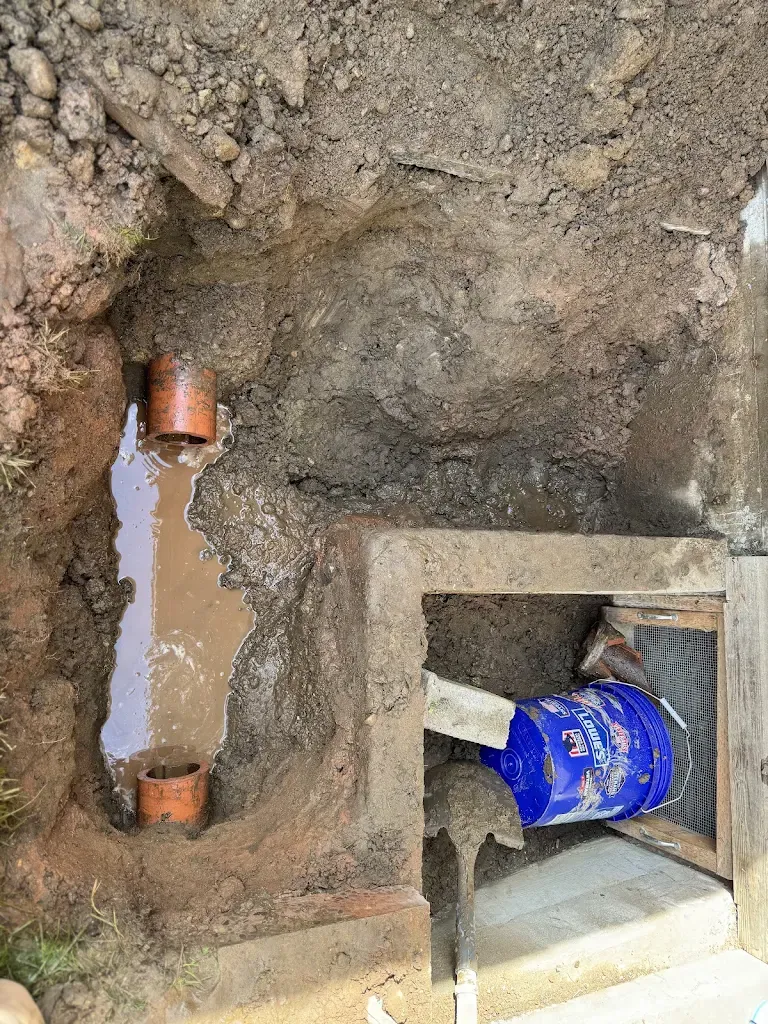
A single break in a copper or poly line that is otherwise sound is a repair. We expose the break, cut out the damaged section, splice in new pipe with the correct fittings, and backfill with clean material so the same rock cannot do it again. For a copper line that is a soldered or compression repair; for poly it is a proper insert fitting with stainless clamps or a compression coupling rated for burial.
A galvanized line is never a repair. Cutting out one rusted section and clamping new pipe to the remaining steel buys a few months. When we find galvanized we quote a full replacement from the meter to the house, and we are blunt about why: the rest of the pipe is in the same condition as the piece we just dug up.
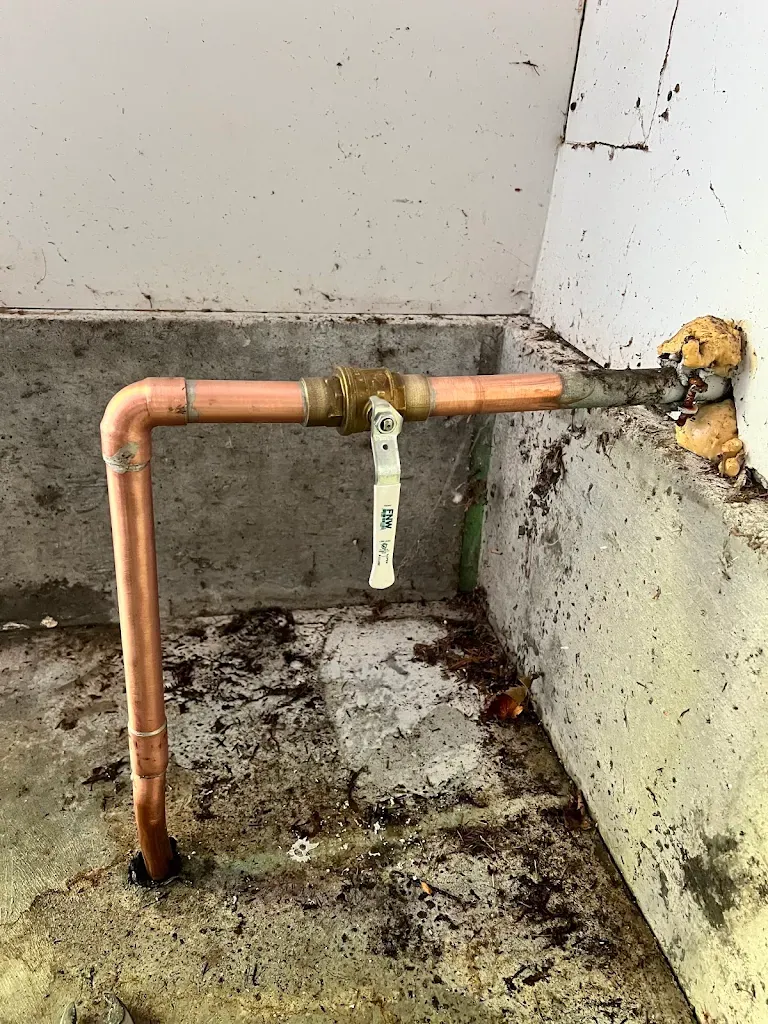
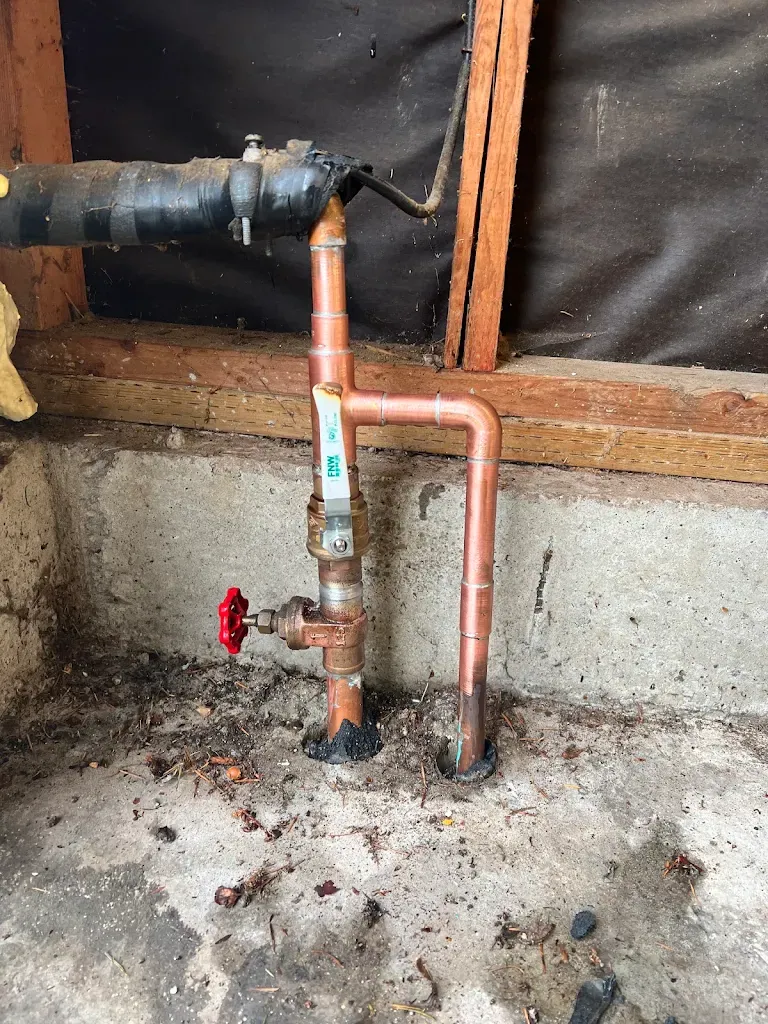
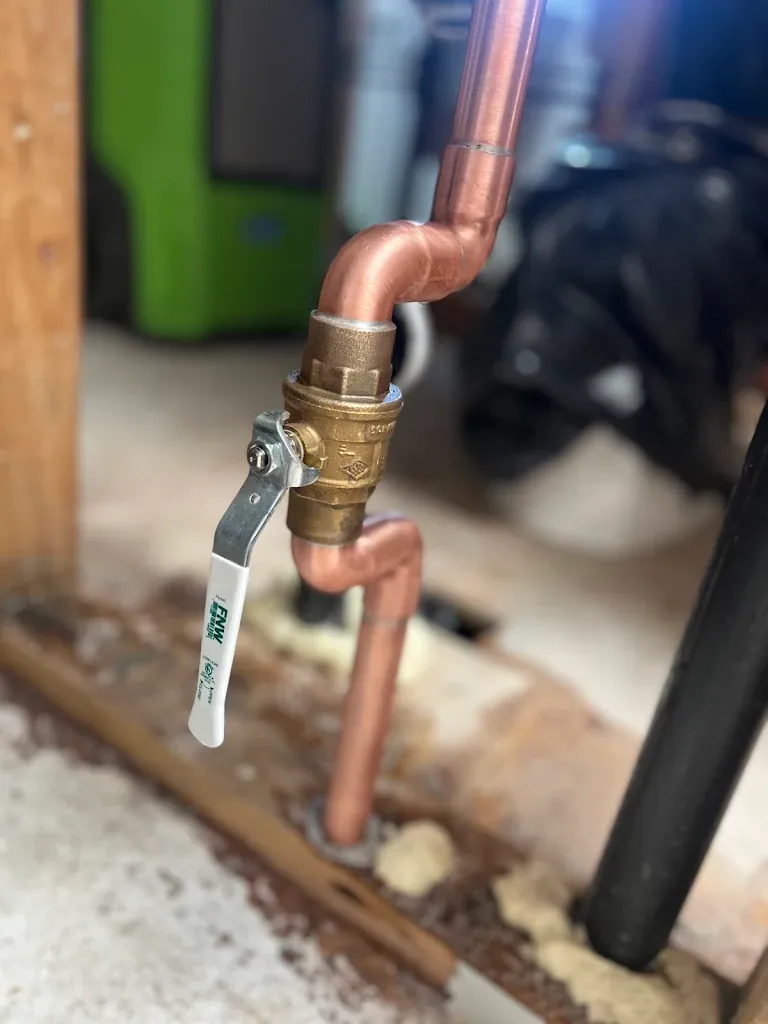
Replacement lines are usually one-inch polyethylene rated for potable service, or copper where the run is short and the soil is kind. We bed the pipe in sand, run tracer wire alongside plastic so the line can be located next time, and come up through the foundation with a proper sleeve and a new full-port ball valve inside the house. The old line is cut and capped, not left live.
- Section repair when the line material is copper or poly and otherwise sound
- Full replacement for galvanized steel, polybutylene, or lines with more than one break
- New line routed to avoid septic components, drainfields and driveways where possible
- Sand bedding and tracer wire on every plastic line we bury
- New ball valve and pressure test at the house before backfill
Digging in Kitsap, Pierce and Mason County ground
Glacial till is the ground under most of the peninsula: a dense, rocky mix that a shovel bounces off of and an excavator bucket has to chew through. Below the till in many places is a layer of hardpan clay that holds water, which is why trenches in Port Orchard and Silverdale fill with groundwater during the rainy season even when it is not raining that day. We schedule outdoor water line work around the weather when we can, and we pump trenches when we cannot.
Near the house we dig by hand. Gas lines, septic lines, power to a well pump, irrigation and low-voltage wiring all converge around the foundation, and a machine bucket does not know the difference. We call for utility locates before any machine digging, and we probe ahead of the shovel for things the locate service does not mark, like the private line to the pump house.
Waterfront and bluff lots add a slope problem. A service line running down from a road to a house on the shore can drop fifty feet of elevation, and the pressure at the bottom is correspondingly higher while the pressure at the top of a line running uphill is correspondingly lower. We size the line and discuss a pressure reducing valve or a booster accordingly so the new line does not just move the complaint.
What you get before, during and after
Before anything is dug, you have a flat price for the diagnosis and a separate written price for the repair or replacement. If the dig reveals something different from what we expected, which happens underground, we stop and talk to you before changing the scope. You will not find a surprise on the invoice.
During the job the water is off for the shortest stretch we can manage; on most replacements we lay and connect the new line while the old one is still feeding the house, and switch over at the end. Afterward the trench is backfilled and compacted, sod set back where it was, and gravel raked back into the driveway. We are plumbers, not landscapers, and we tell you that, but we leave the yard looking like somebody cared.
Every line we replace is pressure tested and photographed before backfill, and the photos are yours. They are useful for your records, for a future buyer, and for the insurance adjuster if a water line break caused damage to the house.
Signs you need water line repair & replacement
Call if you notice
- Your water bill jumped with no change in how you use water
- The meter dial moves with every fixture in the house turned off
- A patch of lawn stays wet or unusually green in dry weather
- Water pressure has dropped slowly over months or years
- A hissing or rushing sound at the main shutoff when nothing is running
- The well system cycles on and off with no water being used
- Water surfaces in the driveway, at the curb, or at the foundation
- Rust-colored water appears first thing in the morning
- The house still has its original galvanized service line
How a water line repair & replacement call goes
Confirm the leak is on the service line
We check the meter or the well pressure gauge against the house shutoff to prove the leak is between the street and the house rather than inside, so you are not paying to dig for an indoor problem.
Locate the break
Acoustic listening, visual tracing of the route, and soil probing narrow the break to a spot small enough to open by hand. On long runs we may section and pressurize the line.
Written price for repair or replacement
You get a flat price for a section repair or a full new line, with our honest recommendation on which one makes sense for the pipe material and age.
Locate utilities, then dig
Utility locates are called in, private lines are probed for, and we hand-dig near the foundation and any marked utility. Machine digging is used only where the run is long and clear.
Repair, test, backfill
The new pipe is connected, pressure tested, photographed, and bedded in sand with tracer wire before the trench is closed and compacted. A new ball valve goes in at the house entry.
Restore and document
Sod and gravel go back as close to original as a plumbing crew can manage. You receive the photos and a record of the line's new route for future reference.
Questions we get about water line repair & replacement
Who is responsible for the water line between the meter and my house?
You are. Kitsap PUD, West Sound Utility District, the City of Port Orchard, Tacoma Public Utilities and the other local suppliers own and maintain the main and the meter. Everything from the meter's house-side coupling to your faucets is the homeowner's. On a well, the entire line from the well head is yours.
How do I know if the leak is underground or inside the house?
Turn off every fixture and watch the meter. If it moves, close the main shutoff at the house. If the meter stops, the leak is inside; if it keeps moving, the leak is in the service line. If you cannot find or close your shutoff, we can do this test in a few minutes.
Can a water line be repaired without digging up the whole yard?
Usually. When we can pinpoint the break, the hole is a few feet across. A full replacement needs a trench along the route, but we lay it in the most direct path and restore the surface afterward. We do not offer trenchless pipe bursting for water lines.
What pipe do you use for a new water service line?
Most replacements are one-inch polyethylene rated for potable water, bedded in sand with tracer wire. Copper is used for short runs or where a jurisdiction requires it. We never install galvanized steel or polybutylene.
Will you fix a leaking galvanized line or do I have to replace it?
We can clamp a galvanized line in an emergency to stop the water loss, but we will tell you it is temporary. The rest of the pipe is in the same condition. A full replacement is the only repair we stand behind on steel.
My water comes from a well. Do you handle the line from the well to the house?
Yes. The line from the well head or pump house to the house is a common failure point on rural Kitsap and Mason County properties, especially at old barbed fittings. We repair or replace it the same way we would a line from a meter.