Washington Plumbing & Drain installs and repairs gas piping for ranges, cooktops, water heaters, tankless units, dryers, fireplaces, outdoor kitchens, fire pits, patio heaters and standby generators. We work with Cascade Natural Gas customers in Bremerton, Port Orchard, Silverdale and Poulsbo, Puget Sound Energy customers across Pierce County, and the many homes in Mason County and rural Kitsap that run on propane.
Every gas job gets a flat price up front, a permit where one is required, and a pressure test you can watch. If you smell gas right now, leave the house, call the gas company's emergency line from outside, and then call us. We will come find and fix the leak once the utility has made the site safe.
Natural gas versus propane in the West Sound
Natural gas around here is patchy. Cascade Natural Gas has mains through the more built-up parts of Kitsap County: Bremerton, Port Orchard, Silverdale, Poulsbo, Manchester, Keyport, Gorst and the corridors between them, plus Belfair and Shelton in Mason County. Puget Sound Energy supplies gas on the Pierce County side, through Gig Harbor, University Place, Tacoma and Puyallup. Step a mile off those corridors and there is no main at all.
That is why so much of our gas work is propane. Cabins on Hood Canal, acreage in Olalla and Seabeck, the Key Peninsula, Tahuya and Grapeview all run on a tank in the yard. Propane is delivered at a different pressure and has a different energy density than natural gas, so the pipe sizing, the regulators and the appliance orifices are all different. An appliance converted from natural gas to propane without the right kit will burn yellow, soot up, and eventually fail.
We size and install for either fuel. On propane systems we coordinate with the tank supplier on the first-stage regulator at the tank, install the second-stage regulator at the house, and run the line in black iron, CSST or underground-rated poly to each appliance. On natural gas we work downstream of the meter, and we handle the utility paperwork when a new meter or an upgraded meter is needed for added load.
Sizing the pipe for everything on the line
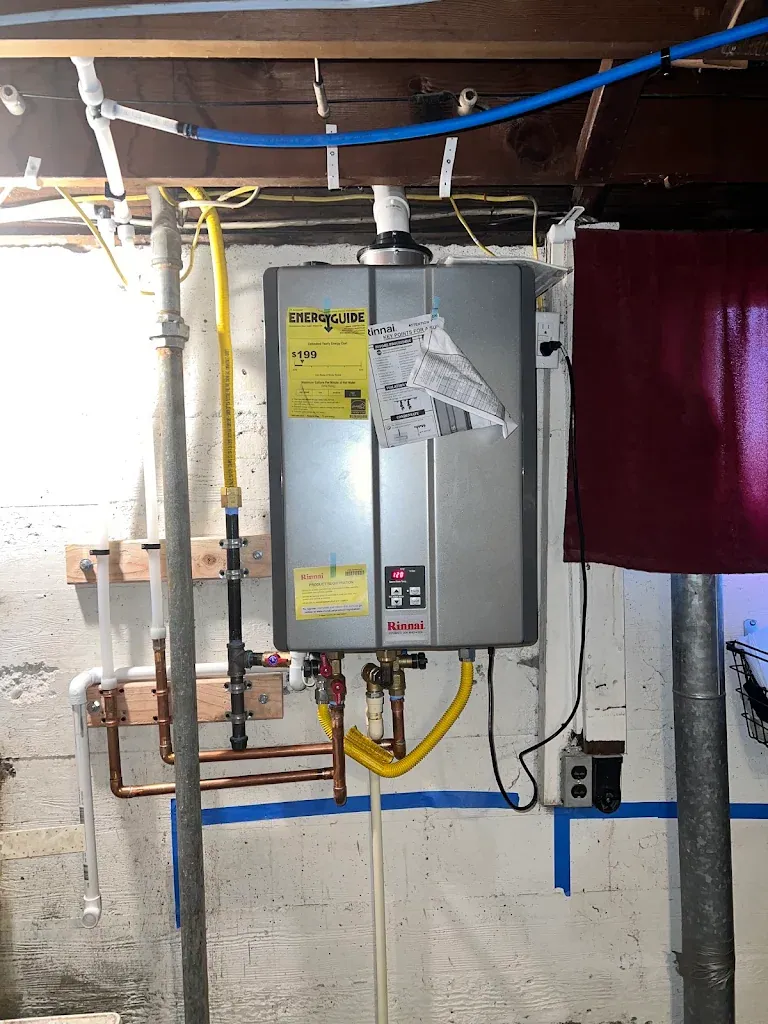
The most common mistake we fix is an undersized line. A homeowner adds a tankless water heater that needs a large volume of gas when it fires, ties it into a half-inch line that was sized for a furnace and a range, and then wonders why the shower goes cold when the furnace kicks on. The pipe cannot deliver enough gas to both at once.
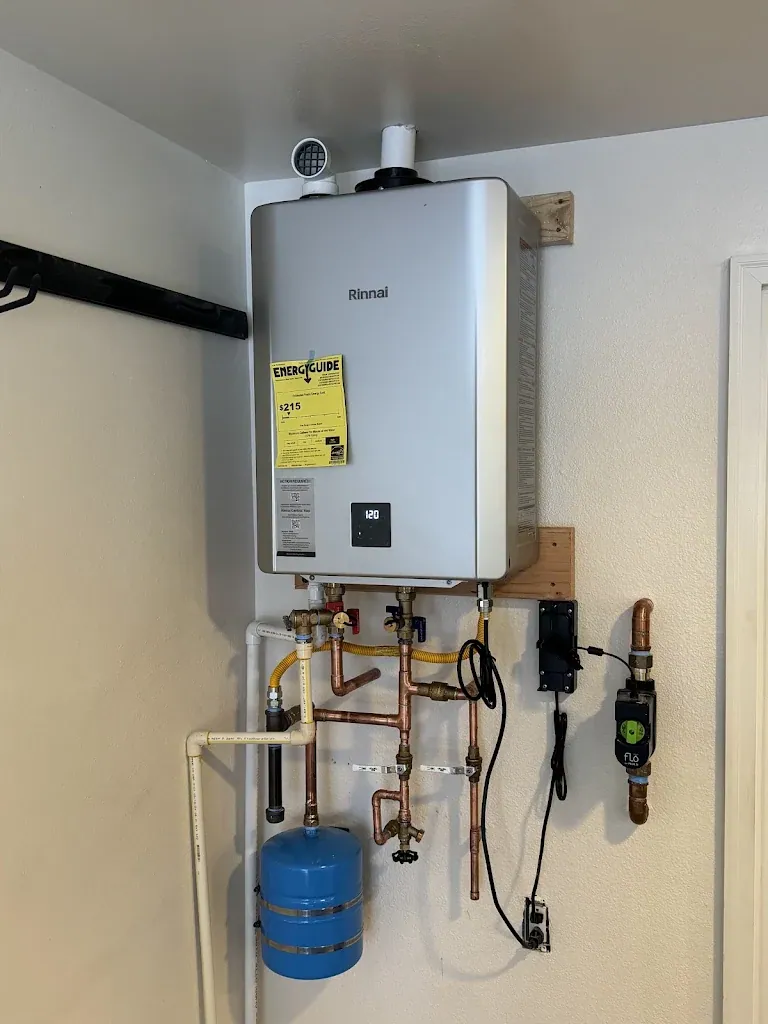
Before we run anything, we add up the input rating of every appliance on the system, measure the longest run from the meter or regulator, and size each section from the code tables. A Rinnai tankless by itself often needs three-quarter-inch pipe all the way back to the meter, and a whole house with a range, dryer, furnace, fireplace and tankless may need an inch at the trunk. We also check whether the meter itself is rated for the new total, because a meter that is too small is the utility's job to upgrade.
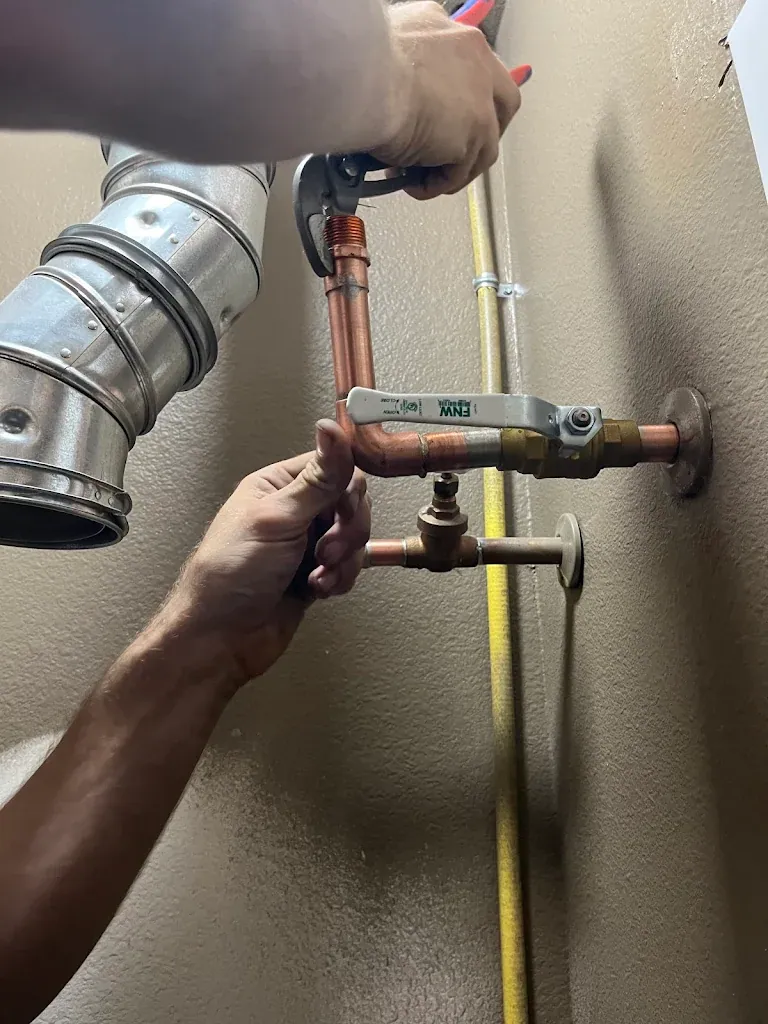
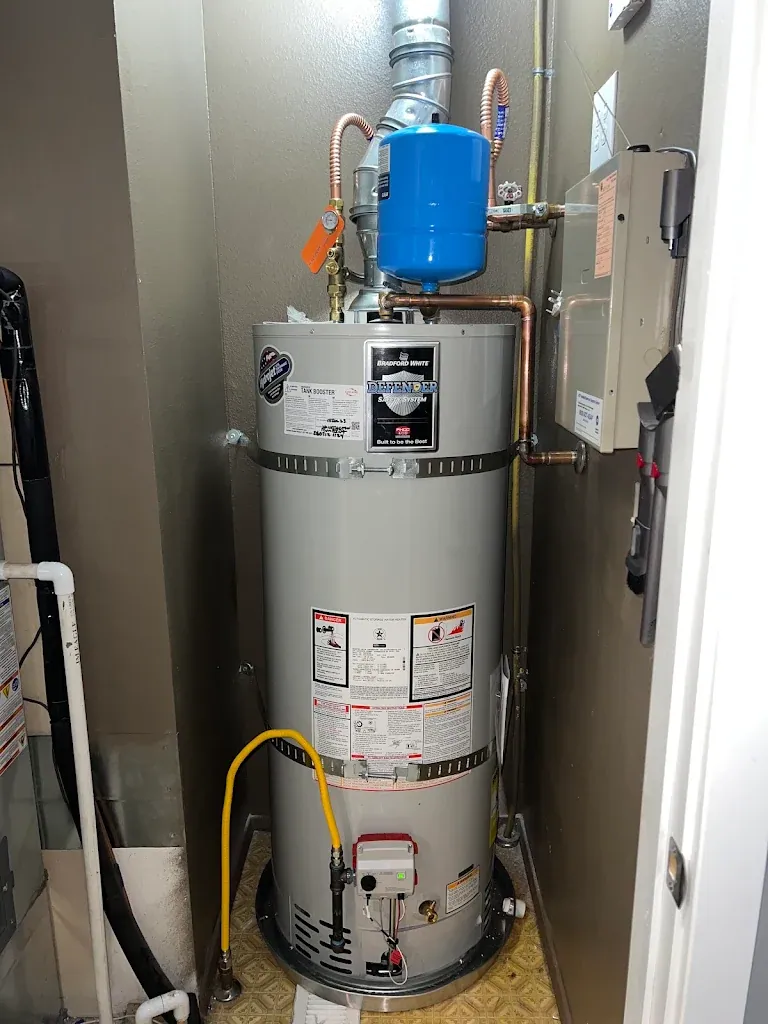
Drip legs, shutoff valves within reach of each appliance, and the correct flexible connector with no part of it running through a wall or floor are all part of the install. On tankless units and generators we set the pressure and confirm it under full fire with a manometer, not by eye.
Black iron, CSST and underground poly
Inside most homes we run threaded black iron pipe. It is tough, it is what inspectors expect, and it does not care about nails or mice. Every joint is doped with gas-rated sealant and tightened to a proper engagement, and the whole system is capped and tested before a single appliance is connected.
Corrugated stainless steel tubing, CSST, is faster to run through finished spaces and we use it where it makes sense, such as a fireplace on an exterior wall or a range relocated across a finished kitchen. CSST has to be bonded to the electrical grounding system to protect it from lightning, and that bonding is something we see missed on a lot of older installs. We correct it when we find it.
For BBQ islands, fire pits, pool heaters, detached shops and generators, the line goes underground in polyethylene gas pipe with tracer wire, risers at each end, and the right depth and bedding. A properly buried poly line will outlast the appliance it feeds.
Gas leak detection and repair
Gas leaks announce themselves with the mercaptan smell, a hissing sound at a fitting, dead grass over a buried line, or a gas bill that climbed with no new appliance. Small leaks at old unions, corroded fittings in a damp crawlspace, and flex connectors that were kinked during an appliance swap are the ones we see most. The pre-1980s homes near PSNS often have original black iron with fittings that were doped with compounds that have long since dried out.
We find leaks with a combustible gas detector and soap solution, confirm them, and isolate the section. If the leak is at one fitting we repair the fitting. If a line has multiple weeping joints we recommend replacing the run rather than chasing leaks one at a time, and we show you the detector readings so the decision is yours.
After any repair the entire system is pressure-tested with air for a timed hold, typically with the gauge reading well above operating pressure. If it holds, we purge, relight the appliances and check each one for correct flame. If it does not hold, we keep looking. We do not reconnect gas to a system that is dropping pressure.
Permits, inspections and the utility
Gas piping in Washington requires a permit and an inspection in nearly every case: new lines, extensions, appliance additions, and most repairs beyond swapping a flex connector. Kitsap County, the cities of Port Orchard, Bremerton and Poulsbo, Pierce County and Mason County each issue their own, and we pull the right one for your address. The inspector sees the pressure test before any wall closes.
When you add significant load on natural gas, the utility may need to set a larger meter or upgrade the regulator. We tell you early if that is likely and help with the request to Cascade or PSE so the meter is ready when the piping is. On propane, we coordinate tank sizing and regulator setup with your propane supplier so nobody shows up to a system that cannot be connected.
What we hook up most often
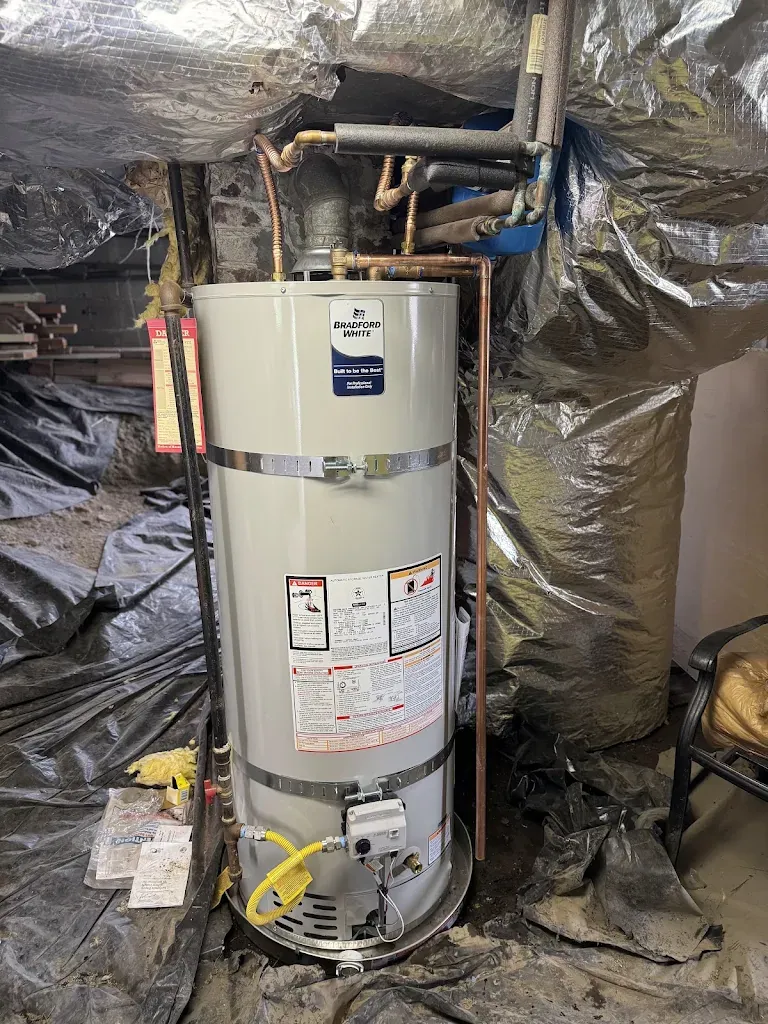
Gas ranges and cooktops are the top request, usually during a kitchen remodel. We bring the line to the range location, set a shutoff and a drip leg, and connect with a range-rated flex. Water heater and tankless connections are next, often as part of a conversion that needs the line upsized. Dryers, fireplaces, outdoor kitchens and fire pits round out the residential work.
Standby generators have become a steady part of our schedule since the extended outages of the last few winters. A generator needs a dedicated, properly sized line, often with its own regulator, and it has to be tested under full load because a generator that starves at the worst moment is worse than no generator at all. We work alongside your electrician so the gas side and the transfer switch are ready at the same time.
Signs you need gas line installation & repair
Call if you notice
- You smell gas near an appliance, a meter, or a spot in the yard
- A new gas range, dryer, fireplace or BBQ needs a line run to it
- You are converting a tank water heater to tankless and the existing line is half-inch
- The flame on a burner is yellow, lazy or sooting the cookware
- The furnace and water heater cannot run at the same time without one losing flame
- A standby generator is going in and needs its own fuel supply
- Grass is dead in a line over a buried gas pipe
- A home inspector flagged unbonded CSST, missing drip legs or a flex connector through a wall
How a gas line installation & repair call goes
Tell us what you are feeding
List every appliance on the gas system plus the new one, and whether you are on natural gas or propane. That lets us size the pipe before we arrive and spot a meter upgrade early.
Load calculation and flat quote
We measure the runs, size each section from the code tables, and send you a flat-rate price covering pipe, valves, permit and testing.
Permit and rough-in
The permit is pulled for your jurisdiction. Black iron, CSST or buried poly is run, supported, bonded where required, and capped at each appliance stub.
Pressure test and inspection
The system is air-tested for a timed hold at above-operating pressure and the inspector verifies it before anything is covered.
Connect, purge and verify
Appliances are connected with the right flex and shutoff, air is purged, each burner is lit, and gas pressure is confirmed under load with a manometer.
Questions we get about gas line installation & repair
Do I need a permit to run a gas line for a stove?
Yes. Any new gas piping or extension in Washington requires a permit and an inspection of the pressure test. We pull the permit for Kitsap, Pierce or Mason County or the city involved and schedule the inspection as part of the job.
Can you run a gas line if I am on propane?
Yes. Much of our gas work in Mason County and rural Kitsap is propane. We size for propane's higher pressure, set the second-stage regulator at the house, and coordinate with your tank supplier on the first-stage regulator and tank size.
Why does my water heater lose flame when the furnace runs?
The line is undersized for the combined load. Both appliances pull from the same pipe and there is not enough volume for both to fire. The fix is upsizing the trunk line or running a dedicated line to one of them.
How do you test a new gas line?
With air, at well above operating pressure, held on a gauge for a timed period with the appliances disconnected. The inspector sees that test. Only after it holds do we connect appliances, purge and light.
Is CSST safe?
When it is installed and bonded correctly, yes. The risk with CSST is lightning energy arcing through unbonded tubing. We bond every CSST run to the grounding electrode system and we check bonding on existing installs.
Can you run gas to a BBQ island or fire pit?
Yes. The line goes underground in rated polyethylene with tracer wire and risers at each end, with a shutoff valve in an accessible spot. Natural gas and propane are both common for outdoor kitchens.
I smell gas. What do I do?
Leave the house, do not flip switches or start a car in the garage, and call your gas utility's emergency line or 911 from outside. Cascade and PSE will respond and shut off the meter. On propane, call your supplier. Once the site is safe, call us and we will locate and repair the leak.
Do you convert appliances from natural gas to propane?
We install the manufacturer's conversion kit when one is available for the appliance and set the regulator and orifices correctly. Some appliances cannot be converted, and we will tell you that before you buy.
Will a tankless water heater work on my existing gas line?
Often not without upsizing. Tankless units draw a lot of gas when they fire. We calculate the load and tell you whether the existing line is adequate or whether a new three-quarter-inch or inch run is needed.