
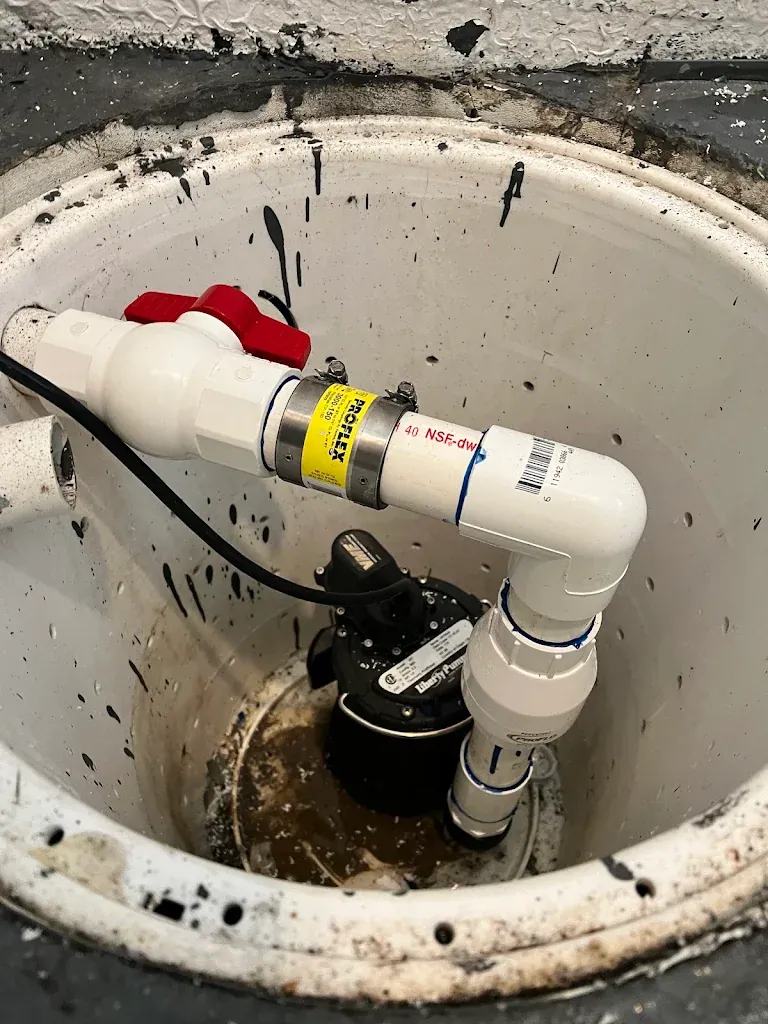
Washington Plumbing & Drain installs and services sump pumps in crawlspaces and basements from Port Orchard and Bremerton over to Gig Harbor and down to Belfair and Shelton. We install Liberty pumps as our standard because they have held up in the wet, gritty conditions out here, and we set them in proper basins with check valves, isolation valves and discharge lines that take the water somewhere it will not come back.
If your pump is running and water is still rising, or the pump is silent and the crawlspace is a pond, call (360) 812-1124. Pump failures during an atmospheric river are one of the calls we prioritize, including evenings and weekends.
Why Puget Sound crawlspaces fill with water
The soil here was left by glaciers: dense till over hardpan, with pockets of clay that hold water like a bowl. Rain that lands on it does not percolate down; it moves sideways along the hardpan until it hits something, and a foundation is something. Homes at the bottom of a slope in Port Orchard, in the flats near Gorst, along the Burley Lagoon, or on low shoreline lots in Hansville and Allyn all see the same thing: a dry crawlspace in August and standing water by Thanksgiving.
Waterfront lots are the worst of it. Along Sinclair Inlet, Dyes Inlet and Hood Canal, the water table rises and falls with the tide and the rain together, and a crawlspace dug below the high water mark will take on water no matter how good the gutters are. Older homes that were built with vented crawlspaces and no vapor barrier soak up that moisture into the joists and insulation.
Gutters, downspouts and grading fix some of it. A footing drain fixes more, if the house has one that still works; many 1960s and 70s homes near the shipyard have footing drains that are crushed or silted in. When the water is coming up from below rather than running in from the sides, a sump pump is the only thing that removes it.
A proper sump installation, piece by piece
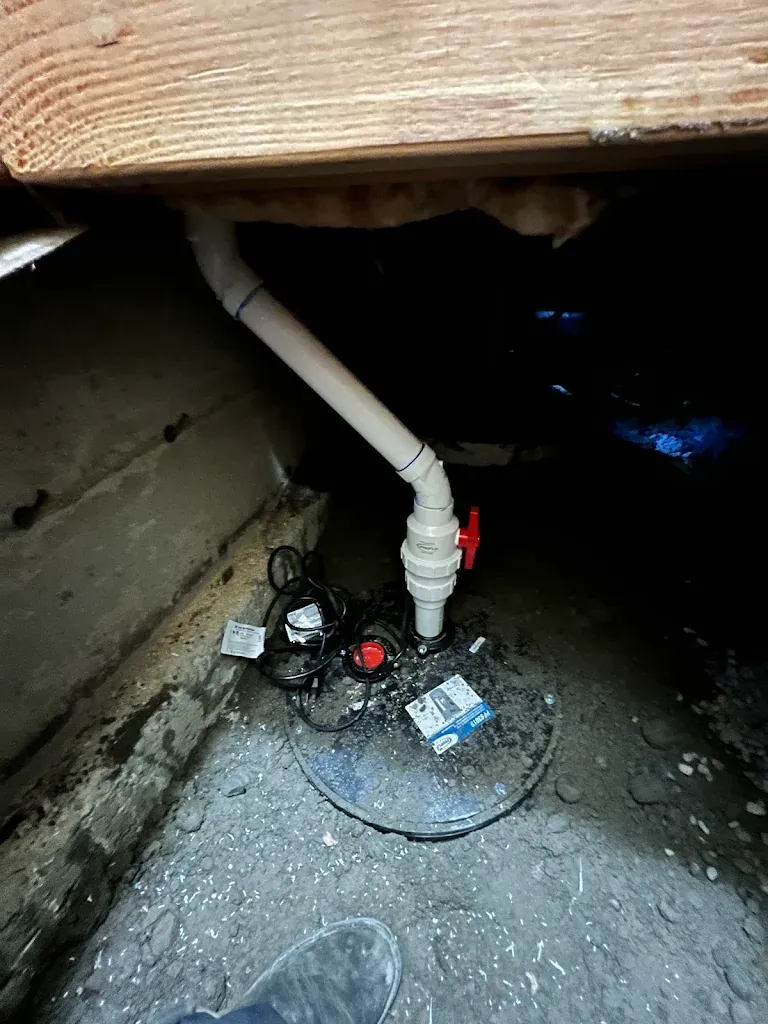
The basin matters as much as the pump. We set a perforated basin at the lowest point of the crawlspace or basement, deep enough that the pump's float has room to cycle without short-cycling every ninety seconds. The basin is bedded in gravel so groundwater can enter from the sides and bottom, and in a crawlspace it gets a sealed lid so the moist air stays in the pit instead of rising into the house.
The pump itself is a submersible, sized for the head and the volume. A pump that is too small runs continuously and burns out; one that is too big short-cycles and wears its switch. We install a vertical float or an electronic switch depending on the basin, and we make sure the float cannot hang up on the basin wall or the discharge pipe, which is the single most common cause of a pump that does not turn on.
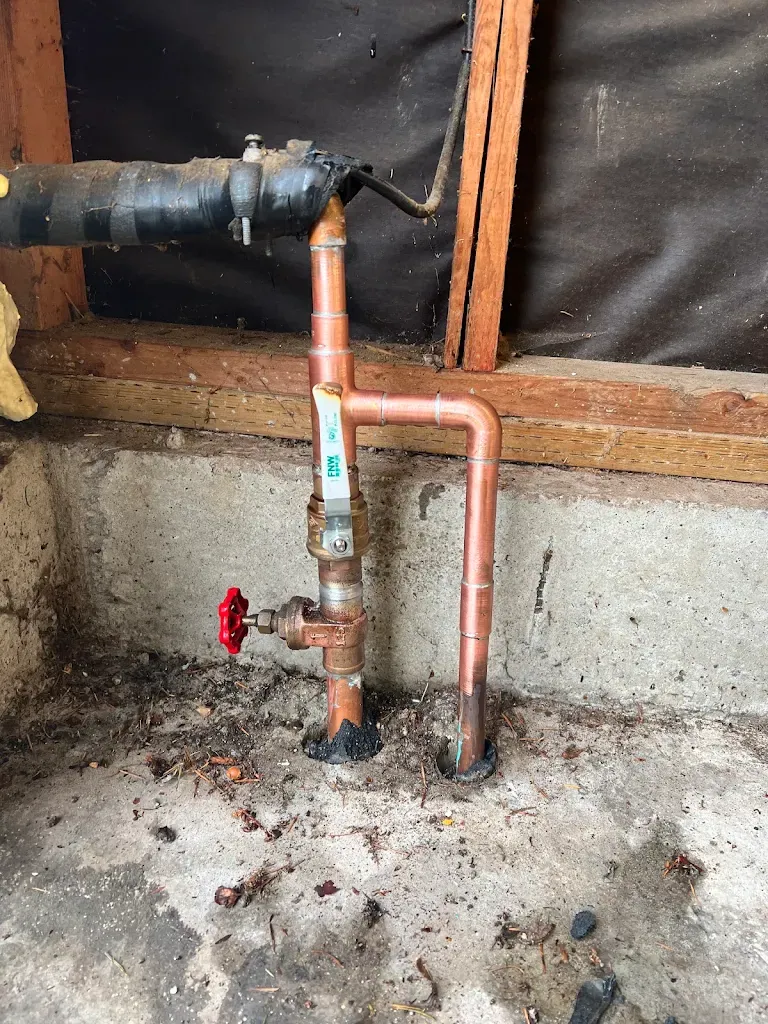
On the discharge we install a check valve so the water in the pipe does not drain back and refill the basin every cycle, and a union and ball valve above it so the pump can be pulled for service without a flood. The pipe exits the foundation and carries the water well away from the house: to a dry well, a daylight outlet downslope, or a storm drain where one is available. A discharge that dumps three feet from the foundation just sends the water around for another lap.
Battery backup and what happens when the power goes out
The storms that bring the water also bring down the power. A sump pump without backup is useless on exactly the night you need it most, and the windstorms of the last few winters left parts of Kitsap and Mason County dark for days. A battery backup pump sits in the same basin and takes over when the primary loses power or fails, and it is the upgrade we recommend most often to anyone with a finished basement or a crawlspace that has flooded before.
We install battery backup systems with a dedicated backup pump, a deep-cycle battery and a charger-controller that alarms when it is running on battery. For homes with a standby generator, we put the primary pump on a generator-fed circuit. Either way, the test is simple: pull the plug on the primary and watch the backup take over.
A high-water alarm is a cheap addition that we recommend on every install. It sounds when the water rises above the normal pump-on level, which is the first sign that the pump has failed or cannot keep up. Smart versions text you, which is useful for a vacation place on the Canal that you only visit once a month.
Repairs: when the pump runs but the water stays
Most sump pump calls are one of four things. The float is stuck, usually against the basin wall or wedged under the discharge pipe. The check valve has failed, so every cycle pulls the same water back into the pit and the pump runs constantly. The impeller is clogged with gravel, silt or a chunk of insulation that fell into an uncovered basin. Or the pump motor is simply done, which a pump that hums but does not move water will tell you.
We diagnose on site and give you a flat price for the repair or the replacement. A failed check valve or a stuck float is a modest service call. A dead pump is a replacement, and we have Liberty pumps on the truck in the common sizes. If the basin was never set up right, with no gravel bed, no lid, or a discharge that just dumps at the foundation, we tell you what it would take to fix the whole setup and let you decide how far to go.
A pump that runs constantly is worth a closer look even if it is keeping up. It may be sized wrong, the check valve may be gone, or there may be more groundwater than any single pump should be asked to handle, in which case the real fix is drainage, grading or a second basin.
Sump pumps, crawlspace encapsulation and the rest of the system
A sump pump is one part of keeping a crawlspace dry. Interior drain tile that routes water to the basin, a vapor barrier over the soil, sealed vents and a dehumidifier all work together, and in a crawlspace that has been wet for years the pump alone will not reverse the damage. We install the pump and the drainage plumbing, and we tell you plainly when the rest of the job belongs to a crawlspace encapsulation or restoration company.
We also look at what else the water has reached. Standing water in a crawlspace corrodes galvanized and copper supply lines, rots the wood around drain hangers, and submerges the water heater's burner if the heater is down there. When we are under the house for a pump, we inspect the plumbing while we are at it and send you photos of anything that needs attention.
Signs you need sump pump installation & repair
Call if you notice
- Standing water or a mud floor in the crawlspace after a heavy rain
- A musty smell in the house that gets worse in winter
- The sump pump runs constantly or cycles every minute or two
- The pump hums or clicks but no water leaves the basin
- Water in the basin is above the pump and the pump is silent
- The discharge pipe is frozen, disconnected or dumping water next to the foundation
- Insulation under the floor is sagging, wet or on the ground
- Your home has flooded before and the pump has no battery backup
How a sump pump installation & repair call goes
Tell us what you are seeing
Water level, whether the pump is running, and whether this is a new problem or a yearly one. If the crawlspace is actively flooding we move you up the schedule, including evenings and weekends.
Inspect the basin, pump and discharge
We check the float, the check valve, the impeller, the power supply and where the discharge actually ends up, then look at the crawlspace for the source of the water.
Flat price for repair or a full install
Whether it is a stuck float or a new sealed basin with backup pump, you get a flat price to approve from your phone before we start.
Install it to last
Gravel-bedded basin, sealed lid in crawlspaces, a Liberty pump sized to the head, check valve, union, isolation valve, and a discharge run to daylight or a dry well away from the house.
Test under load and show you
We fill the basin and watch the pump cycle, test the backup by pulling the primary's plug, and show you how the alarm works and what to check each fall.
Questions we get about sump pump installation & repair
How do I know if my crawlspace needs a sump pump?
If water stands in it during the rainy season after gutters and grading have been addressed, the water is coming from below and a pump is the fix. Dampness alone may be a vapor barrier or ventilation problem; standing water is a pump problem.
Why does my sump pump run all the time?
Usually a failed check valve letting water fall back into the basin, a float stuck in the on position, or more groundwater than the pump can clear. We check all three. A pump that never shuts off will burn out, so it is worth a service call.
What size sump pump do I need?
It depends on how high and how far the water has to be pushed and how fast it comes in. Most crawlspaces are served well by a third- or half-horsepower submersible. We size it on site rather than guessing from a box.
Do you install battery backup sump pumps?
Yes, and we recommend one for any finished basement or any crawlspace that has flooded before. The outages that come with our winter storms are exactly when the primary pump is needed most.
Where should the sump pump discharge go?
Away from the house, downslope, to a dry well, a daylight outlet or a storm drain where one exists. Discharging at the foundation just recirculates the water. We run the discharge line as part of every install.
Can a sump pump be installed in a crawlspace with no basement?
Yes. Most of the pumps we install are in crawlspaces. We dig the basin at the low point, bed it in gravel, seal the lid, and run the discharge out through the foundation or rim joist.
My sump pump stopped and the power is on. What should I check?
Confirm the outlet works with another device, then look at the float to see if it is hung up. If the float is free and the pump hums or is silent, call us. Do not keep resetting a breaker that trips; that is a motor that is done.
Do you handle the drainage and encapsulation too?
We install the pump, the basin and the drainage plumbing that feeds it. Vapor barriers, full encapsulation and mold remediation are done by crawlspace and restoration companies, and we will tell you when that is the right next call.