We spend a lot of our working week on our backs under houses in Port Orchard, Bremerton, Gig Harbor, Belfair and everywhere between. Washington Plumbing & Drain repairs crawlspace drain leaks, replaces failed water lines, re-insulates pipe that froze, installs and relocates shutoffs, and repipes entire crawlspaces when the original plumbing is done. We take photos of everything, because you should not have to crawl under there to see what you paid for.
Crawlspaces around the Sound are low, damp and cold in winter, and that shapes both what fails and how we fix it. The repair has to survive the environment, not just pass a pressure test.
What goes wrong under a Puget Sound house
Drain leaks are the most common call. A cast iron or ABS joint lets go, a cleanout cap was never properly tightened, or a tub drain was assembled by someone in a hurry thirty years ago. Waste water drips onto the soil, the vapor barrier or the insulation, and the first sign is a sewage smell that is strongest near a floor register or a sour, musty odor in a bedroom closet over the leak.
Water supply leaks are quieter and often more expensive. A pinhole in copper, a split PEX fitting, a hose bib line that froze in the December 2022 or January 2024 cold snap and cracked where it passed through the rim joist. Water runs onto the ground, the meter spins, and nothing shows inside the house until the bill arrives or the insulation sags with the weight of water it has absorbed.
The third category is damage from the crawlspace itself. Standing water in the rainy season rusts cast iron and the hangers holding it, rodents chew PEX and pull insulation off hot lines, and pipe that was never insulated at all freezes when arctic air comes down the Strait. Repairs that ignore those conditions fail again.
Finding the leak without tearing up the house
Most crawlspace leaks are found by crawling the whole space with a good light and following the evidence: wet soil, stained insulation, mineral trails on pipe, a sag in the vapor barrier that holds water. For supply leaks we isolate sections with the shutoffs and watch the meter. For drains we run each fixture from above while a plumber watches below, which pins down the exact joint in a few minutes.
When a drain leak is intermittent or the pipe runs where we cannot see it, the camera goes in from a cleanout or a fixture. Under-slab sections in a split-level or a daylight basement home get located with the beacon so any concrete cutting is minimal.
Repairs that hold up in a wet, cold crawlspace
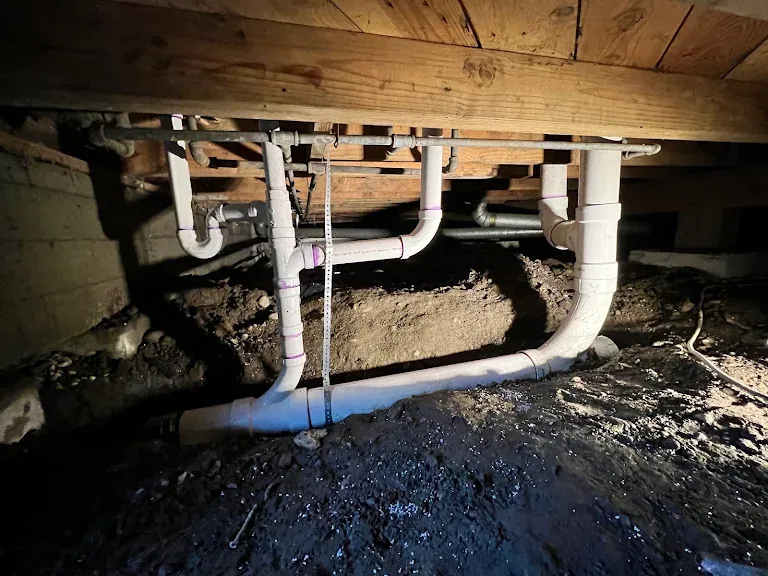
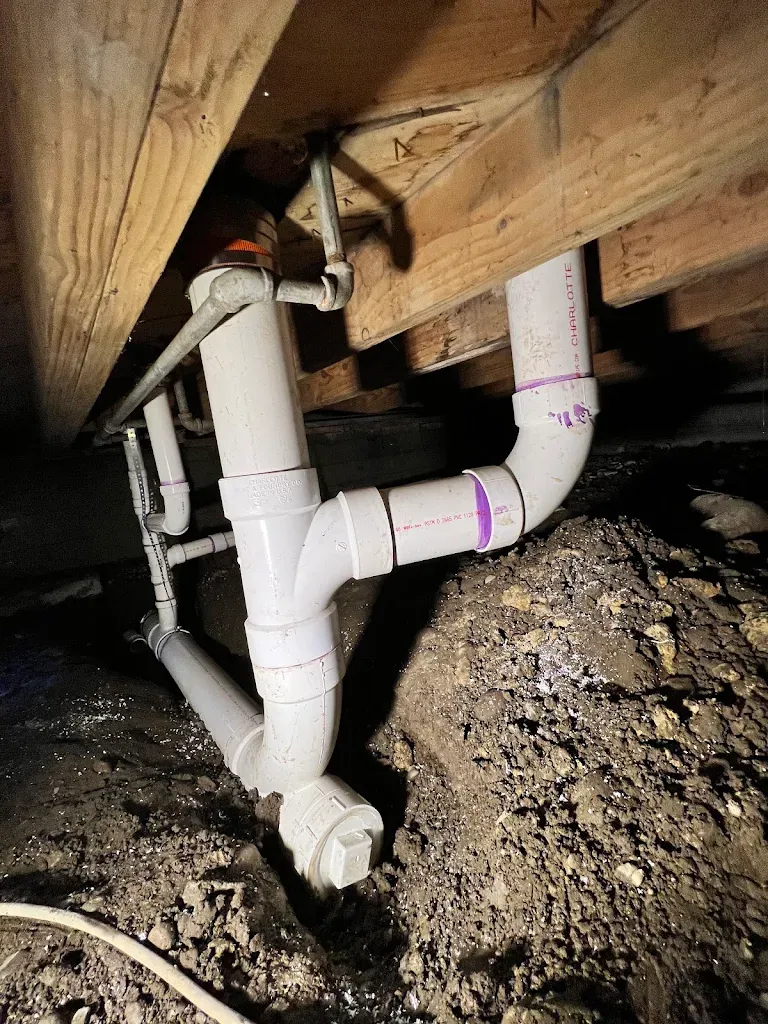
Drain repairs under the house are done in PVC or ABS, properly sloped and hung on hangers rated for the pipe, with shielded couplings wherever new plastic meets old cast iron. We add a cleanout at each stack base and at the exit if there was not one. Where a run has failed in more than one place we replace the whole run, because patching a sixty-year-old drain in three spots over three years costs more than doing it once.
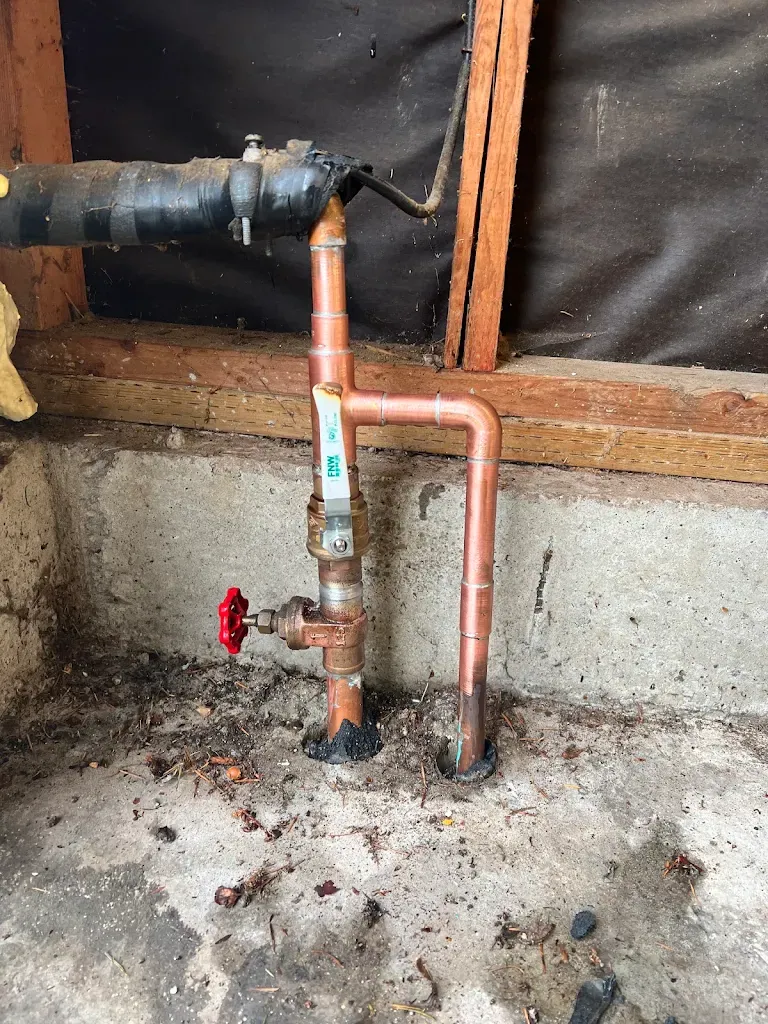
Supply repairs are copper or PEX depending on what is there and what the homeowner prefers. Every pipe near an exterior wall or a vent gets insulated, and hose bib feeds get frost-free replacements or an interior shutoff and drain so they can be winterized. A main shutoff that is buried in the dirt, seized or stuck under a joist gets replaced with a full-port ball valve where a person can actually reach it.
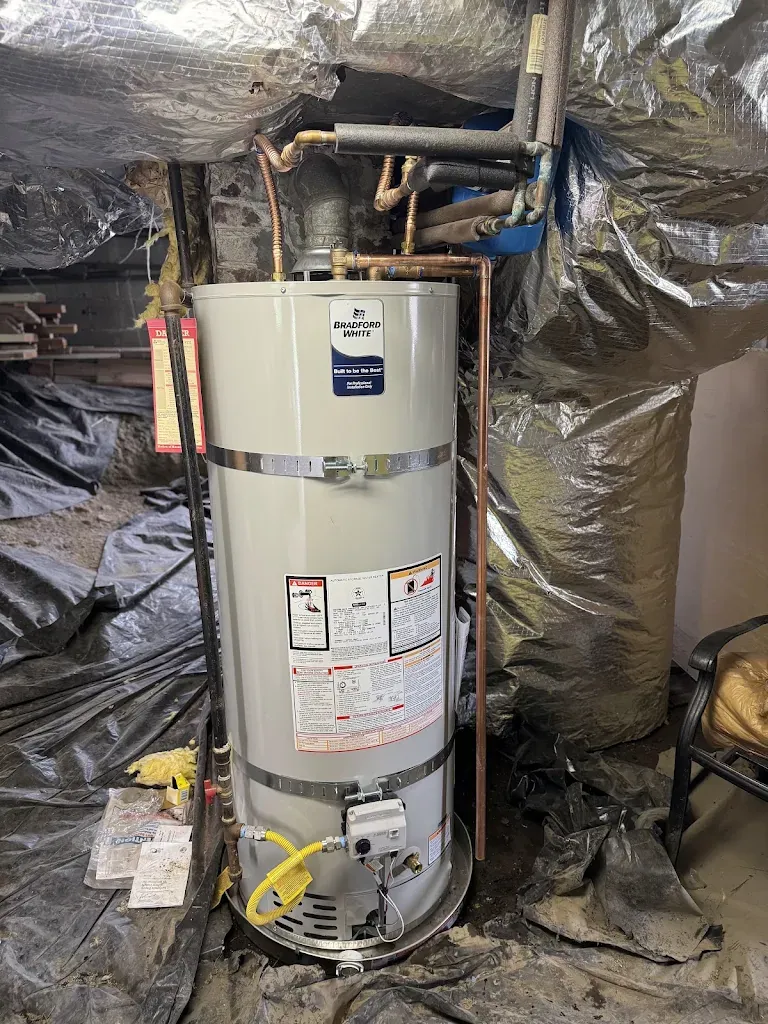
Water heaters in crawlspaces are a Kitsap specialty we see regularly. Replacing one in a space with three feet of headroom takes planning, a drain pan with a route to daylight, and insulated lines on both sides. We have done enough of them to know which models fit through which access doors.
- PVC or ABS drain repipe with cleanouts and proper hangers
- Copper or PEX supply repair and replacement
- Pipe insulation and frost protection for lines near vents and rim joists
- Main shutoff relocation to a reachable spot
- Crawlspace water heater replacement with pan and drain
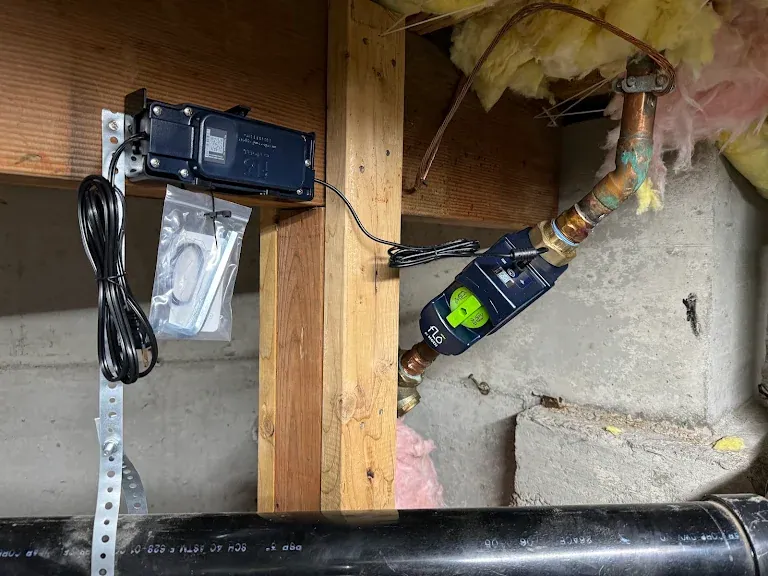
- Sump basins and smart shutoffs where groundwater or vacancy is a concern
Standing water, groundwater and sump pumps
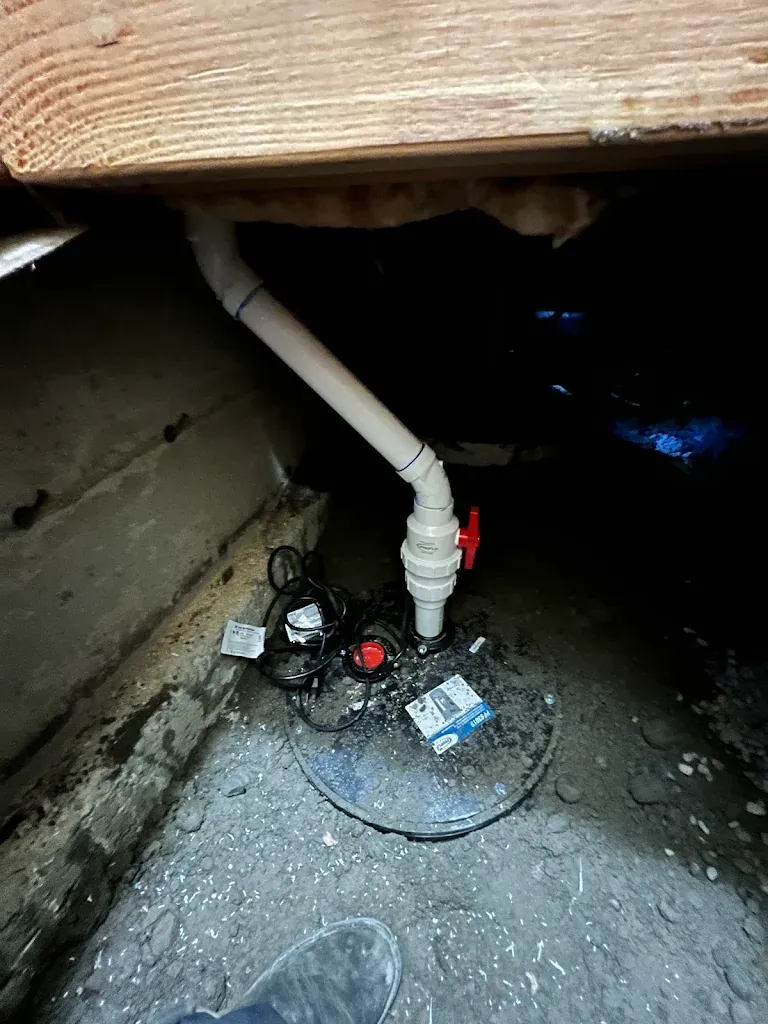
In the rainy months, crawlspaces on the low ground around Sinclair Inlet, Dyes Inlet, the Burley lagoon and the Belfair flats fill with groundwater. That water is not a plumbing leak, but it damages plumbing: it floats insulation off the pipes, rusts cast iron and steel hangers, and makes every future repair miserable. If we find standing water we tell you whether it came from a pipe or from the ground, and for the ground kind we can install a sealed sump basin with a Liberty pump and a discharge to daylight.
If the water came from a burst pipe and the insulation and framing are soaked, a restoration company handles the drying. We stop the leak, document it, and point you to people who do that part well.
Full crawlspace repipes
When the drains under a house are original cast iron with scale and multiple failures, or the supply is galvanized that has narrowed to nothing, a full crawlspace repipe is the right call. We replace every run from the stack bases to the exit and from the main entry to each fixture stub, insulate it all, add cleanouts, and correct any venting shortcuts the original installer took. The water is off for part of one day at the changeover and the house gets a plumbing system that is better than new construction in that era.
Crawlspace repipes are permitted and inspected, and the inspection happens before anything is covered. You get photographs of every run and every connection along with the permit record.
Pricing and what you will see afterward
A single drain joint or supply repair under the house is a modest service call quoted after we find the leak. A full run replacement is more, and a complete crawlspace repipe is a multi-day project with a written estimate. Every price is sent to your phone and approved before work starts, and if the diagnosis changes what is needed, you hear about it before the plumber continues.
Because you likely will not crawl under there yourself, every crawlspace job ends with photos of the old pipe, the new pipe and the finished connections. For out-of-area owners and landlords those photos go in the same email as the invoice.
Signs you need crawlspace plumbing repair
Call if you notice
- A sewage or sour musty smell is strongest near floor registers or in a closet
- A section of floor feels soft, cold or damp underfoot
- The water bill jumped with no visible leak inside
- The water meter moves when every fixture is off
- Insulation under the house is sagging, stained or on the ground
- A hose bib line froze and now drips inside the rim joist
- Standing water under the house every winter
- The main shutoff is in the dirt under a joist and will not turn
- A home inspection flagged leaking drains or missing pipe insulation in the crawlspace
How a crawlspace plumbing repair call goes
Crawl the whole space
A plumber goes under with lights, follows the evidence to the leak, checks the main entry, drains, hangers, insulation and vapor barrier, and photographs what he finds.
Confirm the source
Supply leaks are isolated with shutoffs and the meter; drain leaks are confirmed by running fixtures from above. The camera goes in when a drain leak is hiding.
Quote the fix and the alternatives
You get a flat price for the specific repair, and if the rest of the run is close to failing, a second price for replacing the run. You decide with the photos in front of you.
Repair for the environment
New PVC, ABS, copper or PEX is installed with proper slope, hangers and shielded transitions, then insulated and protected from freezing where it needs to be.
Test, permit and inspect
Drains are water-tested and supply lines pressure-tested. Repipe work is permitted and inspected open before anything is covered.
Photos and plain advice
You receive photos of the finished work plus a note on anything else we saw under the house that should be on your radar, whether or not it is plumbing.
Questions we get about crawlspace plumbing repair
How do I know if the smell under my house is a plumbing leak?
A sewage smell that is strongest near floor registers or in one room usually is. A general musty or earthy smell is more often groundwater and damp soil. We can tell the difference in a few minutes under the house, and we will say which it is.
Can you work in a crawlspace with standing water?
Yes, with pumps and lights, though it is slower. If the water is from the ground rather than a pipe, we will recommend a sump basin so the next repair, and the house itself, stays drier.
Do you replace water heaters that are in the crawlspace?
Yes. It is a regular job for us in older Kitsap homes. We measure the access, choose a unit that fits, install a pan with a drain to daylight, and insulate the lines.
My main shutoff is in the crawlspace and I cannot reach it. Can you move it?
We can replace it with a full-port ball valve at a reachable spot near the entry, or relocate the shutoff to a spot inside the house. Being able to shut off your own water in a hurry is worth the modest cost.
Will you re-insulate my pipes after the repair?
Yes, and we insulate any nearby pipe that was bare and vulnerable. Lines near foundation vents and the rim joist are the ones that froze in the recent cold snaps.
Do I need a permit for crawlspace plumbing work?
A small repair generally does not. A repipe or drain replacement does, and we pull it and schedule the inspection as part of the job.
Can you handle crawlspace repairs for a house I own out of state?
Yes. Landlords and out-of-area owners send us often. We coordinate access, do the work, and send photos of the before and after with the invoice.
What about the wet insulation and framing after a leak?
We stop the leak and document the damage. Drying, mold remediation and insulation replacement are restoration work, and we can refer you to companies that do it well.