
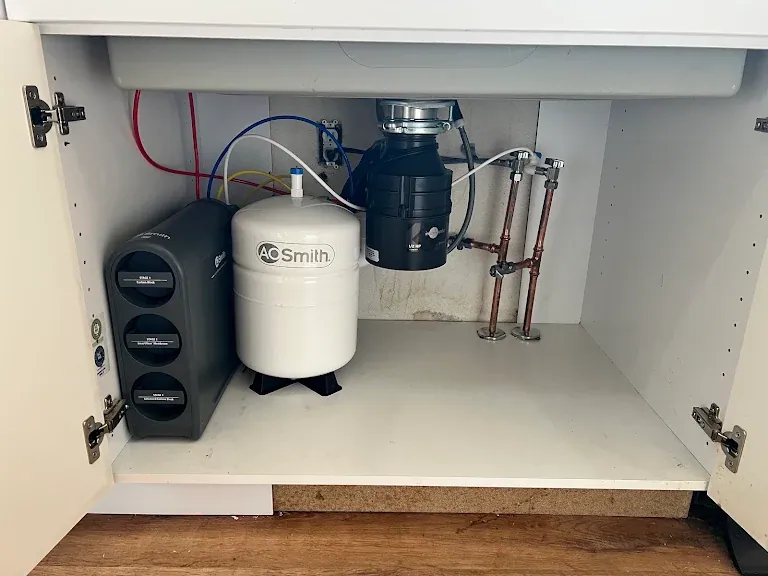
Washington Plumbing & Drain installs and services under-sink RO systems from Port Orchard out to the well country of Mason County, across the Narrows into Gig Harbor and Tacoma, and up the peninsula through Silverdale and Poulsbo. We install A. O. Smith reverse osmosis units most often, and we plumb them the way a plumber does: a proper tee on the cold supply, a real air-gapped drain connection, and a faucet mounted through the sink or counter without cracking anything.
Every RO job starts with a free estimate and a flat price you approve on your phone before a cabinet door is opened. If your water does not need RO, we will say so. More than one customer has called us with a quote from someone else for a whole-house system when a single under-sink unit was all their water actually called for.
What reverse osmosis removes and what it leaves alone
An RO membrane rejects things by size and by charge. Dissolved solids, which is the number a water test reports as TDS, drop by the large majority. That covers sodium, chlorides, sulfates, fluoride, nitrates from fertilizer and septic drain fields, arsenic in the dissolved form, lead that has leached from old solder, and the hardness minerals that leave spots on glasses. The carbon stages before and after the membrane take out chlorine, chloramine and the earthy or musty taste that shows up in surface-influenced water.
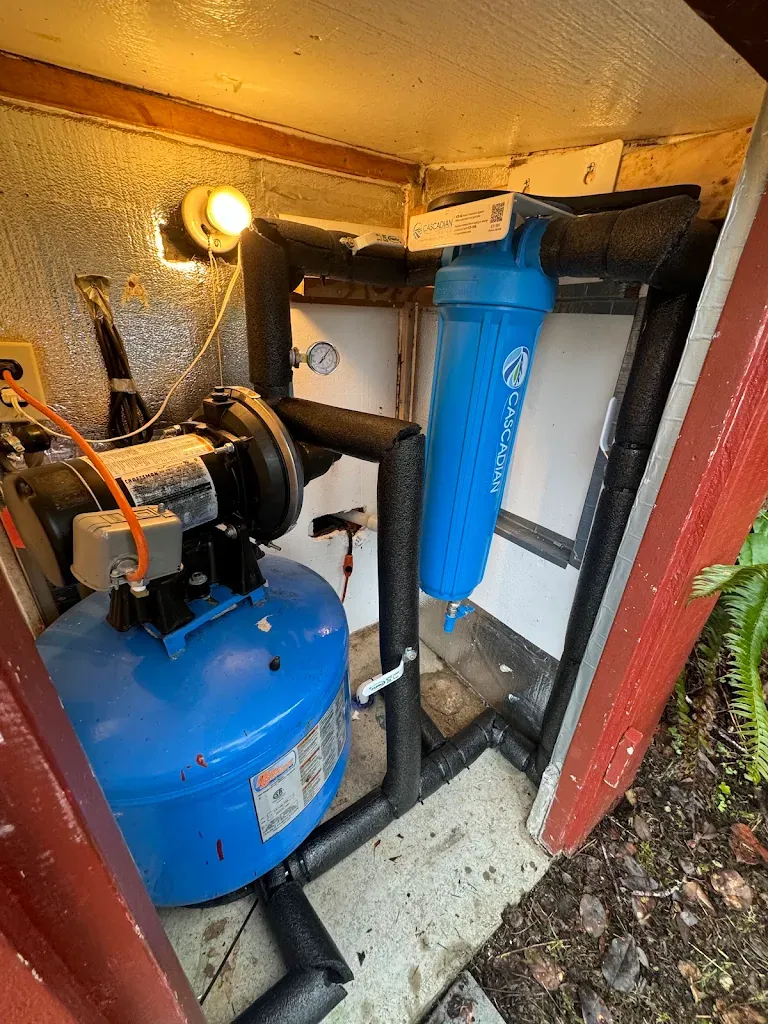
RO does not address bacteria on its own, and it is not the tool for high iron or manganese. Iron fouls the membrane quickly and shortens its life from years to months. On a Mason County or rural Kitsap well with iron or hydrogen sulfide, the right order is a whole-house treatment system first, then RO at the kitchen sink for drinking and cooking. We install both, and we will tell you which one you actually need before quoting either.
Well water, nitrates and why RO matters on a private system
A home on Kitsap PUD, West Sound Utility District or City of Port Orchard water is drinking from a tested, treated supply. A home on its own well in Tahuya, Grapeview, Olalla or the Seabeck hills is drinking whatever the aquifer and the neighbors' drain fields put there. Shallow wells near septic systems are the ones where nitrates show up, and nitrates are tasteless, odorless and a real concern for infants and pregnant women. A sediment filter does nothing for them. An RO membrane removes most of them.
Shoreline wells along Hood Canal and the Sound carry a different risk: saltwater intrusion. When a well draws harder than the aquifer recharges, seawater creeps in and the chloride number climbs. The water tastes slightly salty, the water heater anode burns up faster, and the ice maker starts making cloudy cubes. RO is one of the few practical ways to get drinkable water out of a well that has started to go brackish while the bigger question of the well itself is sorted out.
How an under-sink RO system is actually plumbed
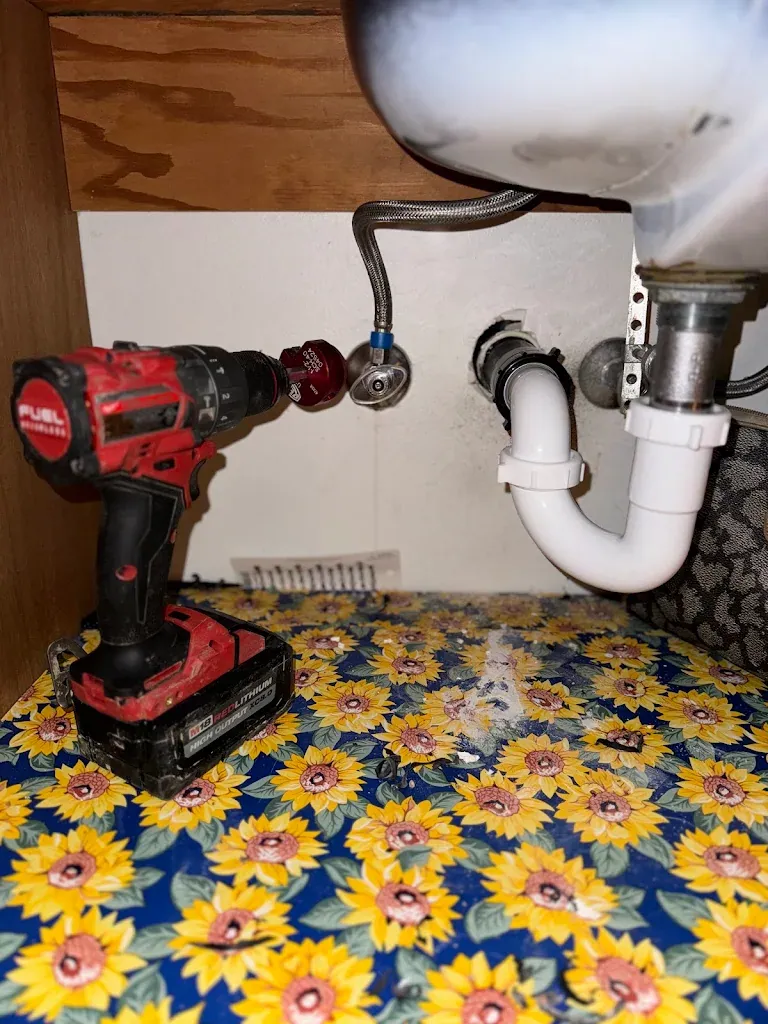
The unit itself is a bracket of filter housings, a membrane, a small pressurized storage tank and a bundle of quarter-inch tubing. The install is mostly about the three connections. Supply comes off the cold line under the sink through a dedicated feed valve, not a self-piercing saddle that leaks in two years. We prefer to replace a tired angle stop with a new one that has a built-in RO port.
The drain connection is where most do-it-yourself installs go wrong. RO systems send reject water to the drain continuously while the tank fills, and that drain line must have an air gap so a backed-up sink cannot siphon dirty water into the membrane. We use an air-gap faucet or a dedicated air-gap fitting and tie into the tailpiece above the trap, never into the disposal body or below the trap weir.
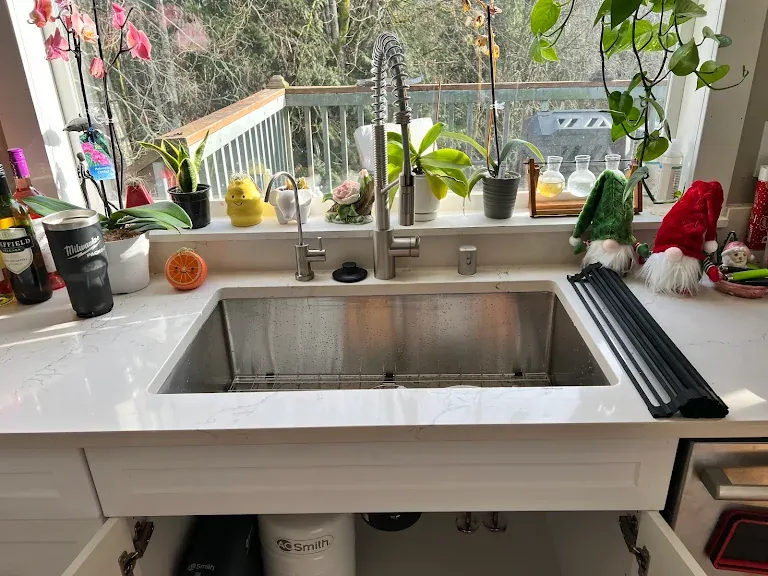
The faucet gets its own hole. Many newer sinks have a spare knockout; older cast-iron and stainless sinks do not, and quartz or granite tops need a diamond core bit and a steady hand. We bring the bit. On a kitchen where the sink is being replaced anyway, we coordinate the hole with the sink install so the faucet lands where you want it.
Then the system gets flushed. The first tank or two is dumped to clear carbon fines and the preservative on a new membrane. We check the tank precharge, confirm the shutoff valve stops production when the tank is full, and look for drips at every fitting before we close the cabinet.
Feeding the refrigerator and the coffee maker
Most homeowners want the RO water at more than the sink faucet. The fridge ice maker and water dispenser are the usual second stop, and a dedicated quarter-inch line run from the RO tank to the fridge valve is a quick addition when the fridge is on the same wall or the cabinet run allows it. We route it so a later fridge swap does not mean fishing new tubing.
Pressure is the limit. A standard RO tank delivers water at a fraction of house pressure, and a long run to a fridge across the kitchen can leave the dispenser trickling. Where that is a problem we size a larger tank, add a permeate pump, or in a home that already has low pressure, pair the RO with a booster pump on the house side. We will tell you up front whether the fridge run makes sense for your layout.
Filter changes, membrane life and keeping the water clean
The pre-filters are the workhorses. The sediment and carbon stages protect the membrane from grit and chlorine, and they need changing on a regular schedule that depends on how much the system is used and what is in the water. On municipal water that is typically once a year. On a well with any sediment, more often. The membrane itself lasts several years when the pre-filters are kept up and far less when they are ignored.
The tell-tale signs of a tired system are a slower fill, a smaller volume before the faucet sputters, and a return of taste or spots. A TDS meter settles it in ten seconds: if the RO water reads close to the tap water, the membrane is done. We carry replacement cartridges and membranes for the systems we install and can set you up on a reminder so filters do not slip to year three.
Flat-rate installation with no surprises in the cabinet
You will have a written flat price before we start, and it will spell out what is included: the unit, the faucet, the feed valve, the drain connection, any core drilling and the fridge line if you want one. Most installs on a sink with an existing spare hole are a modest service call plus the equipment. Core drilling stone, replacing a failed angle stop or adding a booster are listed separately so you can see what each one costs and skip what you do not need.
We stand behind the install with our satisfaction guarantee and the extended warranty we offer on our labor. If a fitting we installed drips, we come back. That is the point of having a plumber do it instead of an appliance delivery crew.
Signs you need reverse osmosis drinking water systems
Call if you notice
- You buy bottled water or run a pitcher filter for everything you drink
- A well test came back with nitrates, arsenic or high chlorides
- Coffee and tea taste off, and ice cubes come out cloudy or white
- Glasses dry with spots no matter what the dishwasher is set to
- There is a chlorine or chemical taste from municipal water that carbon alone does not fix
- An infant or someone with a health condition in the house needs cleaner drinking water
- Your existing RO faucet sputters or the tank takes all day to refill
- A shoreline well has started tasting faintly salty
How a reverse osmosis drinking water systems call goes
Talk through your water
Corinne or Greg will ask whether you are on a utility or a well, whether you have a recent test, and what you are trying to fix. That tells us whether RO is the right tool or whether a whole-house system should come first.
Look under the sink
We check the cabinet space, the sink for a spare hole, the condition of the angle stops and drain, and whether a fridge line is practical. The flat price goes to your phone from there.
Plumb it like it will be there twenty years
New feed valve, air-gapped drain tie-in above the trap, faucet set cleanly through the deck or stone, tubing routed so it does not kink when someone shoves the trash can in.
Flush and test
The first fills are dumped, the tank precharge is set, the automatic shutoff is confirmed, and every fitting is checked dry. We take a TDS reading so you know the baseline.
Set a filter schedule
You leave knowing which cartridges go where and when, and we can put you on a reminder so the membrane is protected.
Questions we get about reverse osmosis drinking water systems
Do I need a whole-house filter before an RO system?
Only if the water has something that will foul the membrane, mainly iron, manganese or heavy sediment. On municipal water, no. On a well, it depends on the test. We will tell you after we see the results, and we will not sell you a whole-house system you do not need.
Does reverse osmosis waste a lot of water?
Older systems sent several gallons to the drain for every gallon produced. Modern units with a permeate pump or efficient membranes do far better. On a private well the reject water goes to the septic system, which is one reason we size the system properly rather than oversizing it.
Can you add an RO faucet to a granite or quartz countertop?
Yes. We core a clean hole with a diamond bit and seal the faucet base. It is the step most likely to go wrong with a do-it-yourself kit, and it is included in our quote when it applies.
Will RO water hurt my pipes or appliances?
No. The volume of RO water is small, and it only feeds the dedicated faucet and fridge line. The rest of the house runs on regular water. Aggressive low-mineral water is only a concern in whole-house systems, which is not what an under-sink RO is.
How often do RO filters need to be changed?
The sediment and carbon pre-filters roughly yearly on clean municipal water, more often on a well with sediment. The membrane lasts several years if the pre-filters are kept up. We check production and TDS at each service so you change parts when they need it, not on a guess.
Can you install an RO system I bought online?
Usually, as long as it is a complete, listed system with its own shutoff and air gap. We will tell you if the parts are not up to the job. The flat price for labor is the same either way.
Does RO remove bacteria from well water?
Not reliably, and it should not be your defense against a contaminated well. If a test shows coliform, that is a well and disinfection issue first. RO is for dissolved contaminants like nitrates, arsenic and salts.
Can RO water go to my refrigerator ice maker?
Yes, and most people want it there. We run a dedicated line from the RO tank. If the run is long or house pressure is low we will talk about a larger tank or a permeate pump so the dispenser does not trickle.