
Washington Plumbing & Drain thaws frozen lines and repairs burst pipes across Kitsap, Pierce and Mason counties, with evening, weekend and after-hours emergency calls answered when the cold hits. The first job is stopping the water. The second is finding every split, because a freeze rarely cracks a pipe in just one place. The third is making sure the same line does not freeze again next year.
If you have water pouring from a ceiling right now, close the main shutoff and call (360) 812-1124. If a line is frozen but has not burst yet, leave the faucet open a crack and read the section on thawing below before you reach for a torch.
Why pipes burst here, and where
Water expands roughly nine percent when it freezes, and ice forming inside a closed pipe pushes the trapped water toward the nearest closed valve or faucet. The pressure in that pocket climbs until something gives. The pipe usually splits not at the ice plug but somewhere between the plug and the faucet, which is why a line that froze in the crawlspace can burst inside a bathroom wall.
Around Puget Sound the lines that freeze are the ones in contact with outside air: supply runs through vented crawlspaces, especially where the vent screens face north or the insulation has fallen off; pipes in garage walls serving a laundry or a hose bib; lines to a bathroom addition built over a porch; water heater and well tank piping in detached pump houses; and the riser where the service line comes up out of the ground. Older Bremerton and Port Orchard homes with plumbing on exterior walls are especially exposed.
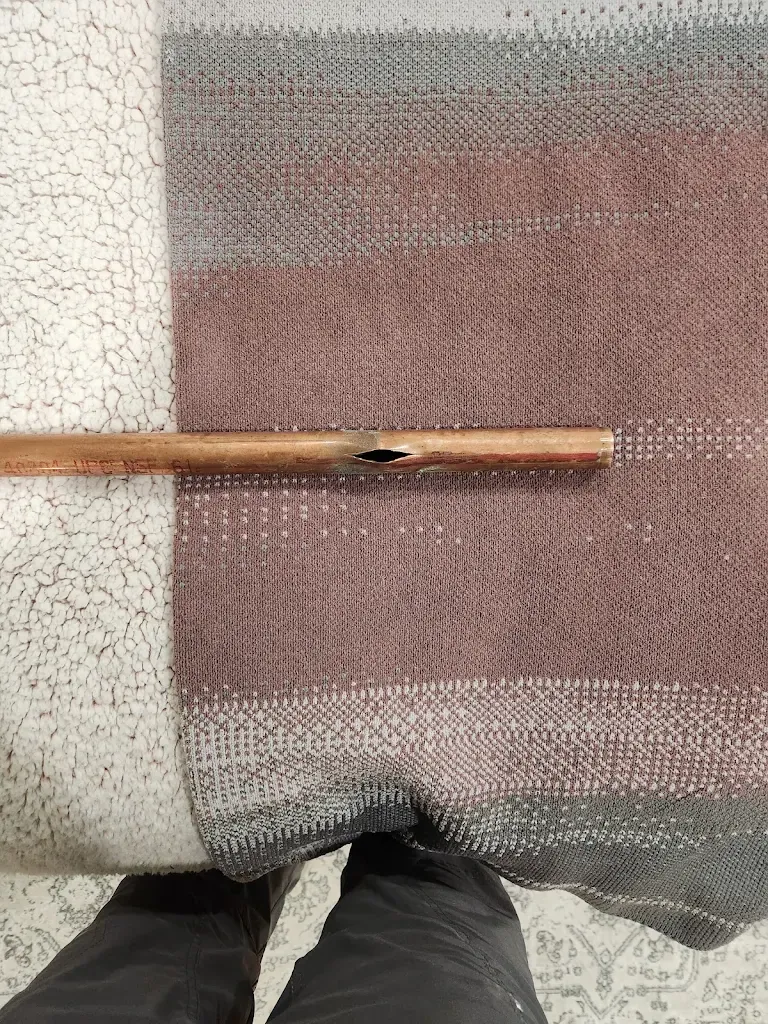
Copper splits lengthwise and shows a clean rip once it thaws. PEX is forgiving and usually survives a freeze, but the brass or plastic fittings on it do not. Polyethylene well lines fail at the fittings too. Galvanized steel cracks at the threads. Each material tells a different story when we see it, and the photo on this page of a split copper line is typical of what a crawlspace freeze looks like.
Thawing a frozen pipe without making it worse
If a faucet produces nothing or a trickle during a cold snap and the rest of the house works, you likely have an ice plug in one line. Open the affected faucet fully, both hot and cold, so that melting water and pressure have somewhere to go. Then find the coldest stretch of that line and warm it gently: a hair dryer, a space heater pointed at a crawlspace vent, towels soaked in hot water wrapped around the pipe. Work from the faucet back toward the plug so meltwater can escape.
Never use an open flame. A propane torch on a frozen copper line boils the trapped water into steam and can burst the pipe in your hands, and it has started house fires in crawlspaces full of dry insulation. We use electric pipe-thawing equipment on metal lines, which passes a low-voltage current through the pipe itself and warms it evenly from the inside. On PEX and poly we use heat and patience.
Once water flows, do not assume you are done. Leave the faucet running a little, walk the house, and listen for hissing or dripping in walls and ceilings. The split, if there is one, will show now that pressure is back. Shut the main off the moment you hear water where it should not be.
What to do in the first ten minutes after a burst
Shut off the water. The main valve is usually where the service line enters the house, in a crawlspace, garage, utility room or a box near the foundation. On a well, kill the breaker to the pump as well. If the valve is a gate valve that will not turn, which is common on older homes, the meter box at the street has a curb stop that a meter key or a long screwdriver can close in a pinch.
Open the lowest faucet in the house to drain the lines and take pressure off the split. Turn off the breaker or gas to the water heater if the house is going to be drained for long, because an electric element or a gas burner firing on an empty tank will destroy it. Move what you can out from under the leak and get towels or a bucket under the drip.
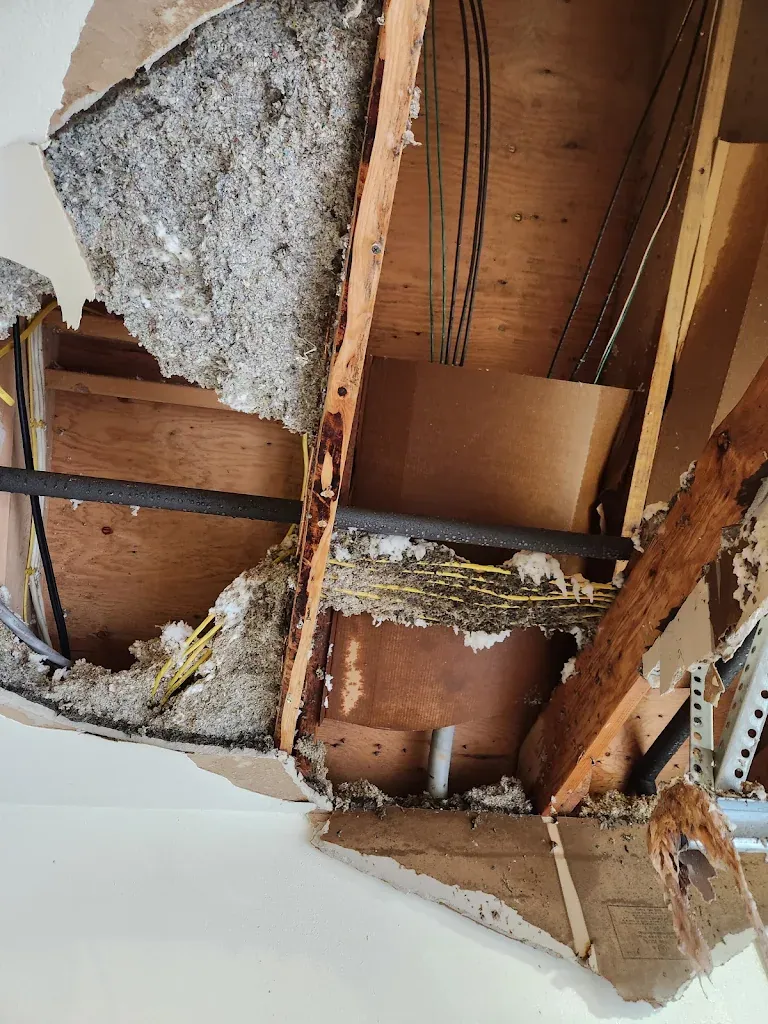
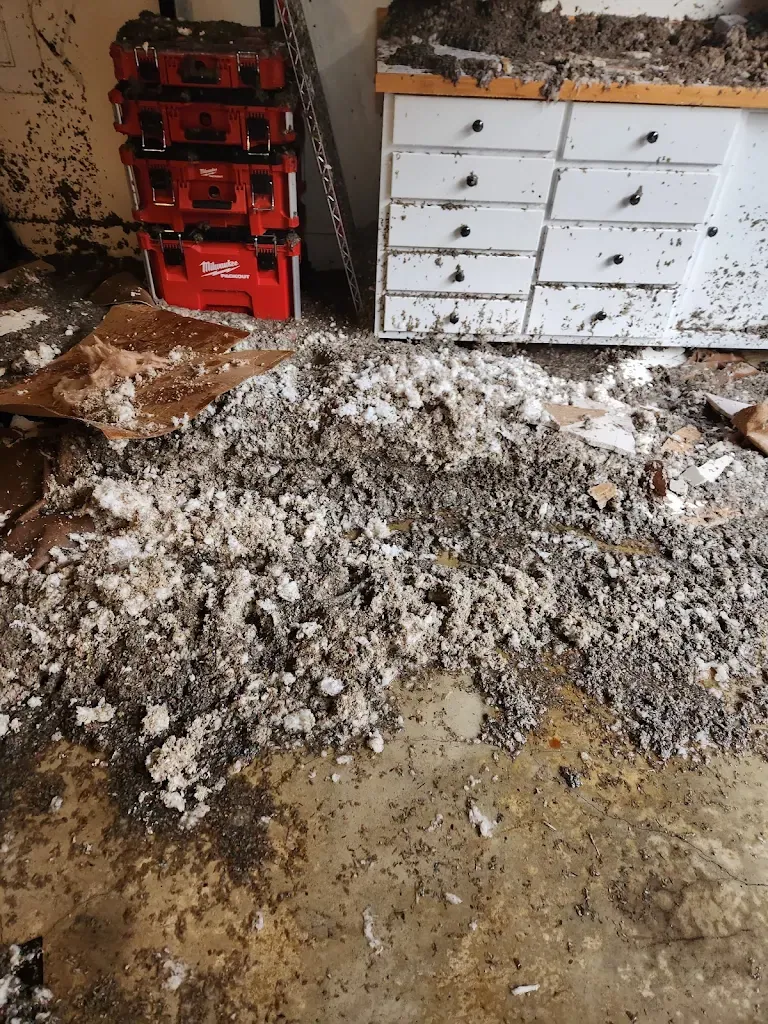
Then call. We will tell you whether this is a tonight job or a first-thing-tomorrow job, and we will say so plainly. A ceiling that is sagging with water needs to be drained before it comes down; the photo on this page shows what happens when it is not. A split in a crawlspace line with the water already shut off can usually wait until morning without any more damage.
- Close the main shutoff, or the curb stop at the meter if the house valve is stuck
- On a well, switch off the pump breaker
- Open a low faucet to drain the lines
- Cut power or gas to the water heater if the system will be drained for hours
- Poke a small hole in a sagging ceiling over a bucket to let the water out before the drywall fails
- Photograph the damage before cleaning up, for your insurance claim
How we repair a burst line
With the water off, we find every split, not just the one that announced itself. After a freeze we pressure test the house in sections, because a second crack in a line that has not yet been pressurized is the leak you discover a week after the plumber leaves. We open walls and ceilings only where the test and the listening gear say to.
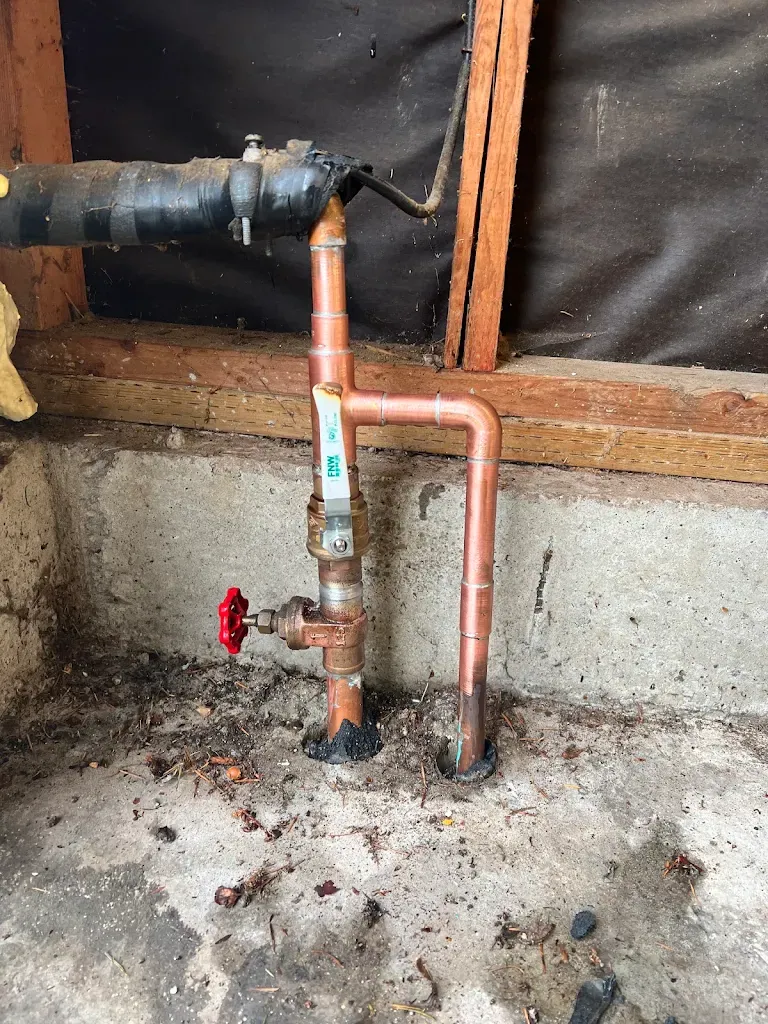
Copper is cut back to clean, round pipe on both sides of the split and a new section is soldered in, or joined with press fittings when soldering near wet framing is not safe. PEX gets a new section with expansion or crimp fittings. A failed fitting is replaced, and a run that has frozen more than once is rerouted to a warmer path or replaced in PEX, which tolerates ice far better than copper. Everything is pressure tested before the water comes back on.
While we are there we look at why it froze. Missing insulation, an open crawlspace vent facing the wind, a hose left on a bib, a pump house with no heat tape. Fixing the cause is usually a small add-on to the repair, and it is the difference between seeing us once and seeing us every January.
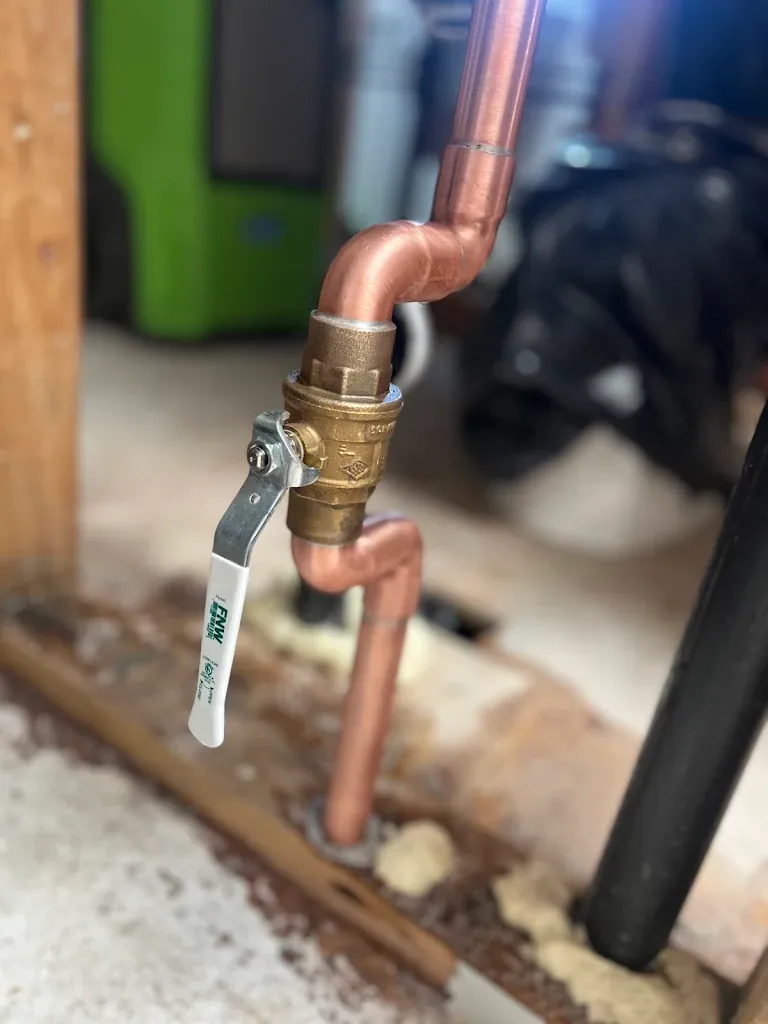
Keeping it from happening again
Most freeze damage in Kitsap, Pierce and Mason County is preventable with an afternoon of work before the cold arrives. Foam sleeves on every exposed line in the crawlspace and garage, with the joints taped. Crawlspace vents closed or covered for the cold weeks. Hoses disconnected from hose bibs and the bibs themselves replaced with frost-free models that shut off inside the wall. Heat tape, properly rated and plugged in, on any line that has frozen before. A trickle of water left running at the farthest faucet on the coldest nights, which keeps water moving and relieves pressure.
Detached structures need their own plan. A well house, a shop with a utility sink, a cabin on Hood Canal that sits empty midweek: each needs insulation, a heat source, or a drain-down routine. For second homes we often install a smart shutoff that closes the main and sends a phone alert when it sees flow at three in the morning. We lay out these options when we close up the repair, and you choose what makes sense.
Signs you need burst & frozen pipe repair
Call if you notice
- No water or only a trickle at one faucet during a cold snap
- Frost or ice visible on an exposed pipe
- Water running from a ceiling, wall or light fixture
- A hissing or spraying sound in a wall after a thaw
- The water meter spins after a freeze with everything turned off
- A ceiling bulging or sagging with trapped water
- Wet insulation or a puddle in the crawlspace following cold weather
- A hose bib that sprays inside the wall when turned on in spring
- A pump house or shop line that froze in a previous winter and was never insulated
How a burst & frozen pipe repair call goes
Stop the water, by phone if needed
When you call, we walk you to the main shutoff or the curb stop and tell you what to drain and switch off while the plumber is on the way. Evening, weekend and after-hours calls are answered during cold snaps.
Thaw safely if the line is still frozen
Electric thawing equipment on metal lines, controlled heat on plastic. Never a torch. We keep faucets open so pressure has a way out as the ice lets go.
Find every split
Sectional pressure testing and acoustic listening find the second and third cracks that a freeze usually leaves behind, so the repair does not fail a week later.
Flat-rate repair in matching material
Copper soldered or press-fit, PEX with expansion fittings, poly with proper insert fittings. Runs that have frozen before are rerouted or replaced in PEX. You approve the price before we cut.
Pressure test and restore water
The whole system goes back under pressure with the plumber watching before the house is handed back to you. Water heater relit or re-energized only once the tank is full.
Insulate, document, refer
We insulate or protect the line that froze, photograph the damage and repair for your insurance claim, and give you restoration company names if the house needs drying.
Questions we get about burst & frozen pipe repair
A pipe is frozen but has not burst. Should I wait for it to thaw on its own?
No. The pressure building behind the ice is what splits the pipe. Open the faucet on that line, warm the coldest section gently with a hair dryer or space heater, and call us if it does not free up within an hour or if you cannot reach the frozen section. Waiting for a warm afternoon often means waiting for a burst.
Can I use a torch to thaw a pipe?
Please do not. A flame boils the trapped water into steam and can burst copper violently, and open flame in a crawlspace full of insulation and old framing is a fire waiting to happen. We thaw metal lines electrically and plastic lines with controlled heat.
How fast can you get to a burst pipe?
When water is actively running we treat it as an emergency, and after-hours calls are answered. During a regional freeze every plumber in the county is busy, so we triage: a house with the water shut off and no further damage may be scheduled for first thing in the morning so that a house with water still pouring can be reached tonight. Corinne or Greg will tell you which you are, plainly.
Do you do the water damage cleanup?
No. We stop the leak and repair the pipe. Drying, drywall, flooring and mold are handled by restoration companies, and we give you names of ones that work in our area on the first visit. Getting drying started in the first day or two matters.
Should I replace copper with PEX after a freeze?
On a line that has frozen more than once, often yes. PEX stretches with ice and usually survives, while copper splits. We also reroute lines out of exterior walls and insulate what stays. For a house with widespread freeze damage, a partial or whole-house repipe in PEX is sometimes the most economical repair, and we price it against the alternative.