What it usually looks like
- Water stands in the sink and drains slowly or not at all
- The second bowl of a double sink fills when the first drains
- Running the dishwasher pushes water up into the sink
- The disposal hums but water does not go down
- A sour or greasy smell from the drain
- The sink drained fine until a big cooking day and then stopped
Likely causes, most common first
Grease lining the drain line
Bacon fat, salad dressing, the oil from a roasting pan, even the fat in dish water all cool and stick inside the pipe downstream of the trap. Each layer narrows the line a little more, and the rough surface grabs starch, grounds and fibrous scraps. Hot water and soap do not remove it; they just push it a few feet further along where it hardens again. This is the cause most of the time, and in older galvanized kitchen lines it happens fastest.
A jammed or failed garbage disposal
A disposal that hums without spinning has something wedged in it, often a fruit pit, bone or utensil. One that is silent has tripped its overload or died. Either way the sink above it will not drain through it.
The P-trap is packed
The trap under the sink catches whatever is heavy: rice, pasta, eggshell, the gasket that fell off the disposal. A trap that is full behaves exactly like a clogged line but is a ten-minute fix with a bucket.
A clog in the branch line inside the wall
Past the trap, the drain runs through the wall to join the main stack. Kitchen branches are long, often low in slope, and in many older homes they are 1-1/2 inch pipe that was marginal from the start. A clog there is beyond a plunger and needs a cable.
The dishwasher drain or air gap
The dishwasher pumps into the disposal or sink tailpiece. If the knockout plug was never removed from a new disposal, or the air gap on the counter is clogged, the dishwasher cannot drain and water appears in the sink. If the sink line is partly blocked, dishwasher discharge is often what overflows it.
A sagging or bellied drain line
A section of pipe in the crawlspace that has dropped off its hangers holds water and sludge permanently. It clogs again a few months after each cleaning. The camera finds it and the fix is to re-support or replace that section.
Safe things to check yourself first
- If there is a disposal, turn it off, look in with a flashlight, and use the hex key in the bottom to free a jam; press the red reset button underneath
- Plug the second bowl's drain tightly and plunge the clogged bowl with a cup plunger, keeping water over the plunger lip
- Put a bucket under the trap, unscrew the slip nuts by hand, and clear the trap and the short pipe toward the wall
- Run the dishwasher briefly and see whether water surges into the sink, which points to the disposal inlet or the branch line
- Skip chemical drain cleaners; they rarely open a grease clog and they leave caustic water in the trap for whoever opens it next
Stop and call if
- The trap is clean and the line still will not drain, which means the clog is in the wall or beyond
- Water backs up into the sink when the washing machine or a bathroom drains, which means the main line is involved
- The pipe under the sink is corroded, leaking or crumbles when you touch it
- Chemical drain cleaner has been poured in and the sink is still full
- The disposal trips its breaker or smells like burning
How we diagnose and fix it
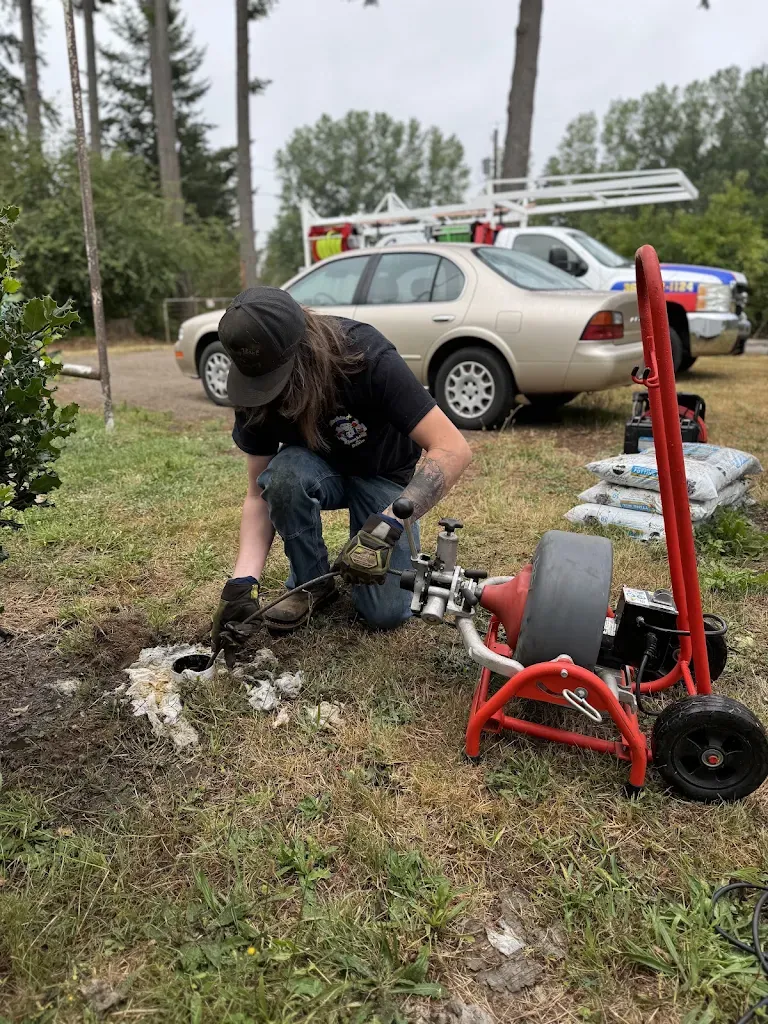
- Open the trap and the cleanout tee and run a cable with a grease head through the branch line until the full diameter is open, not just a hole through the middle
- Hydro jet kitchen lines that are coated end to end with grease, which scours the pipe wall rather than tunneling through it
- Free, repair or replace a jammed or dead disposal, and remove the dishwasher knockout plug if that was the problem
- Replace rotted galvanized or chrome trap arms and tailpieces with proper PVC while we are under the sink
- Camera the branch line when the clog has recurred, and re-support or replace a bellied section in the crawlspace
- Run water at full flow for several minutes afterward to prove the line carries
Around Kitsap, Pierce and Mason counties
Kitchen lines in the 1950s to 1970s houses around the shipyard, downtown Bremerton and old Port Orchard are often original galvanized steel, and their inside walls are rough with rust that grease cannot resist. We hydro jet a lot of these, and when the camera shows the pipe is more rust than steel, we replace the run. On the septic side of the county, a greasy kitchen line is also hard on the tank, which is one more reason to keep fat out of the sink.
Questions people ask
Will boiling water clear a grease clog?
Briefly, sometimes. It melts the grease nearest the sink and moves it a few feet further down the line where it cools again. It can also soften PVC joints. We would rather you plunge.
Why does the sink back up when the dishwasher runs?
The dishwasher pump pushes several gallons into the sink drain quickly. A line that can barely keep up with a faucet cannot take that surge, so the water rises in the sink.
Is a disposal a bad idea on septic?
Not forbidden, but it adds solids to the tank and shortens the pumping interval. If you have one, use it lightly and never for grease.
How long does clearing a kitchen line take?
Most are done within the hour. Jetting a long, heavily coated line takes longer, and we tell you before switching to the jetter.
Do you fix the drain pipes under the sink too?
Yes. Old chrome trap arms and corroded slip joints usually come apart when touched, and we replace them with PVC in the same visit.