
What it usually looks like
- The shower runs cold or lukewarm while hot water is normal at every sink
- The handle turns all the way to hot but the temperature stops short
- The shower was fine until the water heater was replaced or the house pressure changed
- Hot water arrives, then fades to cold after a minute
- The shower handle is stiff, loose or has lost its stops
- Another shower in the house is fine
Likely causes, most common first
A worn or scaled shower cartridge
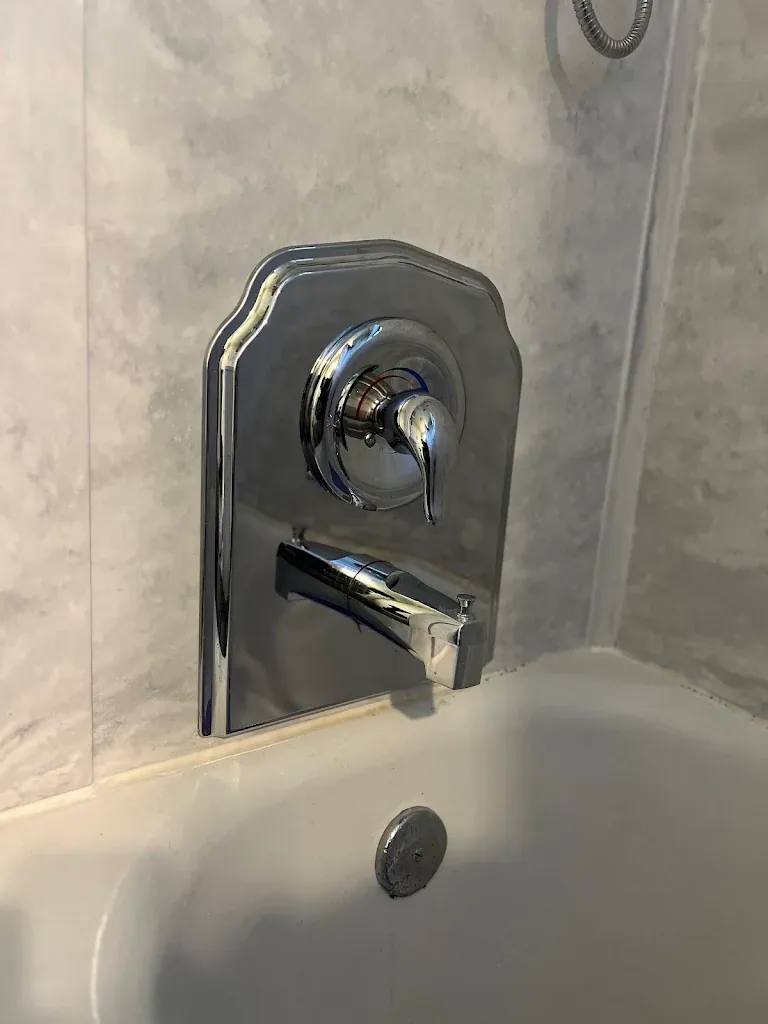
Single-handle shower valves use a cartridge with ports that open to hot and cold as the handle turns. Mineral scale and worn seals narrow the hot port, so even at full hot the mix is mostly cold. This is the usual cause in a valve more than a decade old, and it is a cartridge replacement behind the trim.
The anti-scald limit stop is set too low
Nearly every modern shower valve has an adjustable stop that limits how far the handle can rotate toward hot. If it was set with the water heater at a high temperature and the heater was later turned down, or set carelessly during a cartridge change, the shower can never reach a comfortable temperature. Adjusting it is a five-minute job once the handle is off.
A stuck pressure-balancing spool
Pressure-balancing valves have a small piston that slides to equalize hot and cold pressure so a flushed toilet does not scald you. Scale or debris can jam it toward the cold side, choking the hot supply entirely. The shower runs cold while the sink is fine.
A failed thermostatic cartridge
Thermostatic shower valves use a wax or bimetal element to hold a set temperature. When the element fails it usually fails cold as a safety behavior. The cartridge needs replacing with the manufacturer's part.
Crossover from a failed single-handle faucet elsewhere
A worn cartridge in a nearby faucet or a failed check valve in a mixing valve can let cold water push into the hot line. The shower, being the fixture with the longest run or lowest pressure on the hot side, is where it shows up. The sink nearest the heater may still feel hot.
Debris blocking the hot inlet after plumbing work
After a water heater replacement or repipe, solder, scale and sediment flow downstream and lodge in the hot inlet screen of the shower valve. The timing gives it away.
Safe things to check yourself first
- Run the sink and the shower hot at the same time and compare; confirm the problem is truly just the shower
- Remove the handle, which is usually one screw, and look for the limit stop ring or screw; rotate it to allow more hot, following the manufacturer's diagram
- Check whether the problem started right after plumbing work or a water heater change
- Turn the water heater thermostat to 120 degrees if it was lowered, then retest
- Note whether the shower runs hot briefly and then goes cold, which points to a balancing spool or crossover rather than the limit stop
Stop and call if
- The handle is stuck, spins freely or the stem snapped
- There is water inside the wall behind the valve or a stain on the other side
- You tried to pull the cartridge and it will not come out; forcing it cracks the valve body
- Several fixtures have gone lukewarm, which is a different problem than one shower
- The valve is an older two- or three-handle type and the stems are seized
How we diagnose and fix it
- Pull the trim and test hot and cold supply at the valve body to confirm the valve is the restriction
- Replace the cartridge or balancing spool with the correct manufacturer part, using the proper puller so the valve body is not damaged
- Set the anti-scald limit so the shower reaches a safe, comfortable maximum
- Trace and fix crossover at a failing faucet or mixing valve when that is the real cause
- Replace the entire valve from behind the wall or through the tile when the old valve is obsolete or seized, including upgrading a two-handle valve to a modern pressure-balanced one
- Flush debris from the lines and the valve inlets after any heater or pipe work that stirred it up
Around Kitsap, Pierce and Mason counties
A lot of the shower valves we repair in Silverdale, Gig Harbor and Port Orchard tract homes from the 1990s and 2000s are original cartridges that have simply worn out, and the limit stop was never set properly in the first place. In older Bremerton and Manchester homes, two-handle tub valves with seized stems are common, and converting them to a single-handle pressure-balanced valve is a frequent part of a bathroom update. Well water with iron and sediment on the Mason and South Kitsap side jams balancing spools more often than district water does.
Questions people ask
Could the water heater still be the problem?
Only if every fixture is affected. One cold shower with hot sinks nearby is a valve problem. If the shower is the farthest fixture from the heater and takes a long time to warm, that is a distance issue, not a failure.
Does fixing this mean opening the tile?
Usually not. Cartridges, spools and limit stops are serviced through the trim opening. The wall only comes into it when the valve body itself has to be replaced and there is no access panel behind it.
How do I know what cartridge my shower takes?
The brand is usually on the trim plate or handle, and the cartridge style depends on the valve's age. We carry the common Moen, Delta and Kohler cartridges and can identify most valves on sight.
Why did my shower go cold right after the new water heater?
Draining and refilling the system pushed scale into the hot inlet of the shower valve, or the new heater is set lower and the limit stop now blocks the hot range. Both are quick to correct.
Is a thermostatic valve better than a pressure-balancing one?
Thermostatic valves hold an exact temperature and are nice in a large walk-in shower with multiple heads. Pressure-balancing valves are simpler, cheaper and fine for most bathrooms. We install both.