
What it usually looks like
- Sulfur or rotten egg smell when you run hot water, strongest in the shower
- Cold water from the same tap smells fine
- The smell is worse after the house has been empty for a few days
- A new water heater started smelling within weeks of installation
- The smell appeared after switching to a well or after a water softener was added
- Black particles or a dark slime in aerators on the hot side
Likely causes, most common first
Magnesium anode rod reacting with sulfate-reducing bacteria
Every tank water heater has a sacrificial anode rod to protect the steel. The standard rod is magnesium. Certain naturally occurring bacteria in well water use the electrons the rod gives off to convert sulfates in the water into hydrogen sulfide. The warm, still tank is a perfect place for them. No anode, no reaction, but no anode also means a rusting tank, so the answer is a different kind of anode.
Water heater set too low or used rarely
Those bacteria thrive below about 120 degrees. A vacation cabin on Hood Canal that sits with the heater on low, or a heater turned down to save energy, gives them weeks of ideal conditions. The smell is often strongest in a guest bathroom that is rarely used.
Softened well water
A water softener removes the hardness that would otherwise coat the anode, which makes the rod more reactive. Homes that added a softener and then noticed the sulfur smell are a pattern we recognize.
Hydrogen sulfide in the well itself
Some wells in Mason County and parts of South Kitsap produce water that already contains sulfur gas from decaying organic matter or sulfur bacteria in the aquifer. In that case cold water smells too, and the heater only concentrates it. Treatment happens at the well, not the heater.
Sediment and biofilm in the tank
A tank that has never been flushed holds a layer of sediment that shelters bacteria. Even with an anode change, the smell lingers until the tank is drained and sanitized.
A drain, not the water
Occasionally the smell is coming up from a dry trap or a biofilm-coated overflow in the sink, and it just seems to arrive with the hot water because the steam carries it. Fill a glass of hot water and smell it away from the sink to rule this out.
Safe things to check yourself first
- Fill a glass from the cold tap and one from the hot tap and smell each in another room. Hot only means the heater; both means the source.
- Check the water heater thermostat. If it is below 120 degrees, raising it to 120 to 125 discourages the bacteria. Do not go higher without a mixing valve.
- Look at the age and the brand of the heater and find out whether it has a magnesium anode, which is standard on most Bradford White and A. O. Smith tanks unless specified otherwise.
- If the house has been empty, run hot water at every fixture for several minutes to turn the tank over and see whether the smell fades.
- Clean the sink overflow and pour hot water down the drain to rule out a drain odor.
- Note whether a softener was installed recently or the house changed from city water to a well.
Stop and call if
- The smell is in both hot and cold water on a well, which calls for a water test and treatment at the source
- The smell comes with discolored water, popping from the tank or a leak at the heater
- You smell gas, not sulfur, near a gas water heater, which is a different and urgent problem
- The water heater is more than ten or twelve years old and the smell is new
- Anyone in the home is reacting with headaches or nausea, which can mean the hydrogen sulfide level is high
How we diagnose and fix it
- Confirm the source by sampling hot and cold at the heater and at a far fixture, and test the well water for hydrogen sulfide, sulfate and iron when cold water is involved.
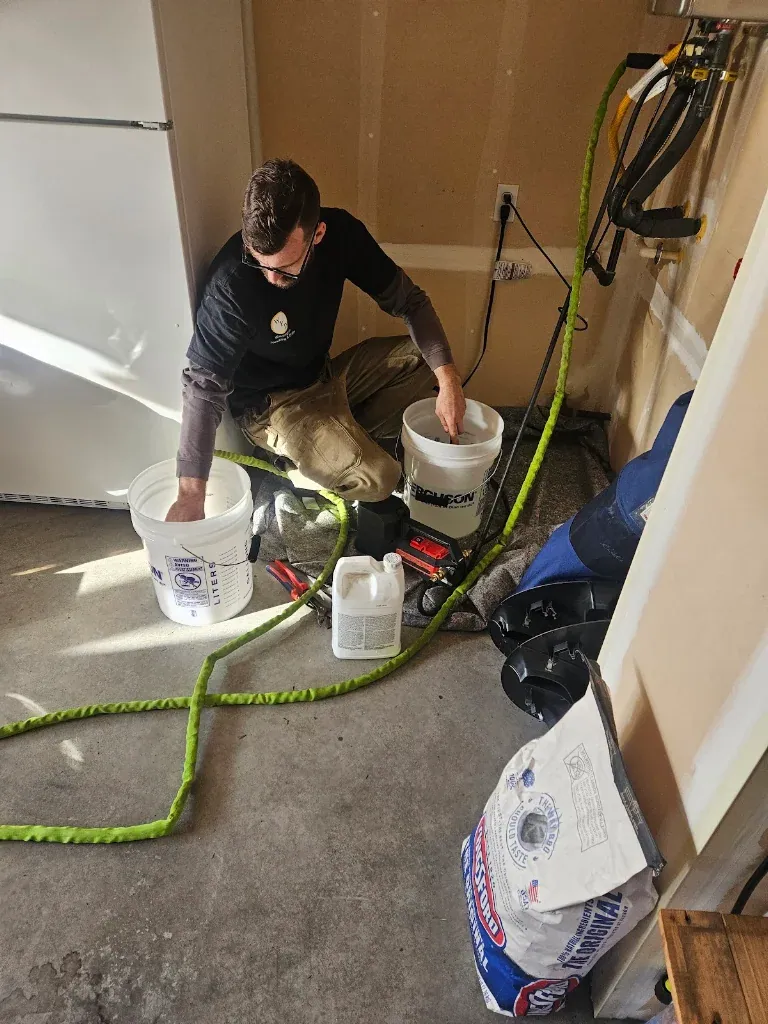
- Drain and flush the tank, then sanitize it with a measured hydrogen peroxide treatment that kills the bacteria without harming the tank or the plumbing.
- Replace the magnesium anode with an aluminum-zinc rod, or with a powered titanium anode on tanks and water that keep producing the smell, so the tank stays protected without feeding the reaction.
- Set the thermostat correctly and add a thermostatic mixing valve when a higher tank temperature is needed for odor control but the fixtures must stay safe.
- Treat sulfur at the well with aeration, oxidizing filtration or chlorination when the source itself smells, sized to the test results.
- On tankless heaters, which rarely cause this, descale and check for a biofilm in the heat exchanger and inlet filter.
Around Kitsap, Pierce and Mason counties
This is one of the most common water heater calls we get from well homes in Belfair, Allyn, Grapeview, Seabeck and the Key Peninsula, and it catches people off guard because the heater is often brand new. The groundwater on the Hood Canal side carries sulfates and the bacteria that feed on them, and a fresh magnesium anode in a new tank gives them exactly what they want. We have replaced anodes on heaters a few weeks old. On city water in Port Orchard, Bremerton or Gig Harbor the smell is rare, and when it appears there the cause is usually a vacation house sitting idle.
Questions people ask
Is the sulfur smell in my hot water dangerous?
At the levels found in a home water heater, hydrogen sulfide is a nuisance, not a hazard. It tarnishes silver and copper and makes showers unpleasant. Very high levels in the source water can irritate eyes and lungs, which is why a well that smells cold should be tested.
Can I just remove the anode rod?
You can, and the smell will stop, but the tank will begin rusting immediately and the warranty is gone. An aluminum-zinc or powered anode solves the smell while keeping the tank protected. That is the right answer.
Why did my new water heater start smelling?
Because it came with a fresh, highly active magnesium anode and your water has the bacteria. The old heater's rod had probably been used up for years, which is why it stopped smelling. The new tank just needs a different anode.
Will a tankless heater get rid of the smell?
Usually yes, since there is no stored water and no anode. If the well water itself contains sulfur, a tankless will not fix it, because the gas is in the water before it reaches the heater.
How long does the fix last?
An anode swap and sanitization typically settles it for years. If the smell creeps back, a powered anode is the permanent version. On source-water sulfur, the treatment system needs its routine media and filter service.