
Short answer
Holiday plumbing problems come from three things at once: double the people, a kitchen running all day, and the coldest weather of the year. The disposal gets fed things it cannot handle, the guest bathroom sees more use in a weekend than in the previous six months, and the water heater runs out just before the last shower. A little preparation the week before Thanksgiving prevents most of the calls we get on the holiday itself.
In this guide
Key takeaways
- The day after Thanksgiving is one of the busiest drain-cleaning days of the year, and nearly every call starts with turkey grease, potato peels or stuffing in the disposal.
- Scrape plates into the trash. The disposal is for the little bit that is left, not for clearing the plate.
- Put a wastebasket and a plunger in every guest bathroom, and tell guests that only toilet paper goes in the toilet.
- Space showers fifteen or twenty minutes apart so a tank heater can recover, or turn the thermostat up a notch for the week if the heater has a mixing valve.
- A drain that was slow in October will be a backup in December. Fix it before the guests arrive.
- Know where your main shutoff and your sewer cleanout are before the house fills up.
What the holidays do to a plumbing system
A house that handles two or three people without a hiccup can fall apart under ten. Water use triples. The kitchen sink runs from morning until the dishes are done at night, and the disposal takes a beating that it was never designed for. Toilets that are flushed a dozen times a day are flushed fifty times. The water heater, which was comfortably oversized for the household, suddenly is not.
Add the weather. Late December in Kitsap and Mason County brings our coldest nights, and the incoming water from a well or from the Kitsap PUD main is at its lowest temperature of the year. A tank heater has to work harder for every gallon. If a cold snap arrives, as it did right before Christmas 2022, the same house full of guests is also a house with frozen hose bibs and a crawlspace line that quit.
None of this is a disaster if the system was in decent shape to begin with. The holiday calls we run are overwhelmingly to homes where a drain had been slow for months, a toilet had been running, or a disposal had been humming, and the extra load pushed it over.
The kitchen sink: grease, peels and the disposal
Turkey fat, bacon grease, gravy and butter all go down the drain as warm liquid and set up as a solid a few feet into the pipe. In a kitchen line that is already coated from years of ordinary cooking, holiday grease is what closes it the rest of the way. Pour fat into a can, let it cool, and throw it out. Wipe greasy pans with a paper towel before they go in the sink.
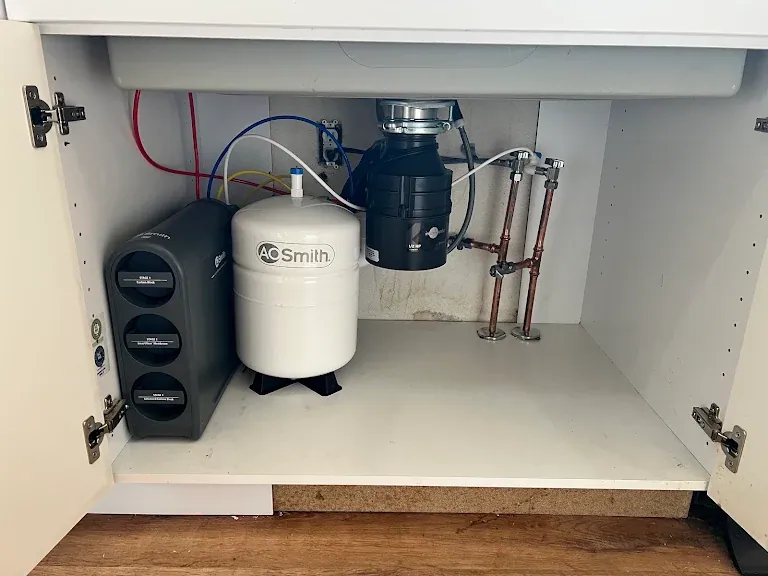
The disposal is the other trouble spot. Potato peels turn into a starchy paste that grips the pipe wall. Celery, onion skins and corn husks wrap around the impellers. Bones, fruit pits and shells do not grind. Coffee grounds sink and pack into the trap. Rice and pasta swell. If you feed a disposal a full sink of prep scraps, you will be calling someone on Friday.
Run cold water before, during and for twenty or thirty seconds after using the disposal, so the pipe carries the ground material all the way to the main drain rather than letting it settle in the trap arm. And if the disposal stops and hums, turn it off, do not reach in, and use the wrench slot on the bottom to free it after unplugging the unit.
- Pour fat and grease into a container and throw it away cooled
- Scrape plates into the trash before rinsing
- Keep peels, husks, bones, pits, grounds, rice and pasta out of the disposal
- Run cold water during and after grinding
- Run the dishwasher in off-peak moments, not while the sink is full and draining
Guest bathrooms and the things that end up in toilets
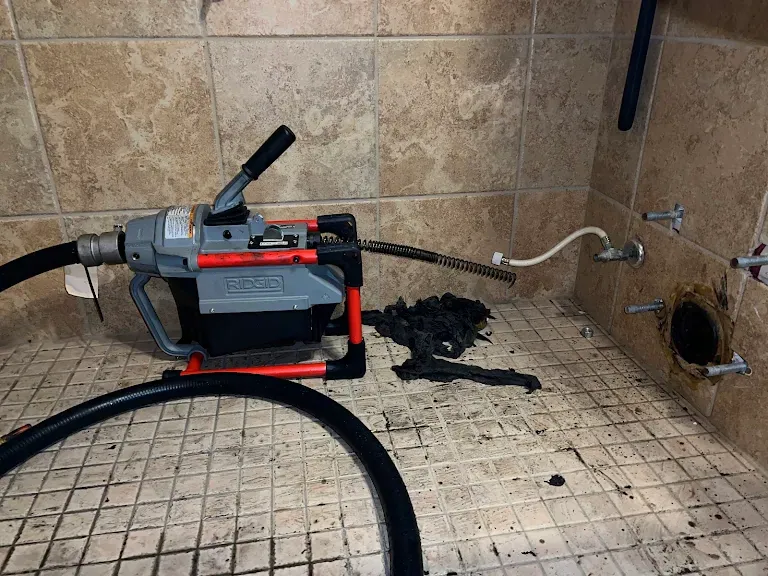
Guests do not know your plumbing. They do not know that the hall bathroom toilet has a weak flush or that the house is on septic. They will flush wipes labeled flushable, cotton rounds, floss and paper towels because that is what the trash can should be for and there is no trash can. The fix is a wastebasket beside every toilet with a liner in it, and a plunger within reach so a small clog does not become an embarrassing one.
If you are on septic, say so. A simple note in the bathroom asking that nothing but toilet paper be flushed is normal in Mason County and South Kitsap and nobody minds it. Septic systems also suffer from the sheer volume of holiday water, so spread laundry out and avoid long back-to-back showers.
A toilet that runs between flushes wastes water all year, but during a holiday it is also the toilet that overflows, because the tank never fills completely and the flush is weak. Replace the flapper or fill valve the week before. It is an inexpensive part and a half-hour job, and it is the single most common holiday-week repair we are asked to make.
Hot water for a house full of people
A fifty-gallon tank heater delivers roughly two average showers back to back before the water starts cooling, and then needs twenty to forty minutes to recover depending on whether it is gas or electric. With eight people wanting showers before dinner, that is a math problem. The easy answer is scheduling: stagger showers through the morning and early afternoon, run the dishwasher and laundry at night, and ask the teenagers to take the short ones.
If the heater has a thermostatic mixing valve on the outlet, the tank can be turned up for the week to store more usable hot water without raising the temperature at the tap. Without a mixing valve, raising the temperature creates a scald risk, especially for older guests and small children, and we do not recommend it.
Tankless heaters do not run out, but they do have a flow limit. Two showers and the dishwasher at once can exceed what a single unit can heat in cold December water, and everyone gets lukewarm. One shower at a time keeps a tankless unit happy. If the unit is on well water and has not been descaled in a year or more, do it before the holidays, because scale reduces its output exactly when you need all of it.
The week before: a short inspection that prevents the call
Walk the house a week or so before guests arrive and look for the warning signs. Fill each sink and tub and watch it drain. Flush each toilet and make sure it refills and stops. Run the disposal and listen for grinding or humming. Look under every sink for dampness. Run the water heater through a normal evening and see whether it keeps up with just your household.
A slow drain in that test will not survive the holiday. A toilet that needs two flushes or a sink that gurgles when the dishwasher drains is a problem that will get worse under load. Those are the things to have cleared or repaired in the first half of December, when the schedule is open and the price is a routine service call rather than a holiday-evening emergency.
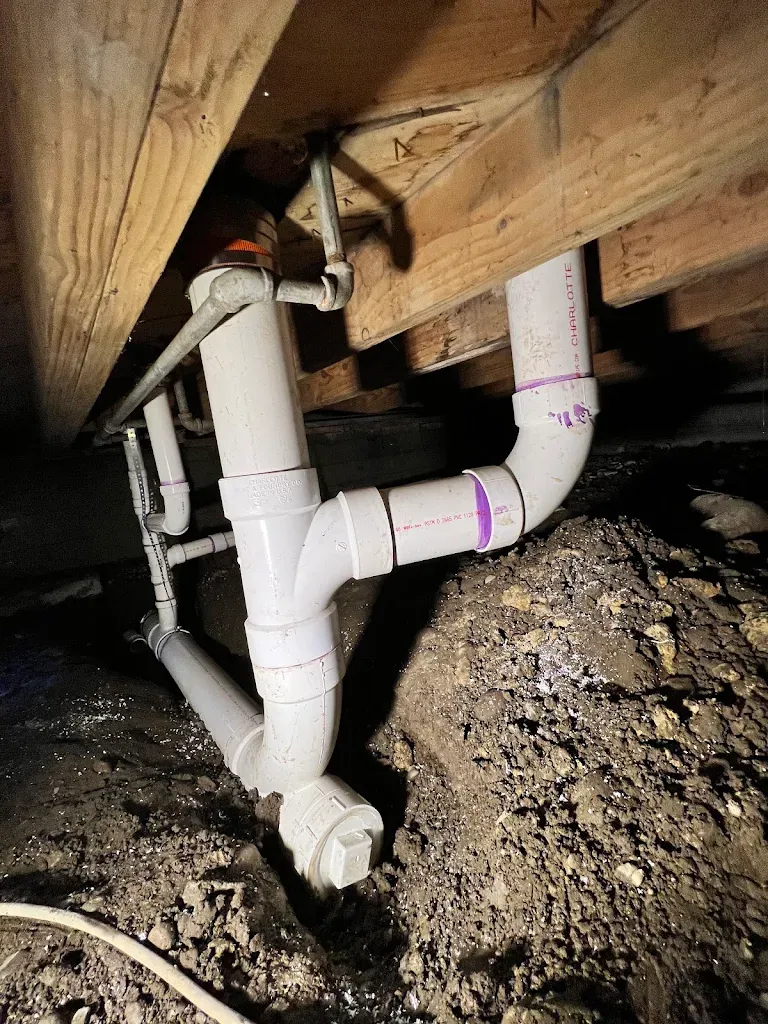
Finally, find the main water shutoff and the sewer cleanout and show one other adult in the house where they are. If a pipe lets go during dinner or the main line backs up with a house full of people, the person who can close the valve in sixty seconds is the one who saves the floor.
If it goes wrong on the holiday
First, stop adding water. If a drain is backing up, no more flushing, no dishwasher, no laundry. If water is coming from a pipe or fixture, close the shutoff under it or the main. Then call. We answer after-hours and holiday calls, and reviews from customers in Port Orchard, Gig Harbor and Belfair describe jobs done on Thanksgiving, Christmas Eve and New Year's Day. We cannot promise an arrival time on a holiday, but we can give you a realistic one when you call.
A main line backup is the one holiday problem that cannot wait. When the lowest drain in the house, a tub or a floor drain or a shower, starts filling with water from somewhere else, the sewer or septic line is blocked and every flush upstairs is coming back into that fixture. Stop using water, and if you have an outside cleanout, opening the cap will often let the line drain into the yard rather than onto the bathroom floor while you wait.
Everything else, a running toilet, a jammed disposal, a slow sink, can usually be managed until the next business day with a plunger, a wastebasket and some patience. Nobody needs to pay an emergency rate to have a disposal unjammed on Christmas afternoon.
After the guests leave
Run hot water down the kitchen sink for a couple of minutes to move any grease that set up over the week. Check that the disposal spins freely. Look under the sinks again. If the drains were marginal before the holiday, they are worse now, and January is a reasonable time to have a kitchen line jetted or a main line cleared before the next cold snap finds it half full.
And if a holiday emergency revealed something structural, a sewer line with roots, a water heater at the end of its life, a shutoff that would not close, write it down and deal with it in the new year rather than letting it wait for the next gathering.
Frequently asked
What is the most common holiday plumbing emergency?
A kitchen sink that will not drain, usually the day after a big meal, from grease and disposal overload. Second is a toilet clog in a guest bathroom from things that should have gone in a wastebasket.
Can I put turkey bones or a carcass in the disposal?
No. Bones jam or break the impellers, and small bone fragments get past the grinder and lodge in the trap. Bag the carcass and put it in the trash or compost.
How can I get more hot water for guests without buying a new heater?
Stagger showers, move laundry and dishes to the evening, and if the heater has a thermostatic mixing valve, raise the tank temperature for the week. Adding a mixing valve to an existing heater is a modest job and makes this possible safely.
Do you really work on Thanksgiving and Christmas?
After-hours and holiday calls are answered and we have run jobs on both. We will give you a realistic arrival window on the phone. For a jammed disposal or a running toilet, waiting until the next business day usually makes more sense, and we will tell you that too.
Our house is on septic. What should guests know?
Only toilet paper gets flushed, showers are kept reasonable, and laundry is spread across the week. A full house for four days puts more into a septic tank than a month of normal use, and a saturated December drainfield has the least capacity to absorb it.
About the author. Gregory Lowe is the owner and lead plumber at Washington Plumbing & Drain, a veteran-owned company in Port Orchard serving Kitsap, Pierce and Mason counties. The guidance here comes from daily work in local homes, not from a content farm. Call (360) 812-1124 with questions.