
Short answer
Flat-rate plumbing pricing means you are quoted one price for a defined job before any work starts, and that price does not change based on how long the job takes. Hourly billing charges for time plus materials, so the final number is unknown until the plumber is done. We use flat-rate because it puts the risk of a slow job on us instead of you, lets you approve the price on your phone before we pick up a tool, and makes it possible to compare quotes between companies on the same terms.
In this guide
Key takeaways
- Flat-rate: one price for the job, quoted and approved before work begins. Hourly: time and materials, total known at the end.
- A flat-rate price includes diagnosis of the problem quoted, labor, standard materials, cleanup and the warranty on that work.
- The price can change only if the scope changes, and a scope change gets its own quote that you approve separately.
- Flat-rate makes slow jobs the plumber's problem, which is why it tends to be fairer on older houses with surprises.
- Estimates are free. If the diagnosis shows nothing is wrong, you are told so.
- When comparing plumbers, ask whether the quote is flat-rate or hourly and what is excluded; a low hourly rate is not a low price.
Two ways to bill the same job
Say a water heater needs replacing in a garage in Gig Harbor. Under hourly billing, the plumber charges a service fee to arrive, an hourly labor rate for the time on site, and the cost of the heater, fittings, venting and whatever else comes off the truck, usually with a markup. If the old heater's shutoff is seized and takes an hour to deal with, that hour is yours. The total appears on the invoice when the plumber is finished.
Under flat-rate billing, the plumber looks at the job, considers what it involves, and gives one price for the whole thing. The seized shutoff is included because the plumber should have seen it coming. If the job takes three hours or five, the price is the same. You know the number before anything happens, and you approve it or you do not.
Both models can be fair and both can be abused. The difference is where the uncertainty sits. Hourly puts it on the customer. Flat-rate puts it on the plumber, which is why flat-rate companies get good at diagnosing before quoting.
How our flat-rate process actually runs
A call comes in to Corinne. She asks enough questions to send the right plumber with the right equipment and gives you a four-hour arrival window. The plumber texts when en route. On site, the first job is diagnosis: find the problem and figure out what it will take to fix it properly. That part is the free estimate.
Then you get a written quote on a tablet or sent to your phone. It describes the work, the price, and anything that is excluded or that might come up. You approve it electronically. Only then does the work start. If, partway in, something changes the scope, say a cast iron drain that was supposed to get a section replaced turns out to be cracked for ten more feet, the plumber stops, explains, and sends a second quote for the additional work. You can say yes, say no, or take time to think.
When the work is done, the invoice matches the approved quote. There is no line for extra hours, no fuel surcharge that appeared on the way, no unexpected part. If you were quoted for a job and we found during diagnosis that the problem was simpler, we tell you and re-quote lower, and we have told people more than once that their system was fine and another company's recommendation was a sales pitch.
What is inside a flat-rate price
A flat-rate quote for a defined repair includes the labor to do it, the standard materials and parts that job needs, the plumber's travel and tools, permit fees where a permit applies, cleanup and haul-away of the old parts, and the warranty on the work. For a water heater installation that means the heater, the new flex connectors and shutoff, the expansion tank if the system needs one, seismic strapping, the pan, the venting or wiring adaptations, the permit and the disposal of the old tank.
It also includes the things that make a job go slow: a rusted union, a valve that will not close, a crawlspace that is tight. Those are the plumber's problem. What it does not include is a different job. If the water heater job reveals that the main shutoff for the house is also failed, that is a separate repair with its own quote, because it is work you did not ask for and might want to do later or not at all.
The honest limitation of flat-rate is that the price for a specific task is built to cover the average version of that task plus the bad versions. On a very easy job, you may pay a little more than an hourly bill would have been. On a hard job, you pay less. Over a house's life, and especially in older Kitsap housing where every job has a surprise, it comes out in the homeowner's favor more often than not.
Why older Puget Sound homes make the case for flat-rate
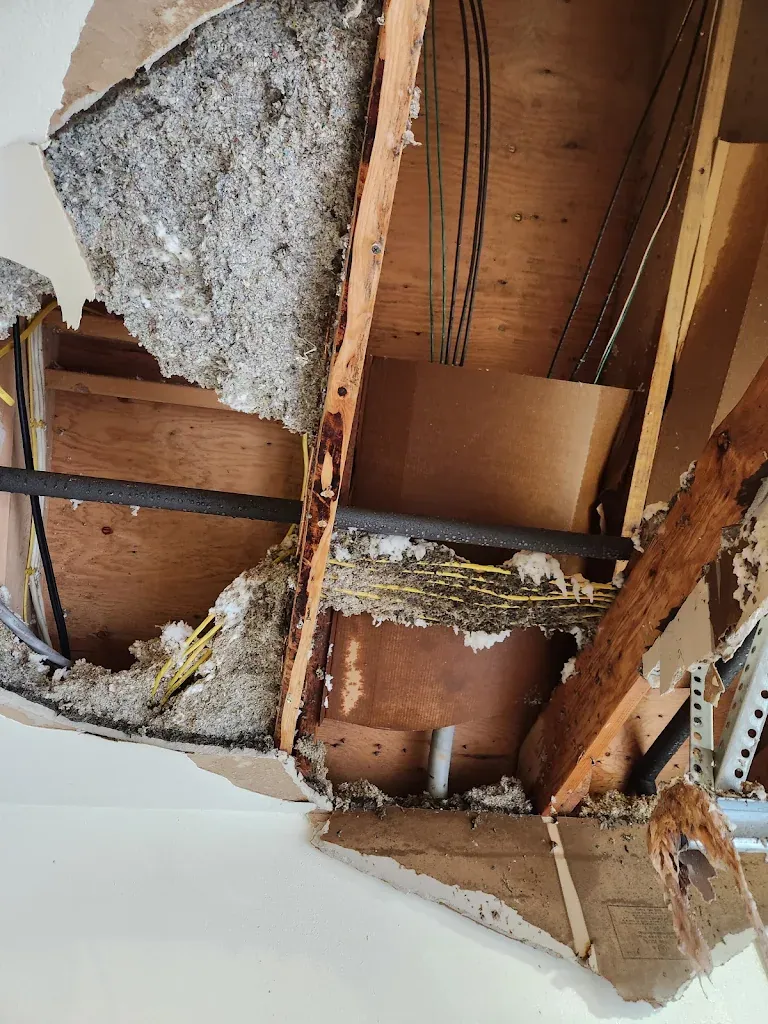
A 1958 house in East Bremerton is a collection of unknowns. The galvanized pipe may crumble when it is cut. The drain under the kitchen may be cast iron that was patched with a rubber coupling thirty years ago. The crawlspace may be twelve inches of clearance and a foot of water in February. An hourly plumber working through that is billing every minute of discovery, and the homeowner is standing in the kitchen watching the meter run.
A flat-rate plumber has to think about all of that before quoting, which means diagnosing more carefully and asking better questions. It also means that when something is worse than expected inside the wall, the conversation is "here is what we found, here is what fixing it would cost, your call," rather than a larger bill at the end of the day. The customer stays in control of the decision.
It also changes what a plumber is motivated to do. Under hourly billing, the slow way of doing a job pays more. Under flat-rate, the right way and the fast way are usually the same thing, and doing it right the first time is what protects the warranty.
What can change a flat-rate price
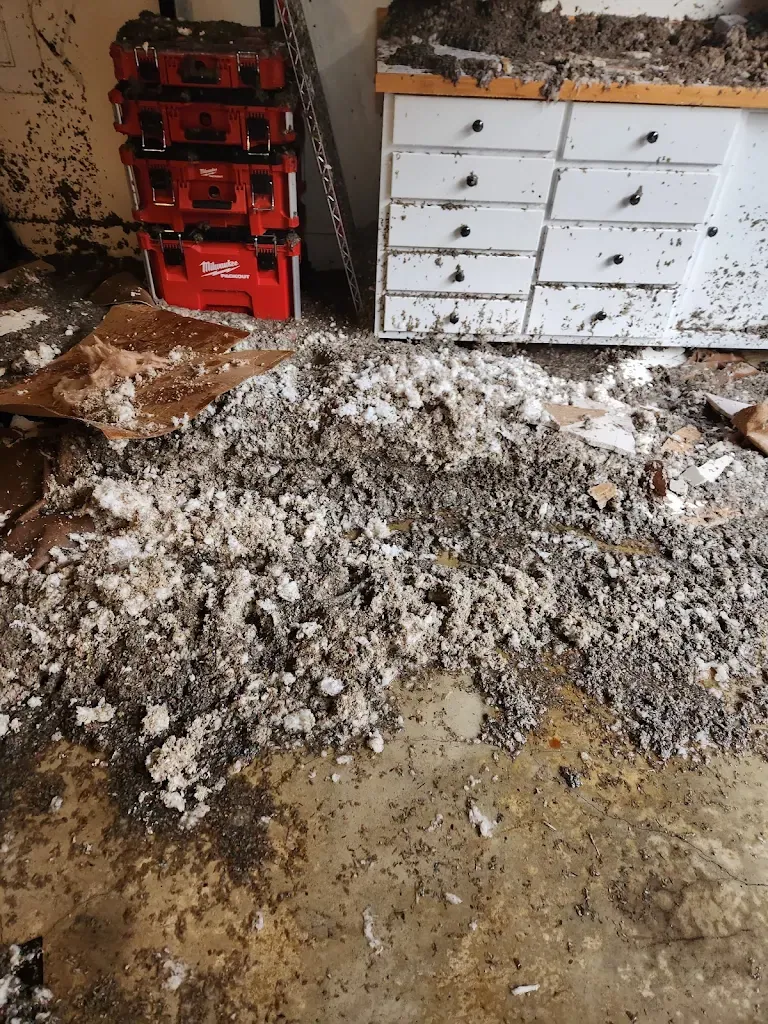
Three things, and each one is visible to you before it costs anything. First, a change of scope: the job you approved turns out to be connected to a second problem, and fixing the second problem is a separate quote. Second, a change in what you want: you decide during the job to upgrade to a tankless heater or add a second cleanout, and that is re-quoted. Third, access that was not disclosed and could not be seen: a crawlspace that has been sealed off, a water heater behind a built-in cabinet. These are rare, and the plumber explains them before continuing.
What cannot change the price: the job taking longer than expected, a part being harder to remove, the plumber needing to make a trip to the supply house for a fitting, or the weather. Those are ours.
- Can change the price: a separate problem found during the work, quoted separately
- Can change the price: an upgrade or addition you ask for
- Can change the price: hidden access problems, explained before proceeding
- Cannot change the price: the job running long
- Cannot change the price: stubborn parts, supply runs, weather or traffic on Highway 16
Comparing quotes from different plumbers
If you are getting more than one quote, make sure you are comparing the same thing. Ask each company whether the number is flat-rate or an hourly estimate. An hourly estimate is a guess, and the final bill is often higher. Ask what is included: permit, haul-away, expansion tank, new shutoff, warranty length. A water heater quote that is noticeably lower than another may be leaving out the permit and the expansion tank, both of which are required in Washington on most installations.
Ask what brand and model is being installed, because a quote for a builder-grade heater and a quote for a Bradford White with a longer warranty are not the same quote. Ask whether the company is a licensed plumbing contractor, which you can verify on the Labor & Industries website using the license number, and whether the person doing the work holds a Washington plumber certificate.
And ask what happens if something goes wrong. A flat-rate price with a satisfaction guarantee and a written warranty is a promise about the result. An hourly rate is a promise about the rate.
Free estimates, diagnosis and the no-charge visit
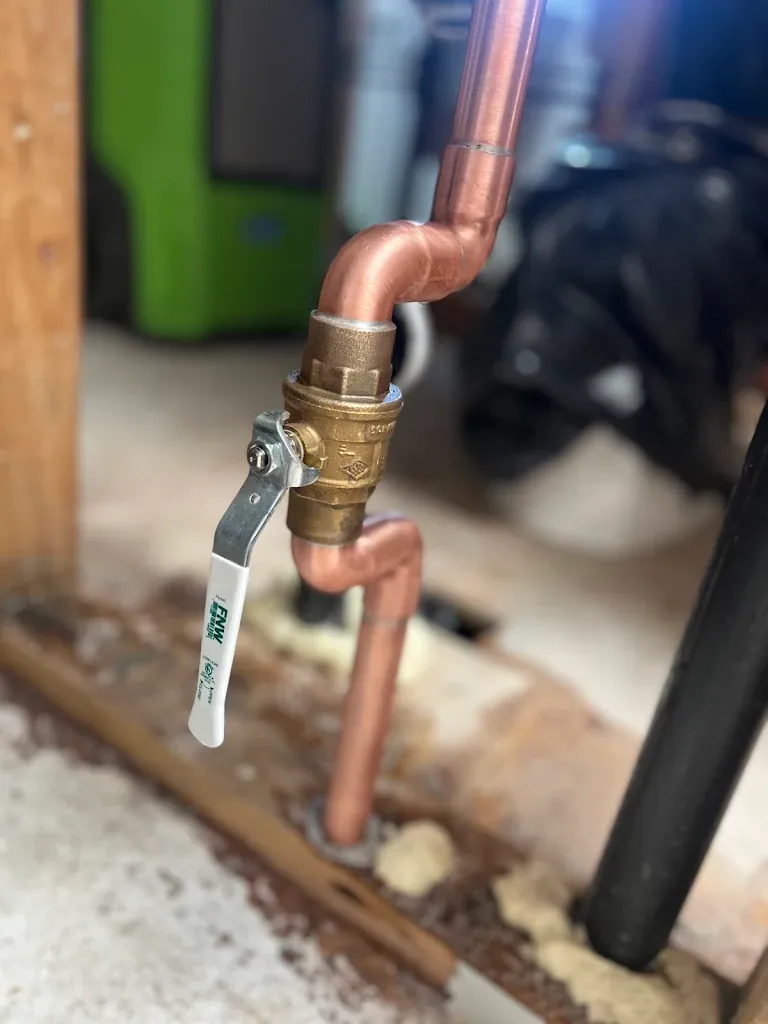
Our estimates are free. That means the plumber comes out, looks at the problem, and gives you a price with no obligation. For a routine repair the estimate is the quote. For a bigger project like a repipe or a sewer replacement, it may take a camera inspection or some measuring, and the estimate comes in writing afterward.
There are times when the diagnosis is the whole job. A noise that turns out to be a loose strap, a toilet that just needed its water supply opened, a pressure complaint that was a partly closed main valve. Customers have written about not being charged for simple things like that. We would rather earn the next call than invoice for five minutes of tightening a screw.
What flat-rate does not mean is that every job costs the same, or that the price on the website is the price on your invoice. Every quote is for your house and your problem. It means that once you have the number, it is the number.
Frequently asked
Is flat-rate more expensive than hourly?
On the easiest version of a job, sometimes slightly. On a typical job, about the same. On a job with surprises, which describes most older homes around here, flat-rate is usually less because the overruns are ours. The bigger difference is that you know the price in advance.
Do you charge a trip fee or a diagnostic fee?
Estimates are free. If you approve the work, the price you approved is what you pay. If the problem turns out to be trivial, we have often not charged at all.
What if the job turns out to be bigger than quoted?
If it is the same job taking longer, the price does not move. If it is a different or additional problem, the plumber stops, shows you, and quotes the extra work separately for your approval. You are never billed for work you did not approve.
How do I approve the quote?
Electronically, on the plumber's tablet or from a link sent to your phone. The approved quote and the invoice are both emailed to you, which is useful for insurance claims and for landlords who are not on site.
Can I get a price over the phone?
For some common jobs, like a standard water heater replacement or a main line clearing from an accessible cleanout, Corinne can give you a close idea. For most repairs the plumber needs to see the problem, because the price depends on what is actually wrong, and we would rather be accurate than fast.
About the author. Gregory Lowe is the owner and lead plumber at Washington Plumbing & Drain, a veteran-owned company in Port Orchard serving Kitsap, Pierce and Mason counties. The guidance here comes from daily work in local homes, not from a content farm. Call (360) 812-1124 with questions.