Short answer
In Washington, a plumbing permit is required for installing, replacing or rearranging pipes, fixtures and water heaters, and for installing or relocating gas piping. Stopping a leak, clearing a clog, and repairing a fixture without replacing or moving piping are exempt under the Uniform Plumbing Code that the state adopts. Permits are issued and inspected by the city or county building department, not the state; Kitsap County's Department of Community Development handles unincorporated Kitsap, and Bremerton, Port Orchard, Poulsbo, Gig Harbor, Tacoma and the other cities each run their own. Labor & Industries certifies plumbers and registers contractors but does not issue local plumbing permits.
In this guide
- How plumbing codes and permits work in Washington
- Work that needs a permit
- Work that is exempt
- Why water heaters are the most-inspected plumbing job
- Doing your own plumbing as a homeowner
- Septic, wells and the health district
- What the permit process looks like on a typical job
- How to check a plumber's license and permit history
Key takeaways
- Washington adopts the Uniform Plumbing Code with state amendments; the current edition is based on the 2021 UPC and took effect March 15, 2024.
- Permit required: water heater replacement, repiping, new fixtures where none existed, moving drains or supply lines, sewer line repair, gas piping, and backflow assemblies.
- Exempt: stopping leaks, clearing stoppages including pulling and resetting a toilet, and repairing a fixture or valve without replacing or rearranging pipe.
- The city or county issues plumbing permits. L&I handles plumber certification, contractor registration and electrical permits.
- Homeowners may do plumbing on their own residence without a plumber's certificate, but the permit and inspection rules still apply.
- A permitted job gets a second set of eyes and a record that follows the house. We pull the permit on work that needs one and tell you when it does not.
How plumbing codes and permits work in Washington
Washington does not write its own plumbing code from scratch. The State Building Code Council adopts the Uniform Plumbing Code with state amendments, and the edition in force today is based on the 2021 UPC, which took effect statewide on March 15, 2024 after the Council delayed it from the original 2023 date. Every city and county enforces that same code, so the rules on what needs a permit are consistent from Shelton to Tacoma.
What varies is who you deal with. Permits are issued and inspections are performed by the local jurisdiction, meaning the building department of the city you live in or, for unincorporated areas, the county. In our service area that means Kitsap County's Department of Community Development for places like Olalla, Manchester, Seabeck, Kingston and most of the Port Orchard area outside city limits; the cities of Port Orchard, Bremerton, Poulsbo and Bainbridge Island for addresses inside their lines; Pierce County, Gig Harbor, Tacoma, University Place and the other Pierce cities on their side; and Mason County or the City of Shelton on the Hood Canal side.
The state's Department of Labor & Industries sits above all of that but in a different role. L&I certifies plumbers, registers plumbing contractors, and issues electrical permits. It does not issue the plumbing permit for your water heater; your county or city does.
Work that needs a permit
The code's basic rule is that installing, altering, repairing, replacing or remodeling a plumbing system requires a permit, and then it carves out a short list of exemptions. In practice, these are the jobs we pull permits for every week. Replacing a water heater, tank or tankless, gas or electric. Repiping a house or a section of it. Adding a bathroom, a laundry, a kitchen sink where there was none, or a hose bib on a new line. Moving a drain or a supply line during a remodel. Replacing a sewer line or a water service line. Installing a backflow preventer.
Gas piping is its own category and the one people most often overlook. Installing or relocating a gas line, whether natural gas from Cascade Natural Gas or Puget Sound Energy or propane from a tank in a Mason County yard, is permitted work. Running a line to a new range, converting an electric water heater to a gas one, or adding a gas line for a barbecue or a shop heater all get a permit and an inspection. The inspector checks the pressure test, and that test is the thing that keeps gas out of your crawlspace.
Kitsap County's own permit guide puts it plainly: plumbing work requires a permit except for stoppage of leaks, and installing or relocating gas lines requires one. The cities read the code the same way.
- Water heater replacement or new installation, including tankless and heat pump units
- Whole-house or partial repiping, water or drain
- New fixtures or fixtures moved to a new location
- Sewer line and water service line replacement
- Gas piping installation, extension or relocation
- Backflow prevention assemblies
- Rough-in for additions, ADUs, shops and new homes
Work that is exempt
The Uniform Plumbing Code exempts two kinds of work from permits. The first is stopping leaks in drain, waste, soil or vent pipe, with a catch: if the leaking pipe or trap has to be replaced with new material rather than patched, that counts as new work and a permit is needed. The second is clearing stoppages and making repairs, including pulling and resetting a toilet to clear a clog, and repairing leaks in pipes, valves and fixtures, as long as the repair does not involve replacing or rearranging valves, pipes or fixtures.
So a drain cleaning visit, a sewer camera inspection, a faucet cartridge, a toilet flapper and fill valve, a new wax ring, a repaired shower valve, a tightened fitting, or a hose bib washer need no permit. Swapping a failed angle stop or a dripping hose bib for a new one is a gray area that most local inspectors treat as like-for-like repair; replacing an entire run of pipe is not.
A reasonable rule of thumb: if we are fixing what is there, no permit. If we are installing something, moving something, or replacing pipe or an appliance, there is a permit. When you get our flat-rate quote, it says which.
Why water heaters are the most-inspected plumbing job
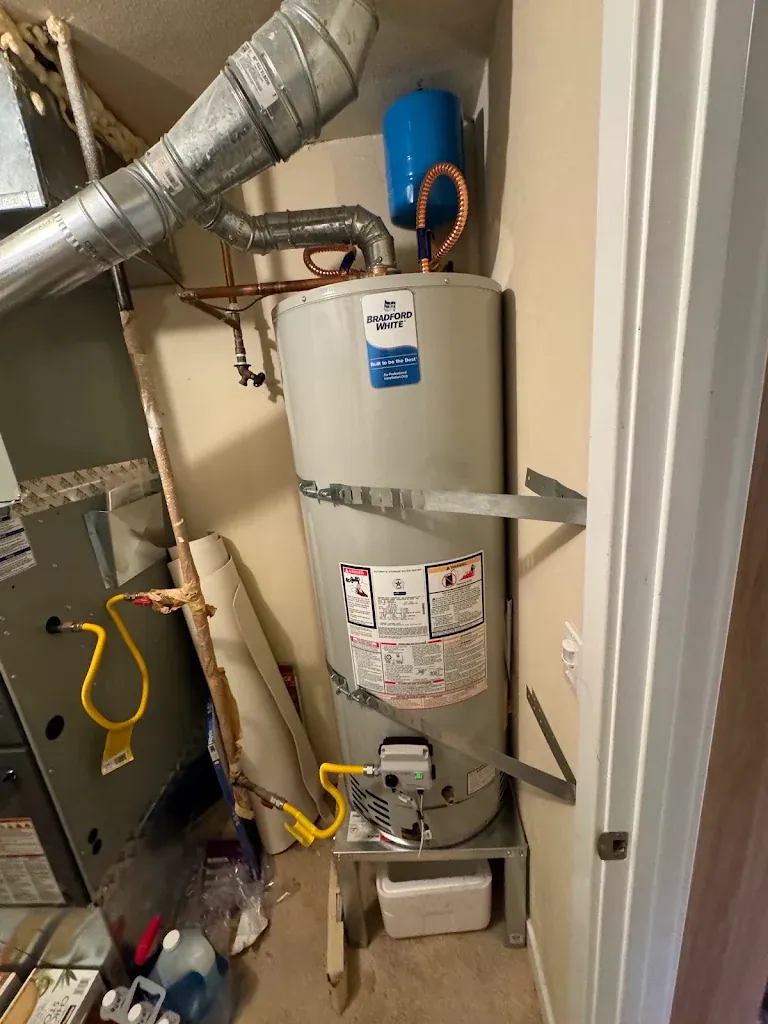
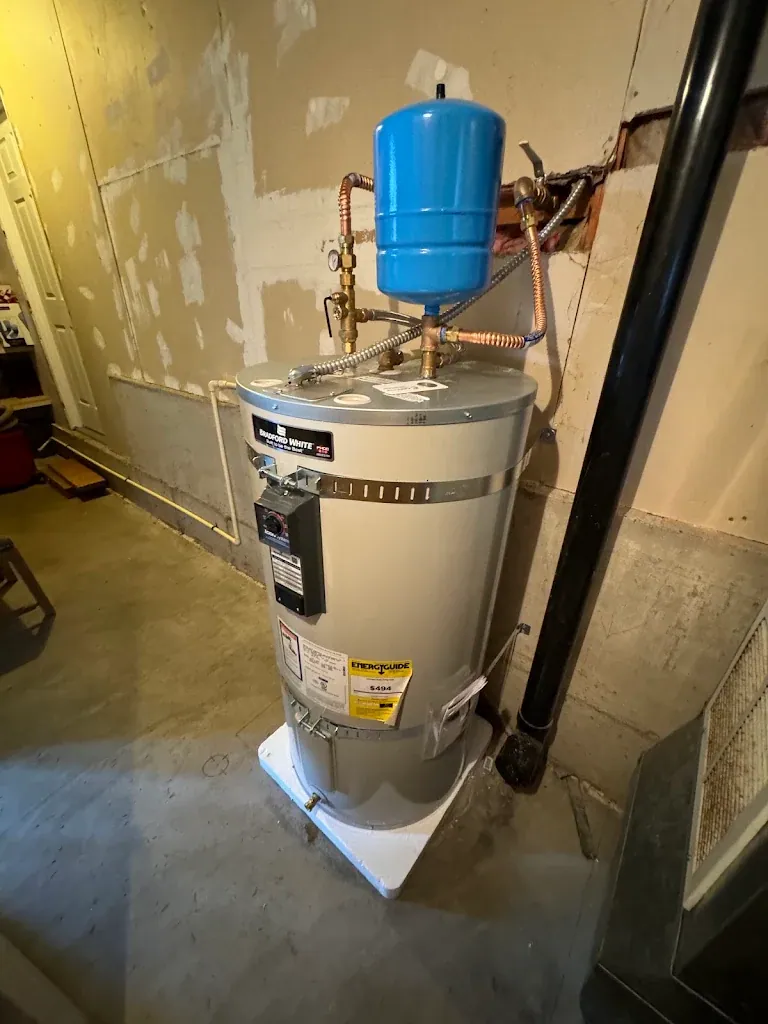
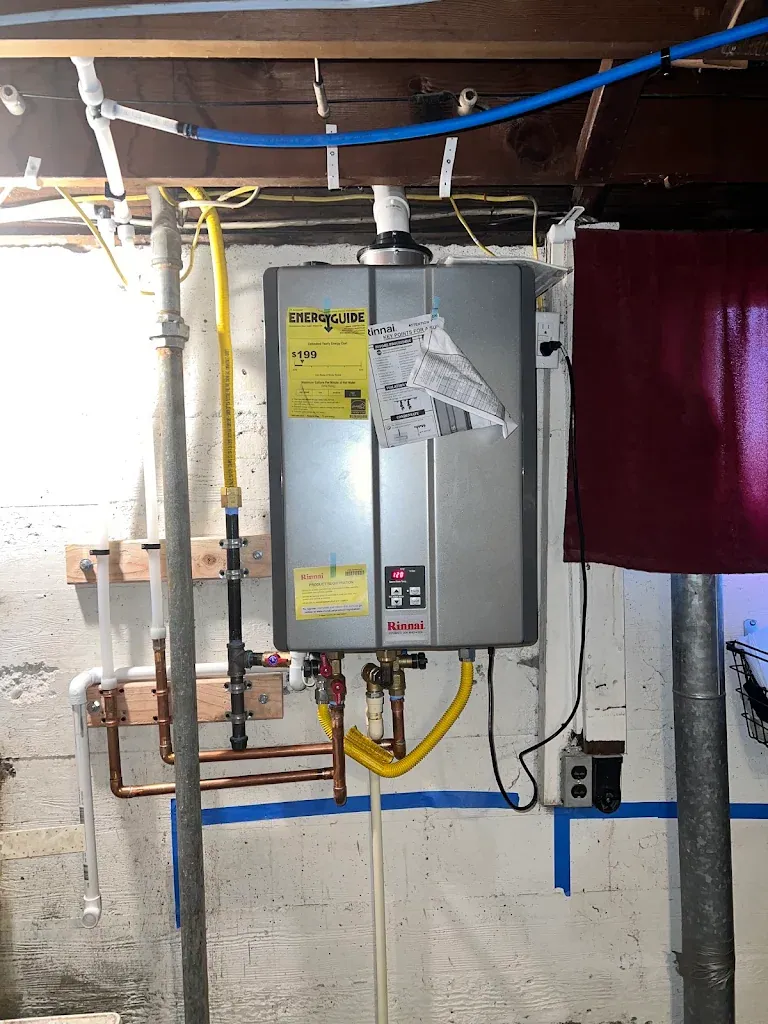
People are surprised that a like-for-like water heater swap is permitted work. It is, in every jurisdiction we work in, and for good reason. A water heater is a pressure vessel holding scalding water, and in gas models it is a combustion appliance with a flue. The inspection checks the temperature and pressure relief valve and its discharge line, the seismic strapping that Washington requires, the venting on a gas unit, the gas connector and shutoff, the thermal expansion tank where the water system is closed, and, on electric units, that the circuit matches the heater.
Those are exactly the things that go wrong on unpermitted installs. We get called to look at heaters other companies or handymen put in with no strapping, a relief valve piped uphill, a flue that does not draft, or no expansion tank on a house with a pressure reducing valve. Some of those are dangerous; all of them are the homeowner's problem when the house is sold and the inspector asks for the permit record.
Heat pump water heaters add condensate drains and clearance requirements. The Washington State Energy Code steers new construction toward them through an energy credit system, after the Building Code Council in January 2024 withdrew an earlier version that would have effectively required them in all new homes. For an existing home, the energy code does not force the choice; the plumbing permit just makes sure whatever you pick is installed right.
Doing your own plumbing as a homeowner
Washington law, in RCW 18.106, requires anyone working in the plumbing trade to hold a plumber certificate from L&I, with exemptions. The one that matters here is for a person doing plumbing work at their own residence or on property they own. You do not need a plumber's certificate to replace your own water heater or repipe your own crawlspace. You do still need the permit and the inspection if the work is permitted work, and the inspector will hold your work to the same code a licensed plumber's is held to.
A few cautions from experience. The homeowner exemption covers you working on your own house; it does not let an unlicensed friend who does plumbing for money work on it. Gas work done wrong can hurt people, and some jurisdictions and most insurers take a hard line on it. And a water heater or repipe done without a permit tends to surface during a sale, when the buyer's inspector asks for records and finds none.
If you are a landlord, the exemption is narrower in practice. Work on a rental you own is still your property, but tenants, insurers and the county all tend to expect licensed, permitted work, and a bad install in a rental has a way of turning into a liability question.
Septic, wells and the health district
Permits on the drain side change once the line leaves the house on a septic property. The building department permits the plumbing inside and the pipe to the tank. Kitsap Public Health District, Tacoma-Pierce County Health Department and Mason County Public Health permit and inspect the septic system itself, including the tank, the pump chamber, the drainfield and any repairs to them. Adding a bedroom or a bathroom on a septic property often triggers a health district review of whether the system is sized for it.
Wells are similar. The pump, pressure tank and piping to the house are plumbing. The well itself, its construction and its water quality are handled by the Department of Ecology and the health district. We do the plumbing side of both, and we will tell you when a project is going to need the health district's signature before the building department will issue anything.
What the permit process looks like on a typical job
For most of our work, you never see the permit office. We pull the permit under our contractor registration, often online through the county's or city's portal, before the work starts, and we schedule the inspection when the job is at the stage the inspector needs to see. On a water heater that is a final inspection after install. On a repipe or a remodel, there is a rough-in inspection with the pipes exposed and pressure tested, and a final after the walls are closed and the fixtures are set. On a sewer replacement, the inspector looks at the pipe in the trench before we backfill.
The permit fee is part of our flat-rate quote so there is no surprise line on the invoice. Inspection scheduling depends on the jurisdiction; Kitsap County and the cities each have their own lead times, and in busy seasons that can add a day or two to a project. We plan for it.
When the inspection is done, the record stays with the county or city. Future buyers, insurers and inspectors can look it up. That record is a big part of what you are buying when you hire a licensed, registered contractor instead of the cheapest person with a truck.
How to check a plumber's license and permit history
Any plumbing contractor working in Washington should be able to give you two things: an L&I contractor registration number and the certificate numbers of the plumbers on the job. Ours is WASHIPD777JL. You can verify a contractor on L&I's website in about a minute, and the lookup shows whether the registration, bond and insurance are active and whether there are unresolved complaints. A company that cannot give you a number, or whose number comes back inactive, is not the company for permitted work.
You can also look up permit history on a property through the county's or city's permit portal, which is worth doing before you buy a house. A 2015 water heater with no permit, a finished basement bathroom with no plumbing permit, or a sewer repair nobody recorded are all things a buyer should know about. Our whole-home plumbing inspection includes checking what we find against what was permitted.
Frequently asked
Do I need a permit to replace a water heater in Kitsap County?
Yes. Water heater replacement is permitted work under the plumbing code Washington adopts, and Kitsap County, Port Orchard, Bremerton, Poulsbo and the Pierce and Mason jurisdictions all require it. The inspection covers the relief valve, strapping, venting, gas connection and expansion tank. We pull it as part of the job.
Does drain cleaning or a sewer camera inspection need a permit?
No. Clearing stoppages, including pulling and resetting a toilet to do it, is specifically exempt. Repairing or replacing the sewer line afterward is not exempt.
Who issues plumbing permits in Washington, the state or the county?
The city or county building department where the property sits. L&I certifies plumbers and registers contractors but does not issue local plumbing permits. In unincorporated Kitsap it is the Department of Community Development; inside city limits it is that city.
Can I do my own plumbing in Washington without a license?
On your own residence, yes; RCW 18.106 exempts a person doing plumbing work at their own home from the plumber certification requirement. You still need a permit and inspection for permitted work, and the work has to meet code.
Is a gas line for a stove or barbecue permitted work?
Yes. Installing, extending or relocating gas piping requires a permit and a pressure test witnessed by the inspector, whether it is natural gas or propane. This is one of the jobs where we would never skip it.
What happens if I find out previous work on my house was not permitted?
Nothing automatic. But unpermitted water heaters, gas lines and remodel plumbing often come up at sale or during an insurance claim. We can inspect the work, tell you whether it meets code, and in many cases help you bring it up to standard so it can be permitted after the fact where the jurisdiction allows it.
Does a permit slow the job down?
Rarely by much. Most of our permits are pulled online before the truck leaves, and water heater finals are scheduled around your availability. A repipe or remodel adds a rough-in inspection, which we build into the schedule.
About the author. Gregory Lowe is the owner and lead plumber at Washington Plumbing & Drain, a veteran-owned company in Port Orchard serving Kitsap, Pierce and Mason counties. The guidance here comes from daily work in local homes, not from a content farm. Call (360) 812-1124 with questions.