
Short answer
In Western Washington, copper supply lines last fifty years or more, PEX is expected to go forty-plus, and galvanized steel is usually done by forty to fifty and often sooner. Cast iron drains run fifty to eighty years before scale and rust take them; ABS and PVC drains should outlast the house. Tank water heaters average eight to twelve years here, tankless units twenty with maintenance, well pumps ten to fifteen, sump and effluent pumps seven to ten, and the small valves under sinks and behind toilets are often the first things to fail in a house that is thirty years old.
In this guide
- What makes lifespans different here
- Supply pipes: copper, PEX, galvanized and polybutylene
- Drain pipes: cast iron, ABS, PVC and the old clay and Orangeburg sewers
- Water heaters, tank and tankless
- Fixtures: toilets, faucets, disposals and shower valves
- Valves, hoses and the small parts that flood houses
- Pumps: wells, sumps, boosters and septic chambers
- Using these numbers without overreacting
Key takeaways
- Most homes near the shipyard built from the 1940s through the 1960s are at or past the end of life for their original galvanized supply and cast iron drains.
- Water quality decides a lot. Soft, slightly acidic Puget Sound water is easy on scale and hard on copper; iron-heavy well water is hard on everything.
- Water heaters here outlast the national average slightly because our water is soft, but an anode rod that has never been checked erases that advantage.
- Rubber and plastic parts fail before metal ones: supply hoses, toilet flappers, fill valves, washing machine hoses, PRV diaphragms.
- Pumps are consumables. Well pumps, sump pumps and septic effluent pumps all have a service life and should be replaced on schedule in homes that cannot afford a surprise. The well pump itself is a well pump company's job; the pressure tank that protects it is ours.
- Age is a reason to inspect, not a reason to panic. A whole-home plumbing inspection tells you what is actually failing versus what is just old.
What makes lifespans different here
Most lifespan charts you find online are national averages, and they lean on conditions we do not have. Hard, mineral-heavy water is the big one. The municipal water around Port Orchard, Bremerton and Gig Harbor comes largely from wells into glacial aquifers and from surface sources, and it is on the soft side. Scale builds slowly. That is good news for water heaters and faucet cartridges. It also means the water is slightly aggressive toward copper, which shows up as pinhole leaks in some homes after forty or fifty years.
Private wells in Mason County, Seabeck, Hansville and the Key Peninsula are a different story. Iron and manganese stain fixtures and clog aerators, and iron bacteria fouls pressure tanks and heater elements. Where that is the case, every number below drops unless there is filtration ahead of the house.
Then there is the weather. Mild winters mean most pipes never freeze, but the December 2022 and January 2024 cold snaps split hose bibs, crawlspace lines and garage water heaters all over the three counties. Long rainy seasons keep crawlspaces damp, which eats the outside of galvanized and cast iron pipe as fast as the water eats the inside.
Supply pipes: copper, PEX, galvanized and polybutylene
Copper, installed from the 1950s onward and still common in good remodels, is the long-distance runner. Type L copper in a dry crawlspace can go sixty years or more. The failures we see are pinholes on long horizontal runs, green crust at joints where flux was never wiped off, and splits where a line froze. Copper in direct contact with wet soil, or with the rebar in a slab, corrodes from the outside and can fail much earlier.
PEX has been in local homes since the late 1990s and is what we use for repipes. Manufacturers rate it for decades, and so far the local failures we see are fittings rather than tubing: early brass crimp fittings that dezincified, or plastic fittings that cracked where the pipe was stressed. Keep it out of sunlight and away from the water heater flue and it should outlast you.
Galvanized steel is the pipe in most pre-1970 homes around here, and it is mostly done. It rusts from the inside, so pressure drops as the bore closes up, and the first sign is often rusty water after a vacation or a shower that goes to a trickle when the washer fills. Forty to fifty years is a generous lifespan; many homes near PSNS are past seventy. Polybutylene, the gray plastic used in some homes built from the late 1970s into the mid 1990s, is a replace-on-sight pipe for us. It becomes brittle and fails at fittings without warning.
Drain pipes: cast iron, ABS, PVC and the old clay and Orangeburg sewers
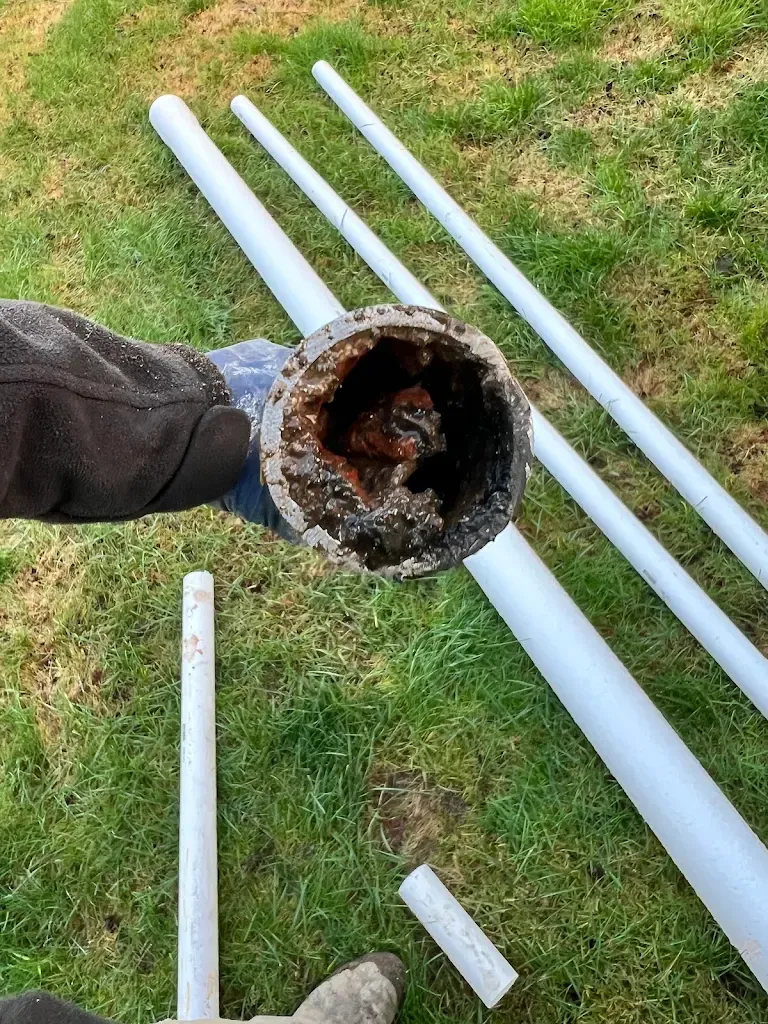
Cast iron drain lines are heavy, quiet and slow to fail, which is why a 1955 house in Manchester can still have a working one. The failure mode is scale building up inside until the pipe is half closed, then rust eating through the bottom of horizontal runs where water sits. Fifty to eighty years is typical, but the bottom of a cast iron line under a slab or in a wet crawlspace can rot through in less. The camera shows us when a line has gone from maintenance to replacement.
ABS, the black plastic drain pipe used in Western Washington since the 1970s, and PVC, the white version more common in Pierce County and newer work, should last as long as the house if they were glued properly and not run through a wall with a nail in them. The weak points are the original glue joints in some early ABS, which can separate, and anywhere a previous owner used a rubber coupling to tie into something it should not have.
Underground, the sewer line from the house to the street or tank tells its own story. Clay tile sewers from the mid-century era leak at every joint and invite roots. Orangeburg, a tar-impregnated fiber pipe used in the 1940s through the 60s, deforms and collapses and is a replacement when found. Our resource on cast iron, galvanized and Orangeburg pipes goes deeper on all three.
Water heaters, tank and tankless
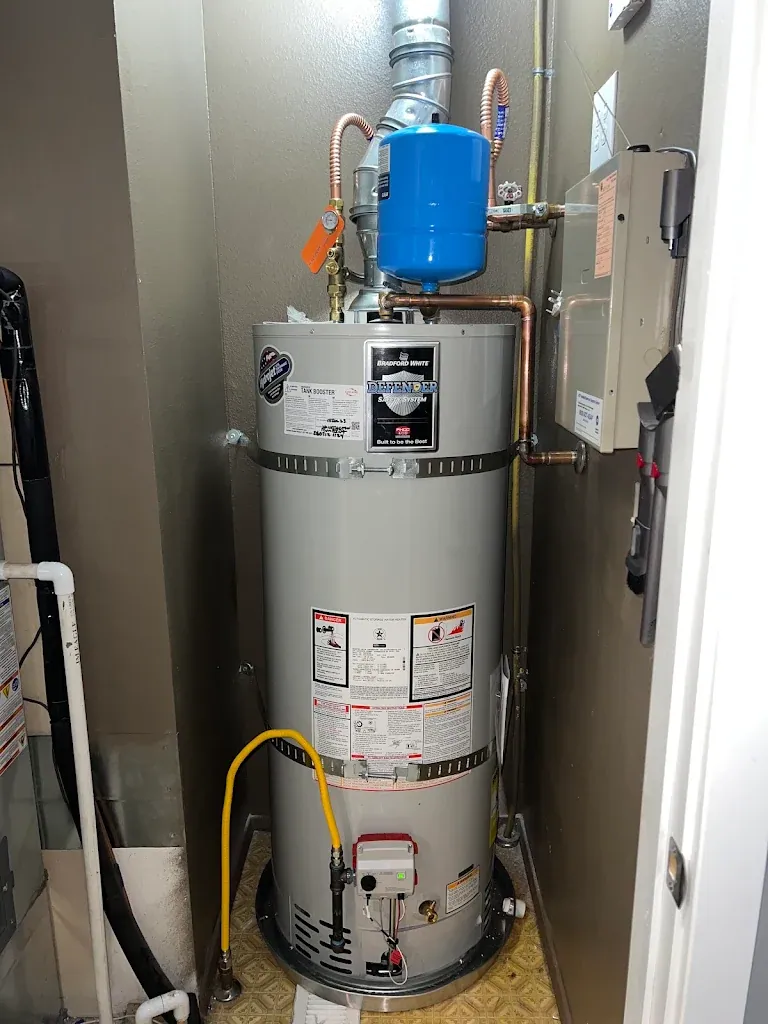
A standard tank water heater in our area lasts eight to twelve years, sometimes fifteen. The tank is steel with a glass lining, and the lining has gaps the moment it leaves the factory. A sacrificial anode rod protects those gaps by corroding instead of the tank. When the anode is gone, usually around year five to seven in soft water, the tank starts going. Replacing the anode once can add years. A tank in a garage that saw the January 2024 freeze, or one on well water with iron, will not get the full run.
Tankless units, which we install mostly from Rinnai, are rated for around twenty years of service. The catch is scale on the heat exchanger. Even our soft water leaves some, and well water leaves more. Annual descaling keeps the exchanger clean and the warranty valid. A tankless that has never been flushed in ten years is often cheaper to replace than to bring back.
Heat pump water heaters are newer in local homes and we do not have twenty years of field data on them. The tank side behaves like any other tank. The compressor side behaves like a refrigerator, and that is the part to watch.
Fixtures: toilets, faucets, disposals and shower valves
A toilet bowl and tank are vitrified china and last indefinitely unless cracked. The parts inside do not. Flappers go in three to five years, fill valves in five to ten, and the wax ring under the toilet can fail any time the toilet rocks. Toilets from before the mid-1990s use far more water per flush than modern ones; the 1.28 and 1.6 gallon designs from good manufacturers flush better than the old 3.5 gallon tanks did, which surprises people who remember the first generation of low-flow toilets.
Faucets from Moen, Delta and Kohler last fifteen to twenty years with a cartridge swap or two along the way. Bargain faucets with plastic bodies last a fraction of that. Garbage disposals go eight to twelve years; a disposal that hums, leaks from the bottom seam, or needs the reset button every week is finished. Shower valves last twenty to thirty years, but their cartridges wear and leak sooner. Older two-handle tub valves from the 1960s and 70s often cannot get parts anymore and are replaced with a single-handle pressure-balanced valve during a remodel.
Valves, hoses and the small parts that flood houses
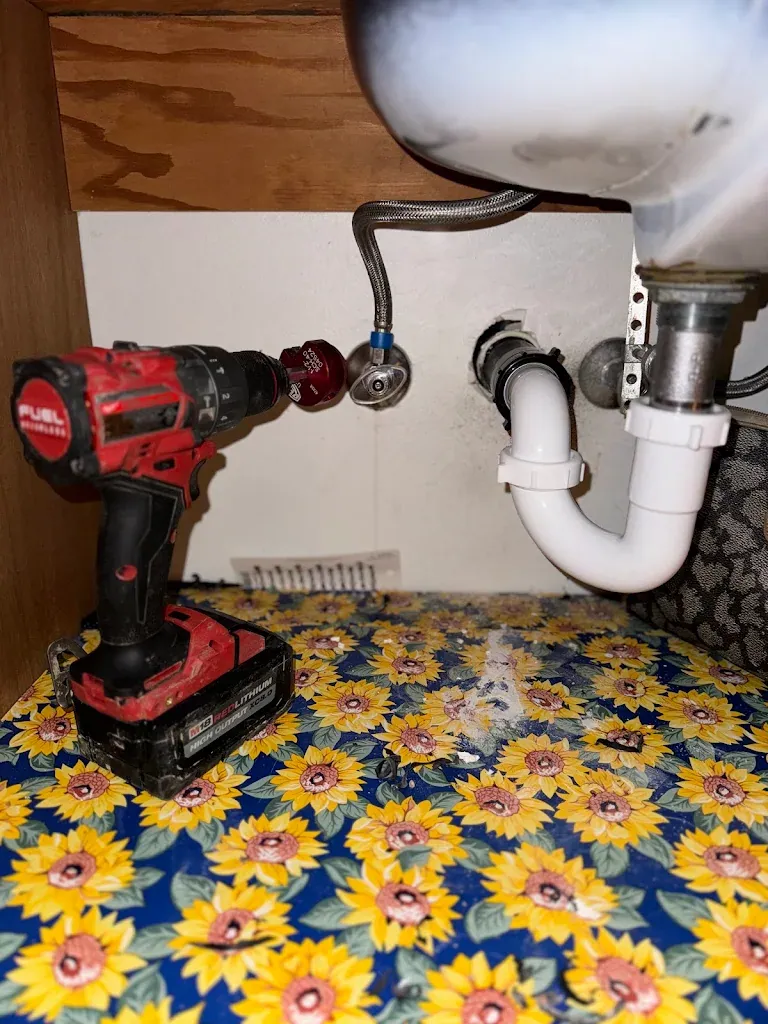
Walk through any thirty-year-old house in Silverdale or University Place and the parts closest to failure are the little ones. Rubber washing machine hoses are good for about five years; the braided stainless ones last longer but still have rubber inside. Flexible supply lines under sinks and toilets are the same. Multi-turn angle stops seize or weep at the stem after decades without being turned. Gate valves on the main line stick open. Pressure reducing valves wear internally after ten to fifteen years and either let pressure creep up or starve the house.
Hose bibs are another one, especially the non-frost-free kind in older homes and any that had a hose left attached through a freeze. A split hose bib that leaks inside the wall when the water comes back on in spring is a common spring call across all three counties.
- Washing machine hoses: replace every five years, or sooner if bulging
- Toilet and faucet supply lines: ten years, or when the fittings show green
- Angle stops under sinks and behind toilets: replace with quarter-turn stops when they seize or drip
- Pressure reducing valve: test pressure yearly; replace when it drifts above 80 psi
- Expansion tank: check the air charge yearly; replace when it is waterlogged
Pumps: wells, sumps, boosters and septic chambers
Pumps have motors, and motors wear. A submersible well pump typically lasts ten to fifteen years, sometimes much longer, and a jet pump on a shallow well a bit less. Replacing either is work for a well pump company, not a plumber. The pressure tank that goes with it, a Well-X-Trol or Amtrol type, lasts five to fifteen years depending on whether the air charge was ever checked; a waterlogged tank makes the pump cycle constantly and shortens its life. Iron bacteria and sand both shorten pump life on local wells.
Sump pumps in crawlspaces run hard during atmospheric river season, when high water tables and clay layers push groundwater up under houses from Olalla to Tracyton. Seven to ten years is typical, less for a pump that runs every few minutes all winter. Effluent pumps in septic pump chambers and sewage ejectors in basement bathrooms are in the same range and fail at the worst possible moment. Booster pumps, like the DAB units we install for low-pressure homes on hills, should see ten years or more with clean water.
Our advice on all pumps is the same: if the pump is near its expected life and a failure would flood a crawlspace, back up sewage or leave a rural house dry, replace it on your schedule rather than its own. For sump, effluent, ejector and booster pumps that is work we do; for the well pump, we will tell you when it is time and point you to a pump company.
Using these numbers without overreacting
An old pipe is not a failed pipe. We walk crawlspaces in Bremerton every week with sixty-year-old copper that is fine and eight-year-old plastic fittings that are not. What age tells you is where to look. If you are buying a home built before 1975, assume the galvanized and cast iron are on borrowed time and get a camera in the sewer. If your water heater is past ten, start planning rather than waiting. If you have never turned the angle stops under your sinks, turn them gently or expect them to drip when a plumber does.
For an older house, a rental, or a place you own from out of state, a whole-home plumbing inspection gives you a written list of what is near the end, what is fine, and what to budget for next. That beats guessing from a chart, including this one.
Frequently asked
How long does copper pipe last in Western Washington?
Fifty to seventy years is common in dry crawlspaces with our soft water. Pinhole leaks on horizontal runs, corrosion where the pipe touches soil or concrete, and freeze splits are the typical failures. Copper that is in good shape at fifty years is usually left alone.
Should I replace galvanized pipes before they leak?
If the house is pre-1970 and still has galvanized supply lines, low pressure and rusty water are already telling you they are closing up. A repipe to PEX is planned work with a tidy schedule; a leak behind a wall is not. We recommend replacing on your terms.
How long does a water heater last here?
Eight to twelve years for a tank, sometimes fifteen with an anode replacement. Around twenty for a tankless that is descaled every year. Garage units that have been through the hard freezes and units on untreated well water tend toward the short end.
Does PEX really last as long as copper?
Manufacturers rate it for decades, and the oldest local installations from the late 1990s are holding up. The failures we see are at fittings, not in the tubing. Keep it out of UV light and away from heat sources and it should be fine for a very long time.
What fails first in a thirty-year-old house?
Rubber and plastic parts: washing machine hoses, supply lines, toilet flappers and fill valves, the PRV, the expansion tank, and seized angle stops. Then the water heater, then the disposal. Pipe failures come later unless the house was built with polybutylene.
How long do well pumps last?
Ten to fifteen years for a submersible, with wide variation. Sand, iron bacteria and a waterlogged pressure tank that makes the pump short-cycle all shorten that. A pump that is cycling constantly is wearing out fast and the tank should be checked, which is the part of the system we service.
About the author. Gregory Lowe is the owner and lead plumber at Washington Plumbing & Drain, a veteran-owned company in Port Orchard serving Kitsap, Pierce and Mason counties. The guidance here comes from daily work in local homes, not from a content farm. Call (360) 812-1124 with questions.