
Short answer
Before buying a home in Kitsap County, find out what the supply and drain pipes are made of, whether the house is on sewer or septic and the condition of whichever it is, where the water comes from and what the well or utility records say, how old the water heater is, and what the crawlspace looks like in the wet season. A general home inspection touches these lightly. A sewer scope and a plumbing-specific inspection answer them, and the answers routinely change the price or the decision.
In this guide
- Why Kitsap housing deserves these questions
- What are the supply pipes made of, and what are the drains made of
- Sewer or septic, and what shape is it in
- Where does the water come from
- How old is the water heater and what is around it
- What does the crawlspace look like when it rains
- Was the work permitted, and who did it
- When to bring in a plumber during the inspection period
Key takeaways
- Galvanized supply pipe and cast iron or Orangeburg drain pipe are common in homes built before 1975 near Bremerton, Port Orchard and the shipyard, and both are at the end of their service life.
- Get a sewer scope on any house older than about 1990 and any house with large trees between it and the street.
- Septic homes should have the tank pumped and inspected as part of the sale; Kitsap Public Health has records of the system and its permits.
- A well needs a flow test, a water quality test and a look at the pump house and pressure tank.
- Water heater age is on the data plate. Past ten years, budget for replacement.
- Check Kitsap County and city permit records for the plumbing work the listing brags about.
- A plumbing inspection is separate from a home inspection and goes much deeper on the parts that cost the most to fix.
Why Kitsap housing deserves these questions
The housing stock around Puget Sound tells a specific story. Thousands of homes in Bremerton, East Port Orchard, Manette and along Sinclair Inlet were built in the 1940s through 1970s for shipyard and Navy families, and a lot of their original plumbing is still in service. Then there are the waterfront and view lots on Bainbridge, in Manchester and along Hood Canal that were cabins first and houses later, with plumbing added in stages by whoever was handy. And there are the newer tract neighborhoods in Silverdale, Gig Harbor North and Port Orchard's McCormick Woods, where the pipe is modern but the lot drainage and the water heater may not be.
On top of that, a large share of homes in the three counties are on septic systems rather than sewer, and a large share in Mason County and rural Kitsap are on private wells. Both are plumbing systems a buyer from Seattle or out of state may never have lived with.
A standard home inspection is a generalist's visual survey. The inspector runs the faucets, flushes the toilets, looks at the water heater and notes what is visible. That is useful, but it is not a camera in the sewer line, a pressure test on the well, or an hour in the crawlspace looking at every joint. The questions below are the ones a plumber would ask, and the ones that end up on the repair negotiation.
What are the supply pipes made of, and what are the drains made of
Start with the water supply. Galvanized steel was standard here into the 1960s and shows up in houses from the early 1970s. It rusts from the inside, so a sixty-year-old galvanized line may be nearly closed with scale and will produce low pressure, brown water after the house sits, and eventually leaks at the threads. Copper from the 1960s onward is usually fine, though thin-wall copper on acidic well water can pinhole. PEX has been common since the 1990s. Polybutylene, a gray plastic pipe used from the late 1970s into the mid-1990s, is the one to be most concerned about, because it fails without warning and some insurers will not cover a house that has it.
Ask the seller directly and look for yourself: in the crawlspace, at the water heater, under sinks, and where the main line enters. A house that has been partially repiped often has PEX at the fixtures and galvanized in the crawlspace, and the galvanized is the part that matters.
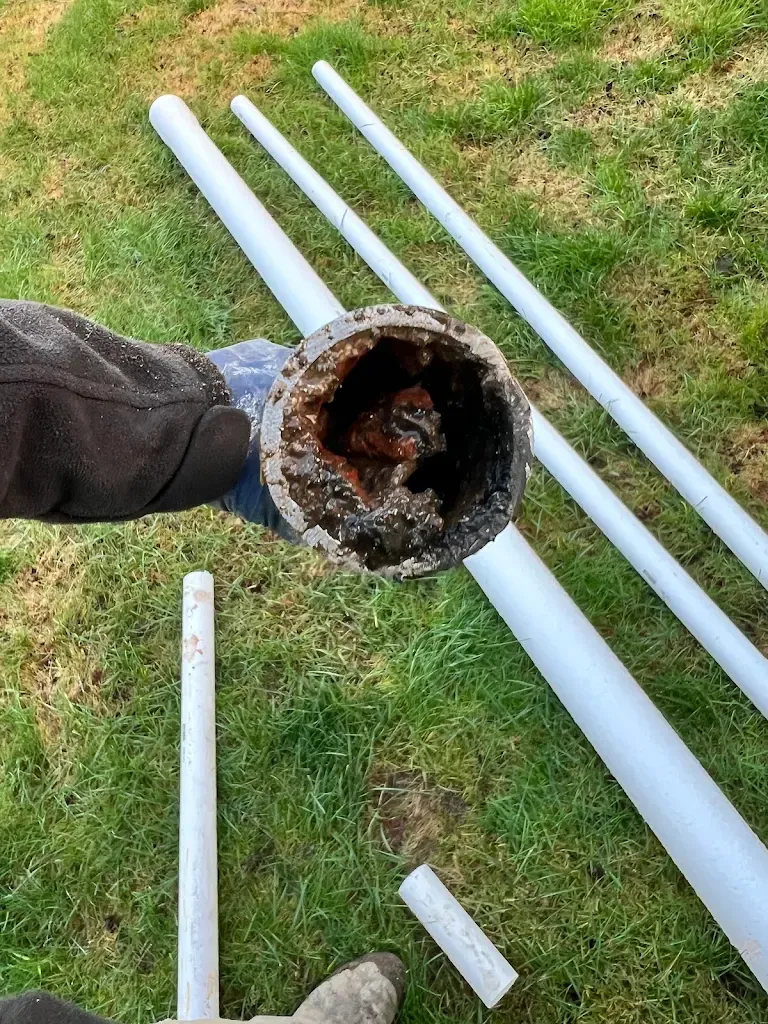
Drains are the other half. Cast iron drain lines under older homes rust and scale internally and eventually crack along the bottom. Orangeburg, a tar-impregnated fiber pipe used for sewer laterals through the 1960s, deforms and collapses. ABS and PVC from the 1970s forward are generally sound unless a bad glue joint or settling has broken them. The drain material is harder to see, and the sewer scope is how you find out.
- Galvanized supply: plan on repiping
- Polybutylene: plan on repiping and check with your insurer
- Copper: usually fine, check for green corrosion at joints
- PEX: modern, check that fittings are brass or quality plastic and not recalled types
- Cast iron or Orangeburg drains: scope them and budget for replacement
Sewer or septic, and what shape is it in
If the house is on sewer, find out which district: Kitsap County Sewer serves South Kitsap, Manchester, Kingston and Suquamish, the cities of Port Orchard, Bremerton and Poulsbo run their own systems, and Pierce County and Tacoma Public Utilities cover the Gig Harbor and Tacoma side. The homeowner owns the side sewer from the house to the main in nearly all of these districts, which means a broken lateral under the street is the buyer's problem.
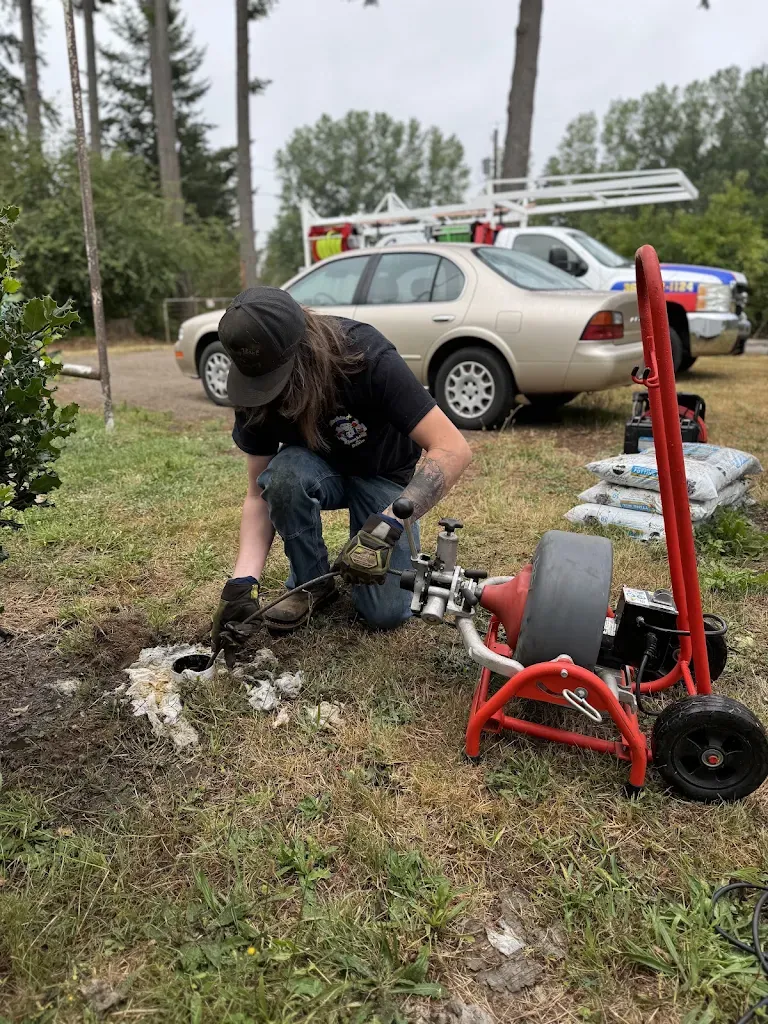
A sewer scope puts a camera through the lateral from a cleanout to the main and shows exactly what is there: roots, bellies holding water, offset joints, cracks, a collapsed Orangeburg section. On a pre-1990 house, or any house with mature trees in the yard, we consider it mandatory. It is a modest cost next to a sewer line replacement, which is a four-figure to five-figure project depending on depth and length.
If the house is on septic, Kitsap Public Health, Tacoma-Pierce County Health and Mason County Public Health keep records of the system design and permits. Ask for a pumping and inspection as part of the sale, which is a septic company's job. The plumbing side, the line from the house to the tank, any effluent pump and the alarm, is what we look at. Find out whether the system is gravity or pumped and when the pump was last replaced.
Where does the water come from
On a public system, ask which utility and look at a recent bill. Kitsap PUD, West Sound Utility District, Silverdale Water, the city water departments in Port Orchard, Bremerton and Poulsbo, Peninsula Light's water side on the Key Peninsula, and Mason PUD 1 and 3 all have different rates and different meter arrangements. Also ask whether the home has a pressure reducing valve and what the static pressure is. Houses at the bottom of a hill in Port Orchard or Bremerton can see pressure well above what fixtures are rated for, which shortens the life of everything connected.
On a private well, ask for the well log, which the Department of Ecology keeps on file by location, and for any water tests the seller has. Then get a flow test, which measures how many gallons per minute the well sustains over an hour or more, and a water quality test for bacteria, nitrates, iron, manganese and arsenic. Arsenic and iron are common in parts of Kitsap and Mason County.
Walk out to the pump house. Look at the pressure tank for rust and age, the pressure switch for corrosion, and the wiring. Ask whether the house has ever run out of water in August. A low-yield well with a small pressure tank is manageable with a storage tank and booster pump, but it is a project the buyer should know about going in.
How old is the water heater and what is around it
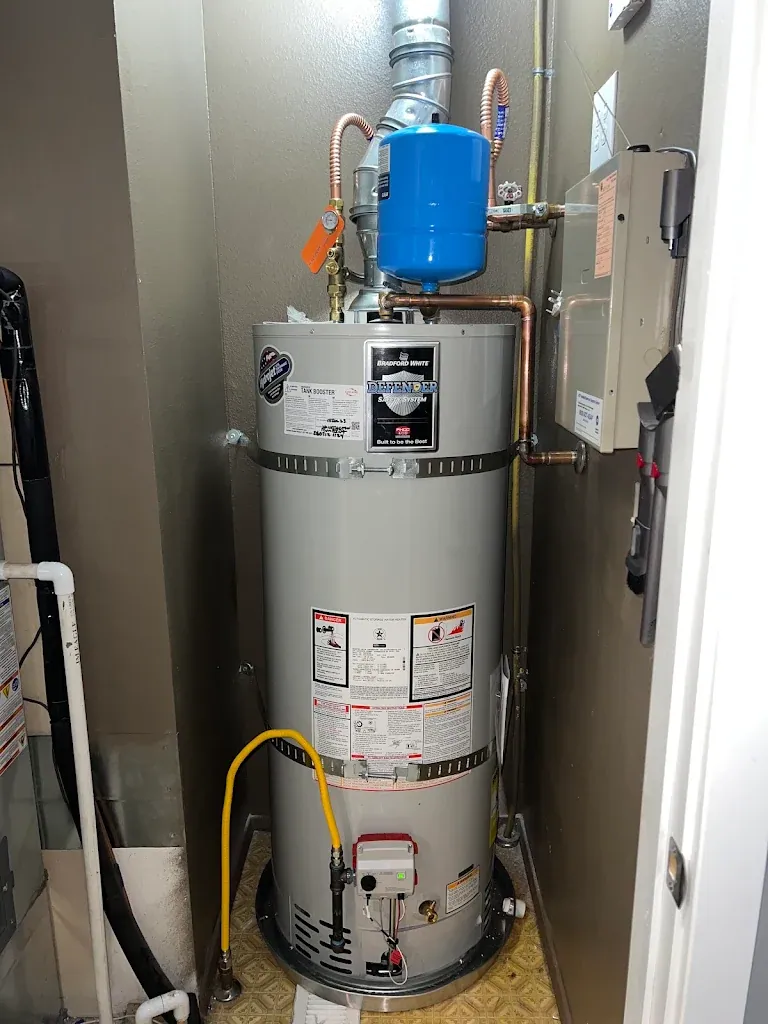
The water heater's data plate has a serial number that encodes the manufacture date. Tank heaters last eight to fifteen years around here depending on water quality and maintenance. One past ten years should be considered a near-term replacement. Look for rust at the base, water in the drain pan, and a relief valve that drips or has a pipe that ends in a puddle.
Also look at what is around it. A gas heater needs proper venting and combustion air. An electric heater in a closet should have a working shutoff. Every heater on a closed system, which is most homes with a PRV or backflow device, should have a thermal expansion tank. A tank sitting directly on a garage floor with no stand, no pan and no seismic strapping is one that was installed without a permit, which raises the next question.
If the heater is tankless, ask when it was last descaled. A Rinnai on well water that has never been flushed is a heater that will need service soon.
What does the crawlspace look like when it rains
You are probably looking at the house in dry weather, or at least on a dry day. The crawlspace in a Kitsap home in July tells you nothing about what it does in January. Look for the evidence instead: a water line on the foundation walls, rusted pipe hangers, silt deposits on the vapor barrier, a sump pit, insulation that has sagged from being wet, and dampness or mold on the joists.
A crawlspace that floods seasonally is a drainage problem first, but it ages every pipe in it and makes freeze damage far more likely. It also means any future plumbing work under the house will be done in water during the wet season. Ask the seller directly whether they have ever had standing water under the house, and if there is a sump pump, ask how old it is and whether it has run.
While you are there, note any pipe that is sagging, any patched sections, any section of drain line with a different material than the rest, and any smell. Sewer gas in a crawlspace is a cracked drain or a dry trap, and either one is a conversation to have before closing.
Was the work permitted, and who did it
Listings love to mention a new water heater, a remodeled bathroom, or updated plumbing. Kitsap County's permit portal and the city building departments in Port Orchard, Bremerton, Poulsbo and Gig Harbor let you search permit history by address. A water heater replacement, a repipe, a bathroom addition and a new gas line all require permits in Washington. Work that was done without one may be fine, or it may be the drain that is sloped backward behind the new tile.
Ask who did the work. A licensed plumbing contractor can be verified on the Department of Labor & Industries verification site, and the contractor's license number should be on the invoice. Work done by the seller or a handyman is not necessarily bad, but it is work nobody with a license has stood behind, and it should be looked at more closely.
In our experience, the most expensive surprises after closing come from unpermitted bathroom additions and basement conversions, where drains were tied in without proper venting or slope and the problems show up as gurgling, slow drains and sewer smell within the first year.
When to bring in a plumber during the inspection period
For most homes we recommend two things during the inspection contingency: a sewer scope on any home older than 1990 or with large trees, and a plumbing-specific inspection on any home with galvanized or cast iron pipe, a well, a septic pump, or a crawlspace that shows signs of water. We also do these for out-of-state buyers who cannot be at the inspection themselves and want a report they can read and photos they can see.
The inspection covers the material and condition of supply and drain lines, water pressure and the PRV, every fixture and shutoff, the water heater and its installation, the well equipment if present, and the crawlspace. What you get is a written list of what is fine, what will need attention in the next few years, and what should be negotiated now. Sellers generally respond to a plumber's written findings differently than to a line in a general inspection report.
Frequently asked
Does a home inspection include the sewer line?
Not normally. A home inspector checks that drains flow, but does not run a camera through the lateral. A sewer scope is a separate service and the only way to see roots, bellies, cracks or collapsed Orangeburg before you own them.
Should I walk away from a house with galvanized pipe?
Not necessarily. Thousands of houses around the shipyard still have it. But you should price a whole-house repipe into your offer or negotiate it, because the galvanized will need to come out, and the only question is when.
Who inspects a septic system for a home sale?
A licensed septic inspector or pumper, often required by the county health district at time of sale. We handle the plumbing between the house and the tank and any effluent pump, and we will tell you if what we see suggests a tank or drainfield problem that needs the septic company.
Can you inspect a house for me if I am buying from out of state?
Yes. We do whole-home plumbing inspections for remote buyers and relocating Navy families and send a written report with photos and video so you can make a decision without being here.
How do I check if plumbing work was permitted?
Search the address on the Kitsap County permit portal or the relevant city's building department site. Pierce and Mason counties have similar lookups. Water heaters, repipes, gas lines and bathroom additions all require permits in Washington.
What water pressure should a house have?
Between about forty and eighty pounds per square inch at a hose bib with nothing running. Over eighty, the house needs a pressure reducing valve, and if one is present and the pressure is still high, the PRV has failed.
About the author. Gregory Lowe is the owner and lead plumber at Washington Plumbing & Drain, a veteran-owned company in Port Orchard serving Kitsap, Pierce and Mason counties. The guidance here comes from daily work in local homes, not from a content farm. Call (360) 812-1124 with questions.