
What it usually looks like
- Water runs brown or yellow first thing in the morning, then clears
- Only the hot water is discolored
- Orange or brown stains in toilets, tubs and the dishwasher
- Black or dark gray flecks in the water, or a slick black film on fixtures
- A metallic taste, or laundry coming out with rust-colored streaks
- Discoloration started suddenly after utility work in the street or a hydrant flush
Likely causes, most common first
Iron and manganese in well water
Groundwater across Mason County and the rural edges of Kitsap passes through iron-rich glacial deposits. Dissolved iron comes out of the tap clear and turns rusty once it hits air, which is why a glass of water goes orange sitting on the counter. Manganese stains black. Both are common enough here that we treat for them nearly every week.
A rusting water heater tank
The glass lining inside a tank water heater eventually cracks, and the sacrificial anode rod that protects the steel gets used up. From then on the tank rusts, and the hot side carries that rust to every fixture. If the brown water is only hot, this is where to look, and the heater is usually near replacement.
Old galvanized steel pipe
Homes built before the mid 1970s near the shipyard, in older Port Orchard and in Tacoma's older neighborhoods often still have galvanized supply pipe. It rusts from the inside, narrowing the pipe and shedding flakes whenever water pressure changes. The discoloration is worst at the fixtures on the longest galvanized runs.
Municipal main flushing or a main break
Utilities flush hydrants to clear sediment from the mains, and a break or repair stirs up everything settled in the pipe. Water from Port Orchard, Bremerton, Silverdale and Kitsap PUD systems can run brown for a few hours afterward. This clears on its own and is not a problem with your home.
Sediment stirred up in the pressure tank or water heater
Both tanks collect sediment at the bottom. A pump that just started short cycling, or a heater that has not been flushed in years, can send that sediment through the house when flow surges.
Safe things to check yourself first
- Run cold water only at a bathroom sink for two minutes. If it clears, the discoloration is in your plumbing or heater, not the source.
- Compare hot and cold at the same faucet. Brown hot and clear cold points straight at the water heater.
- Lift the toilet tank lid. Orange staining means iron; black means manganese; reddish slime means iron bacteria.
- If you are on city water, check the utility's website or call to see whether they are flushing mains or had a break in your area.
- Look at the sediment filter housing if you have one. A cartridge that goes orange within weeks tells you how much iron you are dealing with.
- Note when it happens. First thing in the morning points to water sitting in old pipe overnight; after heavy use points to a disturbed tank.
Stop and call if
- The water heater is leaking, or the brown hot water comes with popping or rumbling from the tank
- Pressure dropped noticeably along with the discoloration, which can mean a galvanized pipe is nearly closed
- Water on a well suddenly turns muddy or sandy, which can mean a failing well screen or casing
- Discoloration is accompanied by a sulfur or sewage smell
- A newborn, immune-compromised person or elderly resident drinks the water and you are unsure of its safety
How we diagnose and fix it
- Test the water at the source and at a far fixture for iron, manganese, hardness and pH so we are treating the real cause.
- Inspect the water heater, check the anode rod and flush the tank; when the tank itself is rusting, we tell you plainly that it is time to replace it.
- Trace discolored branches to galvanized piping and give you the option of replacing the worst runs or a full PEX repipe that ends the problem for good.
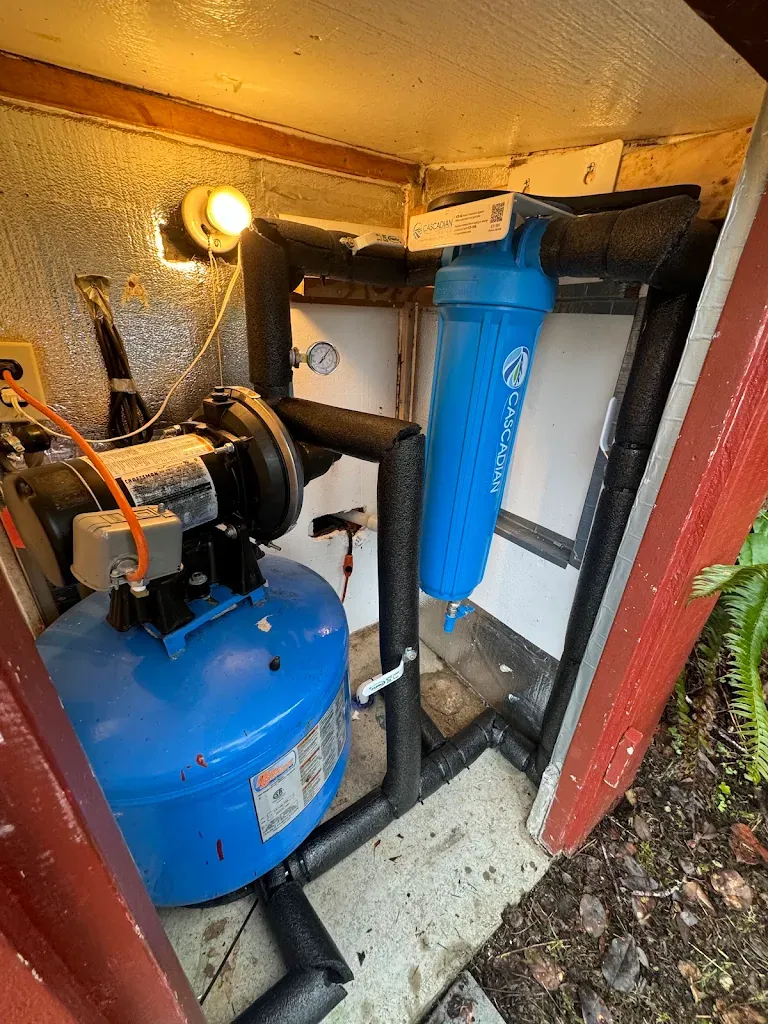
- Install the right filtration for the water: a sediment filter for flakes and sand, an iron and manganese filter or air-injection system for well water, and a Cascadian or Halo whole-house system where the chemistry calls for it.
- Clean out the pressure tank tee and pressure switch on wells, since iron sludge in those is often the first sign of a bigger iron problem.
- Recommend a lab test through Kitsap or Mason County when the well's safety is in question, and size treatment to the results.
Around Kitsap, Pierce and Mason counties
Iron and manganese are the signature of well water on this side of the Sound. From Belfair and Allyn down to Shelton and up the Hood Canal shoreline to Hoodsport, we see orange toilets and black-streaked dishwashers in nearly every well home we visit. Kitsap municipal water is generally clean, but the older galvanized housing stock in Bremerton, Port Orchard and Tacoma puts the rust back in at the house. Figuring out which of those two stories you are living in is the whole diagnosis, and it takes about ten minutes with a few sample jars.
Questions people ask
Is brown water safe to drink?
Iron and manganese at the levels that discolor water are mainly an aesthetic problem, but high manganese is not recommended for infants, and discolored well water should be tested before you assume it is only iron. When it comes from a utility flush, wait for it to clear and run the taps before drinking.
Why does my water turn brown only after I have been away?
Water sat still in the pipes and the heater for days, picking up rust and letting sediment settle. Older galvanized pipe and an aging heater both get worse after a vacation. Running the taps for a few minutes clears it, but it is a sign the pipe or tank is deteriorating.
Will a water softener fix iron?
A softener handles small amounts of dissolved iron, but it is not built for the levels common in Mason County wells and it fouls quickly. A dedicated iron filter, often with air injection, is the right tool. We test first and tell you which you need.
My water heater is only six years old and the hot water is rusty. Why?
The anode rod is probably used up. On aggressive well water that can happen in a few years. If the tank is not yet leaking, a new anode and a flush can buy more life. If the water stays rusty after that, the lining has failed.
Can you replace just the pipes that are rusting?
Yes, and sometimes that is the sensible step, especially a crawlspace run or the line to the kitchen. When most of the house is galvanized, a whole-house repipe is often the better value because every remaining section is on the same clock.