
Short answer
Your main water shutoff is usually on the house side of where the water line enters: in the crawlspace near the foundation, in the garage, in a utility room, or on an exterior wall near the hose bib closest to the street. Turn a lever-style ball valve a quarter turn until the handle is crossways to the pipe; turn a round gate valve clockwise until it stops. If that valve is missing, seized or does not fully close, the meter box at the street has a second valve, and a well system shuts off at the pressure tank and the pump breaker.
In this guide
- Why you need to know this before anything goes wrong
- Where the main shutoff valve is usually located
- Ball valve or gate valve: how to turn each one
- The backup valve at the water meter
- Shutting off water on a private well
- After the main is closed: draining the pressure
- Fixture shutoffs: the small valves that save the big one
- When the valve itself is the problem
Key takeaways
- Find and test your main shutoff on a calm day, not during a flood. Every adult in the house should know where it is.
- A ball valve with a lever handle closes in a quarter turn. A round-handled gate valve takes several full turns clockwise and often fails after decades of sitting open.
- If the house valve will not close, the valve in the meter box at the street is your backup. Most Kitsap and Pierce water utilities allow customers to use it in an emergency.
- On a private well, shutting off water means closing the valve at the pressure tank and flipping the pump breaker so the pump does not keep pushing.
- After shutting off the main, open a low faucet to drain pressure. The leak slows to a trickle within a minute or two.
- A valve that is stiff, weeping, or hidden behind a wall is a valve worth replacing before it fails during the next freeze.
Why you need to know this before anything goes wrong
Most of the water damage we see in Port Orchard, Bremerton and Gig Harbor did not come from a dramatic burst. It came from a supply line under a sink, a washing machine hose, or a split pipe in the crawlspace that ran for an hour or two while the homeowner searched for a valve they had never touched. A house service line delivers several gallons a minute. Thirty minutes of searching is a lot of water in a crawlspace.
The fix is cheap and takes ten minutes: find the valve today, turn it once to confirm it moves, and put a tag on it. Then show the rest of the household. We have had calls from Naval Base Kitsap families where the service member who knew the valve's location was deployed and nobody else in the house had a clue. A tag and a two-minute walkthrough prevents that.
Where the main shutoff valve is usually located
Start by figuring out which side of the house faces the street or the water meter. The service line almost always enters the foundation on that side, and the main valve sits within a few feet of where it comes in. In the older homes near the shipyard and along Sinclair Inlet, that usually means the crawlspace. Look for a copper or galvanized pipe coming up through the dirt or through the footing, with a valve on it right where it turns toward the house.
Newer tract homes in Silverdale, Gig Harbor North and the newer parts of South Kitsap tend to have the valve in the garage, often on the wall shared with the house, near the water heater or inside a small access panel. Some builders put it in a utility closet with the pressure reducing valve. In a few newer homes it is outside, in a plastic box near the foundation on the street side, with a lid that looks like an irrigation valve box.
Homes on slabs, which are less common here but show up in Tacoma, Lakewood and some University Place neighborhoods, usually have the valve in the garage or in a cabinet under the kitchen sink if the kitchen is on the street side. Manufactured homes in Mason County typically have the valve under the home, near the skirting on the side closest to the well or meter, and sometimes in a heat-taped box.
Ball valve or gate valve: how to turn each one
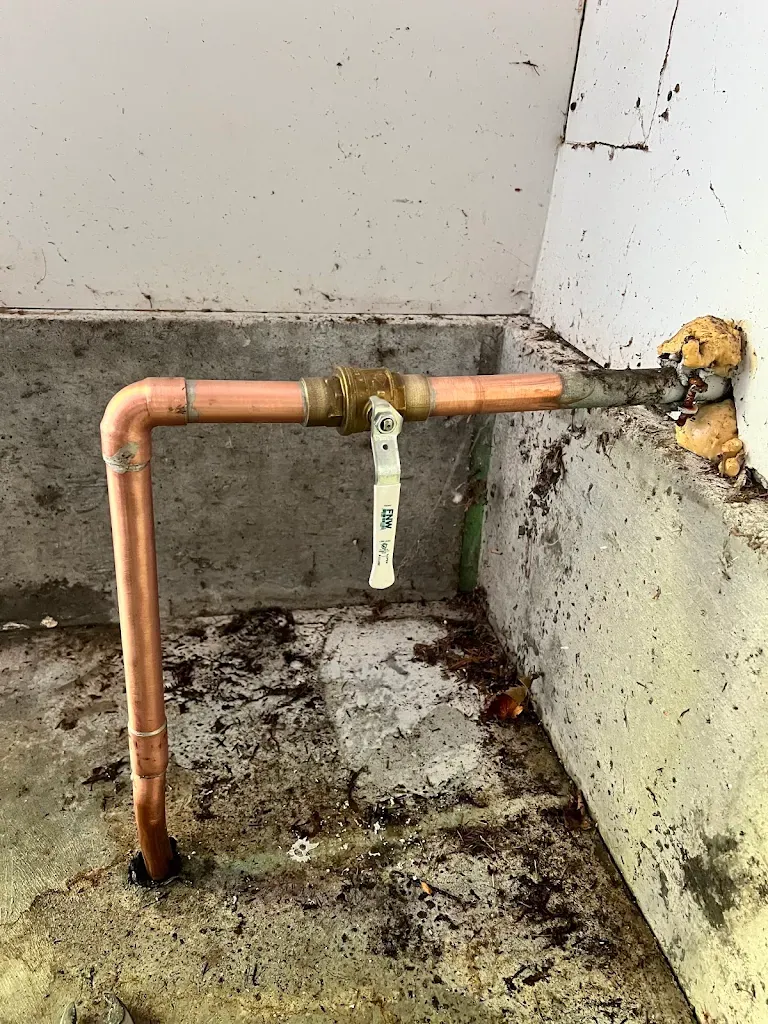
A ball valve has a flat lever handle. When the handle lines up with the pipe, water flows. Turn it a quarter turn so the handle sits crossways to the pipe and the valve is closed. It should move with firm hand pressure and stop hard at ninety degrees. If you have one of these, you are in good shape. We install FNW full-port ball valves on every main we replace for exactly this reason.
A gate valve has a round wheel handle, like an outdoor spigot. Turn it clockwise, and keep turning. It can take five to eight full revolutions before it seats. Do not force it with pliers if it stops early; the gate inside may be corroded and a hard twist can snap the stem, which leaves you with a valve that is neither open nor closed. Gate valves from the 1960s and 70s are the single most common failed part we find in crawlspaces around Bremerton and Manchester.
If the handle is missing, a pair of pliers on the stem will work in a pinch. If the handle spins freely and nothing changes, the stem has separated from the gate. Stop and go to the meter.
The backup valve at the water meter
If you are on city or district water, there is a second valve in the meter box near the street or at the edge of your driveway. The box has a cast iron or plastic lid; lift it with a screwdriver and you will see the meter with a valve on the street side, sometimes on the house side as well. The valve usually needs a meter key, which is a long T-shaped tool, but many will turn with a large adjustable wrench on the small rectangular tab.
Policies vary. Kitsap PUD, West Sound Utility District, the City of Port Orchard, the City of Bremerton and Silverdale Water District each own the meter and the valve in that box, and in general they would rather you close it in an emergency than let the house flood. Call the utility afterward and tell them you did it. What they do not want is someone breaking the valve or damaging the meter, so turn it gently and stop when it stops.
On long gravel driveways in Olalla, Burley and the Key Peninsula, the meter can be a long way from the house, sometimes at the road a few hundred feet away. Walk it once in daylight so you can find it in the dark during a December freeze. Spiders, moss and ferns love those boxes; bring a flashlight and gloves.
Shutting off water on a private well
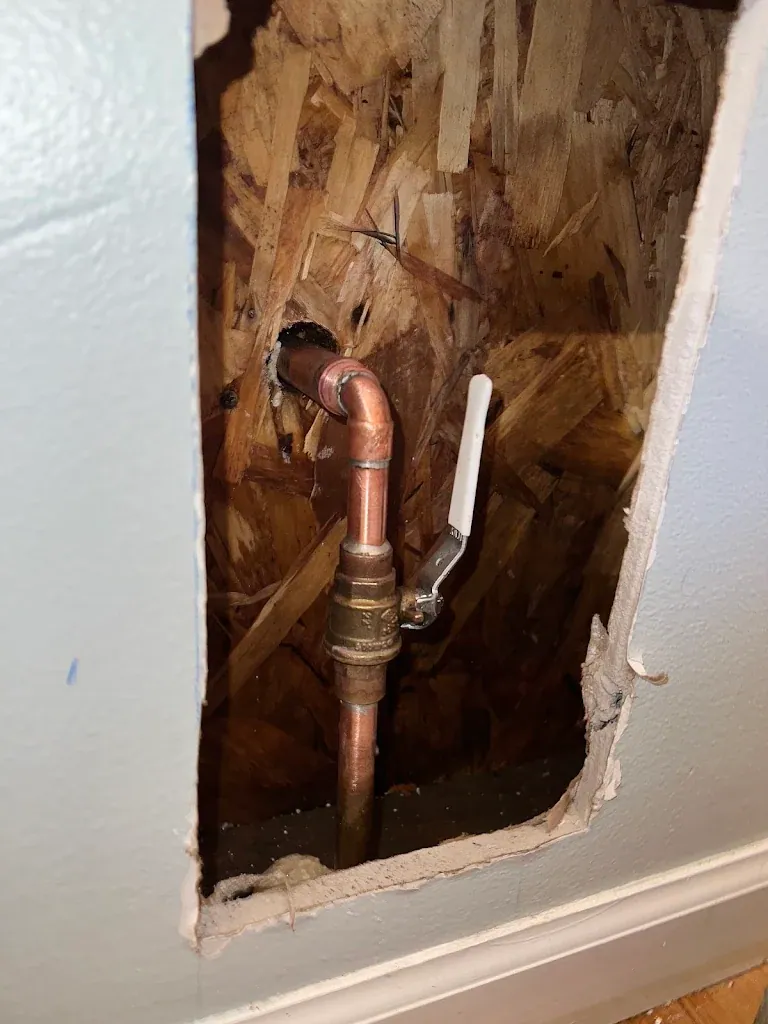
Well homes in Mason County, Seabeck, Hansville and rural Kitsap do not have a meter box. The water comes from a pump in the well, into a pressure tank, and then into the house. There is normally a ball valve on the house side of the pressure tank; that is your main shutoff. Closing it stops water to the house while leaving the tank charged.
If the leak is between the well and the tank, or if you cannot find a valve, flip the breaker labeled for the well pump in the electrical panel. The pump stops and the pressure in the tank bleeds off through the leak within a few minutes. Remember that with the pump off you have no water at all, so do not leave it that way longer than needed. Some wells in Belfair and Tahuya also have a valve at the wellhead; that one closes the whole supply.
A well home with a pressure switch that keeps clicking on while nothing is running usually has a leak somewhere, and that is a separate problem worth chasing down. Our well house and pressure tank page walks through it.
After the main is closed: draining the pressure
Closing the valve stops new water from entering, but the pipes are still full and under pressure. Open the lowest faucet in the house, usually an outside hose bib or a laundry sink, and a high faucet somewhere upstairs to let air in. The pressure drops in a minute or two and the leak slows to a drip. If the leak is on the hot side, shutting off the cold inlet valve on top of the water heater isolates it while leaving cold water to the rest of the house.
Turn off the water heater if you are going to leave the main closed for more than an hour or so. A gas unit should go to the vacation or pilot setting; an electric unit should have its breaker turned off. Electric elements that heat in an empty or partly drained tank burn out fast.
When you turn the water back on, open the main slowly and let a couple of faucets run until the sputtering stops. Air in the lines can bang around and loosen things if you open the valve all at once.
Fixture shutoffs: the small valves that save the big one
You do not always need the main. Every toilet and sink should have a small angle stop valve on the wall or floor beneath it. Washing machines have a pair of valves in the laundry box, sometimes a single lever that shuts both. Dishwashers usually share the hot valve under the kitchen sink. The water heater has a valve on the cold inlet. Turning one of these off isolates the problem while the rest of the house keeps working.
Those small valves fail too. Multi-turn stops from the 1980s and 90s often leak at the stem the first time they are turned in twenty years. If you turn one and it drips, do not keep working it; close the main and plan to have it swapped for a quarter-turn stop. On a whole-house plumbing inspection we check every one of them and tag the ones that are seized.
- Toilets: angle stop on the wall behind the bowl, turn clockwise
- Sinks: two stops under the cabinet, hot on the left as you face them
- Washing machine: valves in the laundry box behind the washer
- Water heater: valve on the cold line on top of the tank
- Outdoor hose bibs: often a separate interior valve on frost-free models in older homes
When the valve itself is the problem
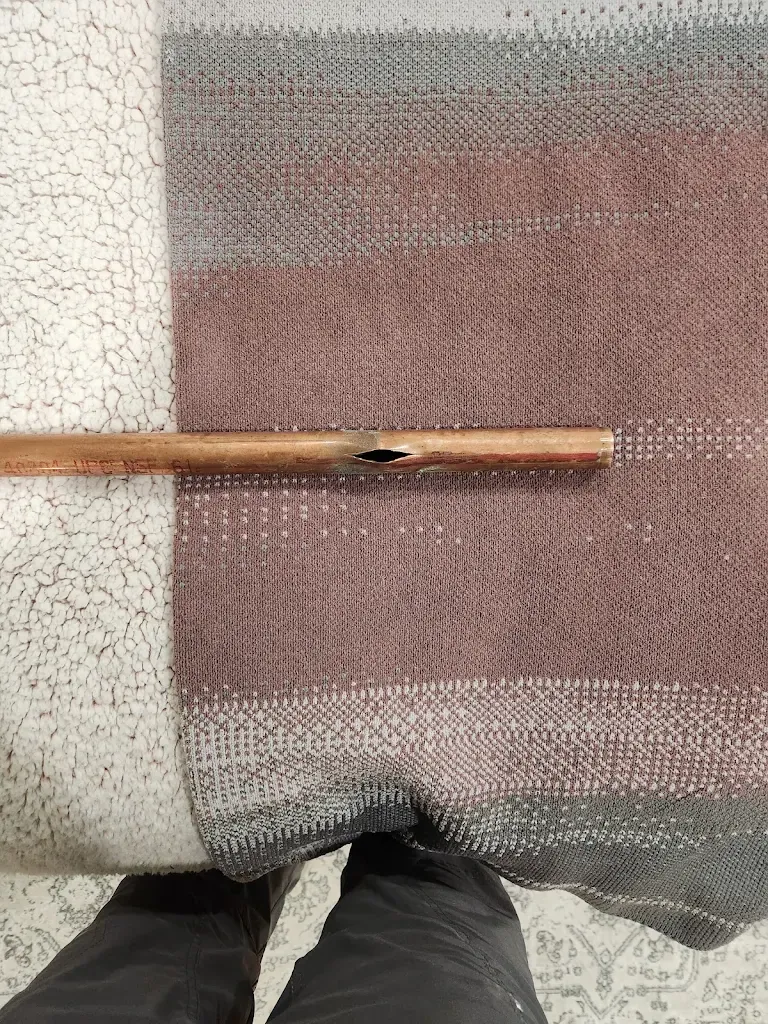
A main valve that will not close, closes only part way, or drips from the stem afterward is a valve that needs replacing. So is a valve buried under insulation in a crawlspace that nobody over fifty wants to crawl into at two in the morning. We replace old gate valves with full-port ball valves and, when the original is in a miserable spot, relocate the shutoff to the garage or an accessible wall so it can be reached in seconds.
This is also the moment to think about a smart shutoff. A Flo by Moen valve on the main line watches flow around the clock and closes itself when it sees a burst, which matters for the many Kitsap homes whose owners are away for weeks at a time or who own a second place on Hood Canal. It is not a replacement for knowing where the manual valve is, but it is a very good backstop.
Frequently asked
Which direction closes a water shutoff valve?
Clockwise for a round-handled gate valve, often five or more full turns. For a lever-handled ball valve, turn the lever a quarter turn so it sits crossways to the pipe. If the lever is parallel to the pipe, the valve is open.
Can I turn off the water at the meter myself?
In an emergency, yes, and most local utilities would rather you did than let a house flood. Lift the lid, turn the valve on the meter gently until it stops, and call the utility afterward to let them know. Do not force it or use a pipe wrench on the meter itself.
My main valve is in the crawlspace and I can't get to it. What should I do?
For now, know where the meter valve is and keep a meter key by the front door. Long term, have the shutoff relocated to the garage or an interior wall. It is a modest job compared with what a flood costs, and it is one of the most common upgrades we do on older Port Orchard and Bremerton homes.
How do I shut off water if I have a well?
Close the ball valve on the house side of the pressure tank. If the leak is before the tank or you cannot find a valve, turn off the well pump breaker in the panel. The pressure bleeds down within a few minutes.
Should I turn off the water heater when the main is off?
If the main will be off for more than a short while, yes. Set a gas heater to pilot or vacation mode and switch off the breaker on an electric one. Electric elements can burn out if the tank drains even partly while they are powered.
Do I need to shut off the water when I leave for vacation?
It is a good habit, especially in winter. A closed main cannot flood the house if a pipe freezes and splits while you are gone. If you have a smart shutoff like a Flo by Moen, you can set it to away mode instead.
The valve closed but water is still running. Why?
Either the valve is not sealing, which is common with old gate valves, or you closed a valve that only serves part of the house. Go to the meter and close it there. If the meter dial still turns with the meter valve closed, call the utility; the problem is on their side.
About the author. Gregory Lowe is the owner and lead plumber at Washington Plumbing & Drain, a veteran-owned company in Port Orchard serving Kitsap, Pierce and Mason counties. The guidance here comes from daily work in local homes, not from a content farm. Call (360) 812-1124 with questions.