What it usually looks like
- The small triangle, star or sweep hand on the meter turns with every fixture off
- The meter's digital display shows a flow or a flashing faucet icon
- Meter readings taken an hour apart differ with no water used
- The water district sent a continuous-use or leak alert
- A faint hiss is audible at the main shutoff or water heater
- A toilet refills by itself every so often
Likely causes, most common first
A toilet leaking from tank to bowl
A worn flapper, a chain caught under it, or a fill valve set so high that water runs over the overflow tube all send water silently down the drain. The meter registers it as a slow, steady creep. Because it is the most common cause and takes two minutes to test, it is always the first stop.
A leak in the buried service line
Between the meter and the house, a cracked poly line or a corroded galvanized fitting leaks into soil that may never show a wet spot. If the meter still turns with the main valve at the house closed, this is where the water is going.
A pinhole in supply piping under the house
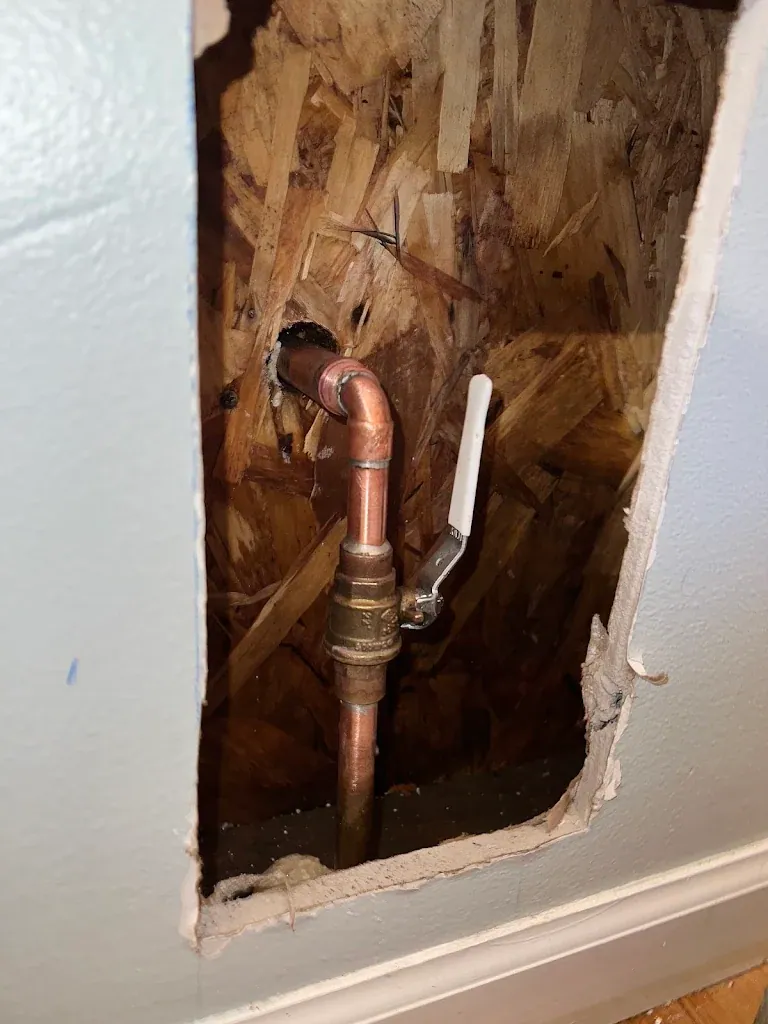
Copper in a damp crawlspace develops pinholes, and PEX fittings can weep at a crimp. A fine spray into fiberglass insulation can run for a season before anyone notices. The meter catches it long before the subfloor does.
An irrigation zone or hose bib
Irrigation valves fail open, drip lines split, and a frost-free hose bib with a cracked body can leak inside the wall while looking dry outside. Isolating the irrigation shutoff separates this from the house.
Water treatment equipment
A softener, iron filter or reverse osmosis unit with a stuck valve can run water to its drain line continuously. Listen at the equipment and look at its drain.
A water heater relief valve piped outdoors
If the relief valve discharges through a pipe to the exterior or a drain, it can run intermittently for weeks without a puddle inside. Check the end of that pipe.
Safe things to check yourself first
- Make sure every faucet, appliance, ice maker and irrigation zone is off, then watch the meter's leak indicator for two full minutes
- Drop food coloring into each toilet tank and wait fifteen minutes; color in the bowl means a leaking flapper
- Close the main shutoff at the house and check the meter again; if it still moves, the leak is underground between meter and house
- If you have an irrigation shutoff, close it and repeat the test
- Walk the crawlspace entrance with a flashlight and look for a wet spot or dripping insulation
- Listen at the water heater and at the main valve for hissing
Stop and call if
- The meter keeps turning with the house main valve closed
- The sweep hand moves fast enough to count in gallons, not a slow creep
- Wet or sunken ground anywhere along the service line path
- Water or dripping insulation in the crawlspace
- The main shutoff will not close completely, so you cannot isolate the house
How we diagnose and fix it
- Read the meter with you, then isolate the system in stages: house main, water heater, irrigation, each toilet, each bathroom group
- Fix toilet flappers and fill valves on the spot; they are the most frequent answer
- Pressure test the service line and use listening equipment to pinpoint a buried leak before any digging
- Repair the failed section or run a new service line in PEX or poly, with a new ball valve at the house end
- Locate and repair crawlspace pinholes and recommend a repipe when the copper has multiple failures
- Offer a Flo by Moen shutoff so the meter is watched around the clock in the future
Around Kitsap, Pierce and Mason counties
Kitsap PUD and several of the city water systems now use meters that report continuous flow, and the leak alert letter from the district is often the first a homeowner hears of it. The long rural runs toward Burley, Olalla and the Mason County side are the ones that leak underground without a trace, especially in summer when the ground drinks everything. On waterfront bluff lots around Manchester and Southworth, a service line leak can also undermine a slope, which is a bigger reason not to leave it.
Questions people ask
How do I read the leak indicator on my meter?
Analog meters have a small triangle or star that spins with any flow at all, even a drip. Newer digital meters show a flashing faucet or flow icon. Either one moving with everything off confirms a leak.
The meter moves a tiny bit, then stops, then moves again. What is that?
An intermittent leak, most often a toilet fill valve topping off, or a water heater relief valve weeping on each heating cycle.
Can the meter itself be wrong?
Rarely, but it happens. If every isolation test shows no leak and the meter still creeps, the district can test or replace the meter.
Whose responsibility is a leak between the meter and the house?
Yours, in nearly every district here. The utility owns the meter and the pipe on the street side; the service line to your house is the homeowner's.
How much water is a creeping meter wasting?
A slow creep is often a few gallons an hour, which still adds up to hundreds a day. A visibly spinning sweep hand can be thousands a day and warrants a same-day call.