Short answer
Around Puget Sound the choice is mostly made by what is already in the house. A gas or propane water heater recovers faster, keeps working through the frequent winter power outages if it has a standing pilot, and suits big households; an electric heater is simpler, cheaper to install, has no venting, and in heat pump form uses a fraction of the electricity. Natural gas reaches only parts of Kitsap through Cascade Natural Gas and most of urban Pierce through Puget Sound Energy, while Mason County and rural Kitsap run on propane or electricity from Kitsap PUD, Peninsula Light and Mason PUD. Washington's energy code now steers new homes toward heat pump water heaters through an efficiency credit system; for an existing home, the fuel that is already there is usually the right one unless you have a reason to switch.
In this guide
Key takeaways
- Gas heats faster. A 40-gallon gas tank often outperforms a 50-gallon electric one in a busy morning.
- Electric is simpler to install and service, needs no flue or combustion air, and is the only option in many all-electric neighborhoods.
- Heat pump water heaters are electric tanks that use far less power; Washington's energy code favors them in new construction and utilities often encourage them.
- Winter outages are real around here. A gas tank with a standing pilot keeps making hot water; a power-vented gas unit, a tankless and any electric heater do not.
- Propane is the gas of Mason County and rural Kitsap, and it works well with tank or tankless units once the tank and regulator are sized.
- Switching fuels is a real project involving gas piping or electrical work plus the plumbing permit. Sometimes worth it, often not.
What is available on your street
This decision starts with a map. Cascade Natural Gas serves parts of Kitsap County, concentrated in Bremerton, Port Orchard, Silverdale, Poulsbo and the corridors along Highways 3 and 16, with plenty of neighborhoods in between that never got a main. Puget Sound Energy supplies natural gas across most of urban Pierce County, including Gig Harbor, University Place, Tacoma, Puyallup and Lakewood. Bainbridge Island, Kingston, Hansville, the Key Peninsula, Fox Island and essentially all of Mason County have no natural gas; homes there heat water with electricity or propane.
Electricity is everywhere, from Kitsap PUD, Puget Sound Energy, Peninsula Light on the Gig Harbor and Key Peninsulas, Tacoma Power, and Mason PUD 1 and 3. A big share of the housing built for shipyard and Navy families from the 1940s through the 1970s is all-electric, with an electric tank in a closet or garage and no gas anywhere in the house.
If you do not know which you have, look at the top of the water heater. A metal flue pipe going up through the ceiling or a plastic pipe out the wall means gas or propane. Two small element covers on the side and a cable from the breaker panel means electric.
How gas and electric tanks differ in daily use
A gas tank has a burner under the tank. When the thermostat calls, the burner heats the whole bottom of the tank at once, and the tank recovers in well under an hour. A standard electric tank has two elements and heats with one at a time, which is slower. That is the whole reason a 40-gallon gas tank and a 50-gallon electric tank end up with similar first-hour ratings. For a family that showers in sequence, gas gives more usable hot water from a smaller tank.
The electric tank's advantages are the things it does not have. No flue, no combustion air, no gas line, no carbon monoxide, no pilot to go out. It can sit in a closet with the door shut. Elements and thermostats are inexpensive and quick to replace. In a crawlspace-heavy older Port Orchard house with no gas, an electric tank is the obvious like-for-like replacement, and it will serve for a decade without much thought.
Winter outages and who still has hot water
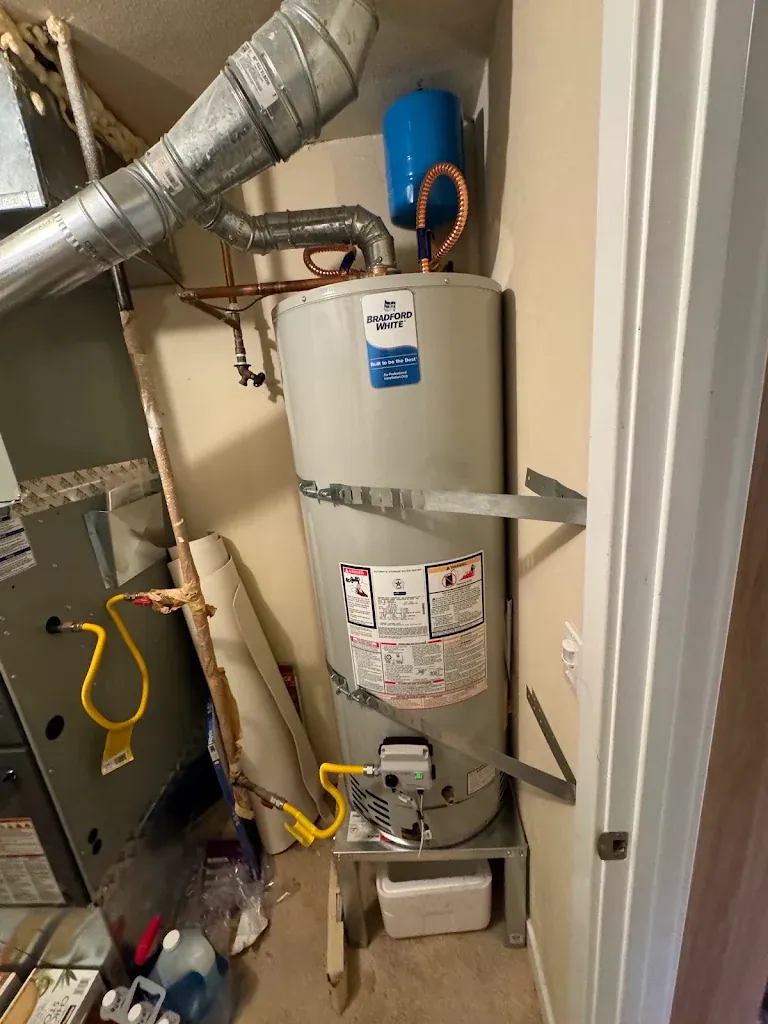
Anyone who lived through the December 2022 ice or the windstorms that roll through every November knows Kitsap and Mason County lose power. Gas water heaters with a standing pilot and a mechanical gas valve keep working when the lights go out, because they need no electricity. That is a real comfort when the house is cold and the outage is in its second day.
Not every gas heater does this. Power-vented and direct-vent units use a blower and electronic controls; condensing tanks and every tankless unit need power. Electric heaters obviously stop. If outage resilience matters to you, and on the Hood Canal side or the north end of Kitsap it often does, a standard atmospheric-vent gas or propane tank is the one heater that keeps going, or a generator circuit covers the others. A tank full of hot water also holds its heat for many hours after power is lost; a tankless holds nothing.
Propane: the rural gas
From Belfair and Allyn down through Shelton and up the Hood Canal, and across rural South Kitsap and the Key Peninsula, propane fills the role natural gas plays in town. A propane water heater, tank or tankless, works like a natural gas one with a different orifice and regulator, and we install both. The things to get right are the propane tank size and the regulator capacity, since a tankless can pull hard on a cold morning and a small tank with a tired regulator will starve it.
Propane is delivered, not piped, so it has to be managed. A household that heats the house, cooks and heats water on propane should keep an eye on the tank gauge in January. Homes that have propane only for a range sometimes add a propane water heater to get gas-style recovery without running a new electrical circuit; that is a conversation about tank size and delivery schedule as much as about the heater.
Heat pump water heaters change the electric side
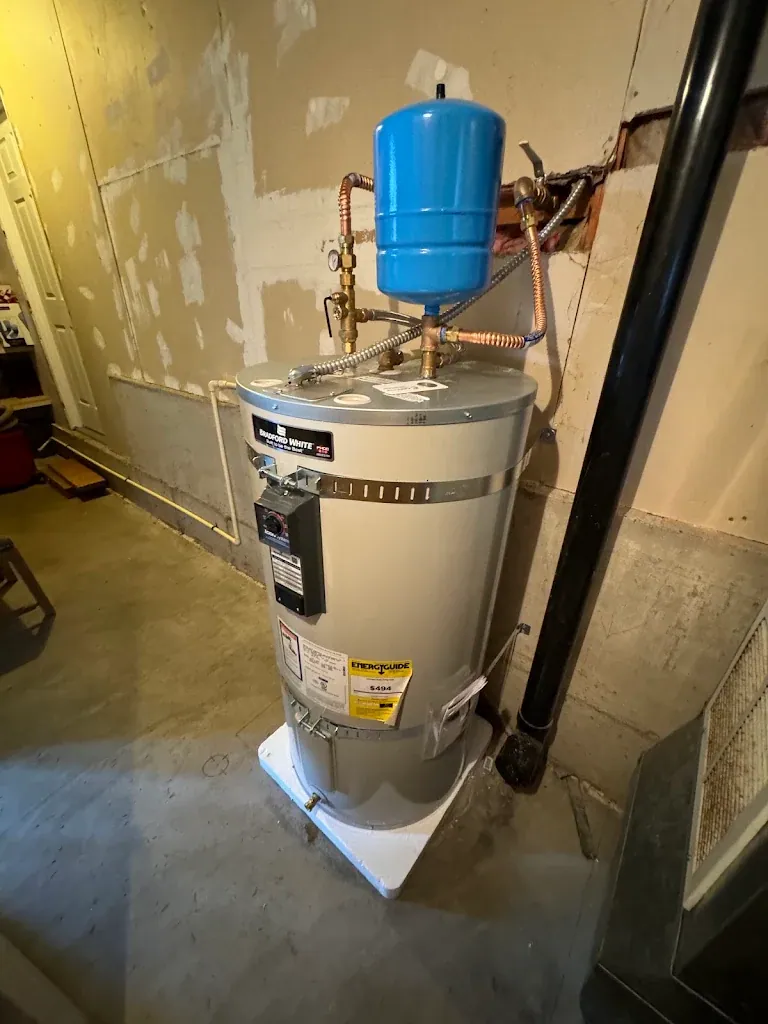
A heat pump water heater is an electric tank with a small refrigeration unit on top that moves heat from the surrounding air into the water. In that mode it uses a fraction of the electricity of a standard electric tank. Most are hybrids with backup elements for heavy demand. They are the reason an all-electric home no longer has to accept the running cost of resistance heating, and local utilities have run incentives for them over the years; check with your utility for current programs.
They need space and air. A garage, a large utility room or a basement works; a closet does not without ducting. They cool and dehumidify the room, which is pleasant in a Kitsap garage in summer and noticeable in winter. They recover slowly, so size up. And they need a condensate drain. For many homes on PUD power with a garage heater, a heat pump unit is now the first thing we suggest when the old electric tank is done.
Washington's energy code is part of the picture. The State Building Code Council's 2021 residential energy code, in force since March 2024, pushes new homes toward heat pumps for space and water heating through an efficiency credit system; an earlier version that would have effectively required heat pump water heaters in all new construction was withdrawn in January 2024 and replaced with the credit approach, under which a gas water heater is still allowed but the house has to earn more credits elsewhere. That code governs new construction and major remodels, not a like-for-like replacement in an existing home.
Converting from one fuel to the other
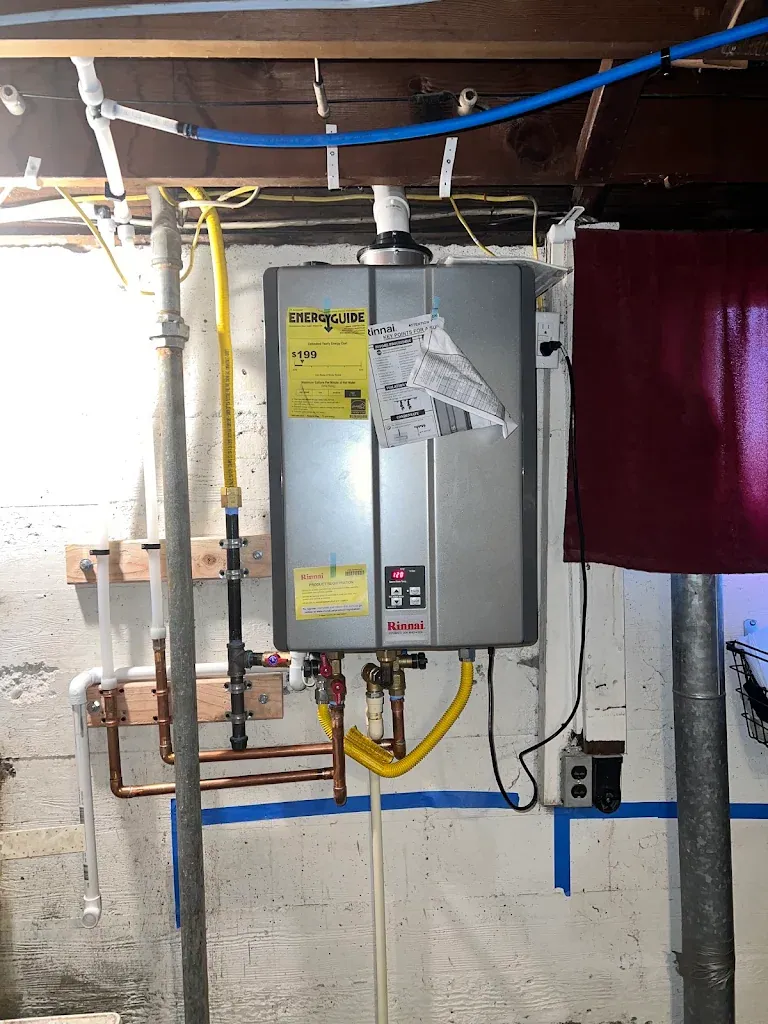
Electric to gas is the more common request, usually from a household tired of running out of hot water. It is a real project. A gas line has to be run from the meter or the propane tank to the heater, sized for the load, and permitted and pressure tested. The heater needs a flue or a sidewall vent and combustion air. If the house has gas already for a furnace or range, the line is often a reasonable extension; if the house has never had gas, the utility service or a propane tank comes first. Most of these end up as tankless conversions, since the venting and gas work are the same and the tankless gives the capacity people were after.
Gas to electric happens too, mostly when a homeowner wants to drop a gas appliance, when the flue is a problem, or when the plan is a heat pump unit in a garage. It needs a dedicated circuit, often 30 amps for a standard tank and the same or less for a hybrid, and panel capacity to spare. We coordinate the electrical with a licensed electrician; we do not do electrical work ourselves. The gas line gets capped and that is inspected under the plumbing permit.
- Electric to gas: gas line sizing, venting, combustion air, permit and pressure test
- Gas to electric: dedicated circuit, panel capacity, cap the gas line, permit
- Either way: new location may need a drain pan, expansion tank and strapping
Safety and venting on gas units
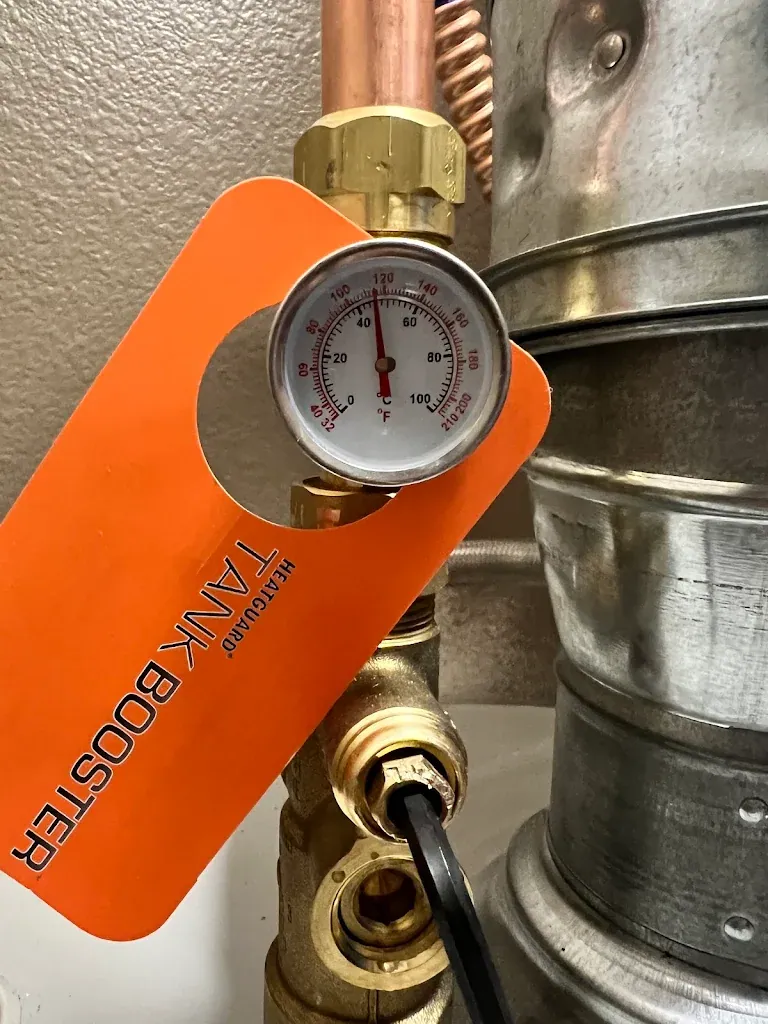
A gas water heater makes carbon monoxide if it does not draft properly. Older atmospheric tanks vent by natural draft through a metal flue that has to rise continuously and connect to a chimney or a B-vent roof jack. We see flues in older Bremerton and Manchester homes that are disconnected in the attic, sloped the wrong way, or sharing a chimney that was lined for a furnace that is no longer there. A flue inspection is part of every gas heater install and every service call.
Power-vented and condensing units push exhaust out a side wall through PVC, which removes most of the draft problems and lets the heater live in more places. They need an outlet nearby and, for condensing units, a condensate drain. Tankless units vent the same way. Any gas unit in a garage needs its burner raised off the floor to the height the code requires and protection from vehicles. A carbon monoxide alarm near sleeping areas is cheap and we recommend one in every gas home.
Our usual advice
If you have gas or propane and a busy household, stay on gas, and think about tankless if you want to stop running out. If you are all-electric with a garage or utility room, look at a heat pump water heater before a standard electric tank. If you are all-electric in a tight closet, a good standard electric tank from Bradford White or A. O. Smith is still a fine heater. If you are thinking of changing fuels, tell us why, because the reason decides whether the project is worth doing.
Whichever way it goes, we pull the permit, strap the tank, pipe the relief valve, check the flue or the circuit, and add an expansion tank where the house needs one. And we will tell you plainly if the heater you have is fine and the problem is somewhere else, which happens more than you would think.
Frequently asked
Is a gas or electric water heater better for a Kitsap County home?
If gas or propane is already in the house, a gas heater gives faster recovery and keeps working in an outage if it has a standing pilot. If the house is all-electric, a heat pump water heater in a garage or utility room is the efficient choice and a standard electric tank is the simple one. Switching fuels is a project, not a swap.
Does Cascade Natural Gas serve my neighborhood?
Cascade serves parts of Kitsap, mainly around Bremerton, Port Orchard, Silverdale and Poulsbo, with gaps. PSE serves gas in Pierce County. Mason County, the Key Peninsula, Bainbridge and the north end of Kitsap have no natural gas. The utility can confirm whether a main runs past your house.
Which water heater works during a power outage?
An atmospheric-vent gas or propane tank with a standing pilot. Power-vented gas units, tankless units and all electric heaters stop when the power does, though a full tank stays warm for many hours.
Does Washington require heat pump water heaters?
Not in existing homes. The state's current residential energy code steers new construction toward heat pumps through an efficiency credit system; a proposal that would have effectively required them was withdrawn in January 2024 in favor of credits. Replacing a heater in your existing home is governed by the plumbing code and the permit, not by that requirement.
Can I switch from electric to a gas water heater?
Yes, if gas or propane is available. It requires a properly sized gas line, venting, combustion air, a permit and a pressure test, and the heater location may change. Many homeowners making this switch choose a tankless since the gas and vent work is the same.
Do you do the electrical work for a new electric water heater?
No. We handle the plumbing, the permit and the gas side, and we coordinate with a licensed electrician for a new circuit or panel work. A like-for-like electric replacement on an existing circuit usually needs no electrical work at all.
Is propane a good choice for a water heater?
Yes, and it is the standard choice in Mason County and rural Kitsap. Tank and tankless propane heaters both work well. We size the propane tank and regulator for the load so the heater does not starve on cold mornings.
About the author. Gregory Lowe is the owner and lead plumber at Washington Plumbing & Drain, a veteran-owned company in Port Orchard serving Kitsap, Pierce and Mason counties. The guidance here comes from daily work in local homes, not from a content farm. Call (360) 812-1124 with questions.