Short answer
An atmospheric river pushes inches of rain onto already saturated ground, and the water table around Puget Sound responds within hours. Getting ready means testing the sump pump, clearing exterior drains and downspouts, confirming the sewer line can carry water with roots and infiltration in play, and giving septic drainfields a fighting chance. The homes that call us during a big storm nearly always had a warning sign in September.
In this guide
- What an atmospheric river does to the ground under your house
- Sump pumps and crawlspace drainage before the first big storm
- Gutters, downspouts and the water you can keep out
- Sewer lines, roots and groundwater infiltration
- Septic systems in a saturated drainfield
- Crawlspace water lines, drains and the rust problem
- Commercial lots, storm drains and catch basins
Key takeaways
- Groundwater, not rainfall, is what floods crawlspaces here. By December the ground is full and every additional storm has nowhere to go.
- Test your sump pump by pouring water into the pit in September, and replace a pump that is more than seven or eight years old before it fails in a storm.
- Sewer lines with root intrusion or cracks let groundwater in, and a line that is marginal in August backs up in November.
- Septic drainfields in saturated soil cannot accept normal household flow. Spread out laundry and long showers during multi-day storms.
- Downspouts that dump next to the foundation are the single cheapest thing to fix.
- Storm drains and catch basins on commercial lots need jetting before the rain, not after the parking lot floods.
What an atmospheric river does to the ground under your house
Western Washington gets most of its rain between October and April, and a good share of it arrives in a handful of atmospheric river events. These are long plumes of tropical moisture that park over the region for two or three days and drop several inches of rain at a time. The first one in October soaks into dry ground. By the third or fourth, the soil is saturated, the glacial till and hardpan a few feet down will not let water through, and the water table rises to the surface in low spots.
That is when crawlspaces fill. Much of Kitsap and Mason County sits on compacted glacial till with a thin layer of topsoil on top, which means water moves sideways along the hardpan rather than down. A house at the bottom of a slope in Olalla, Port Orchard or Belfair can have a dry crawlspace all summer and six inches of standing water in it by Thanksgiving, with no leak anywhere in the plumbing.
The plumbing consequences follow from that. Sump pumps run constantly. Sewer lines that leak get infiltration. Septic drainfields drown. Pipe hangers rust in wet crawlspaces, and crawlspace water lines sit in cold water that pulls heat out of them when the freeze arrives.
Sump pumps and crawlspace drainage before the first big storm
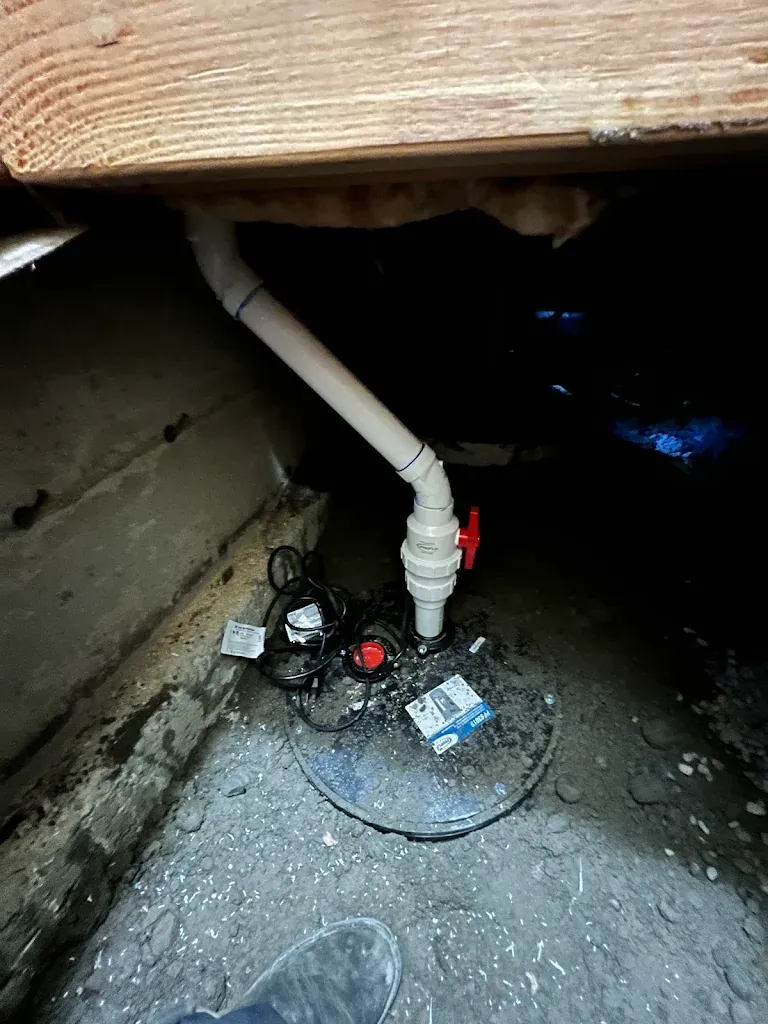
If your house has a sump pump, September is when to test it. Lift the lid, pour a few gallons of water into the pit until the float rises, and watch the pump run and the water level drop. Listen for grinding, which is bearing wear, and watch whether the check valve holds or the water drains back into the pit after the pump stops. A pump that hesitates or hums is telling you it will not survive a three-day storm.
Look at the discharge line outside. It should carry water well away from the foundation, and it should not be crushed, kinked, or dumping into a bed of mulch six feet from the house where the water simply soaks back in. If the discharge runs uphill or across a driveway, it should have a check valve near the pump and a way to drain so it does not freeze solid in January.
For crawlspaces without a sump that flood every winter, a sump pit with a Liberty pump and a proper discharge is usually the fix. Homes on the steeper lots around Sinclair Inlet and the Manchester shoreline sometimes need a battery backup, because the power goes out in the same windstorms that bring the rain.
- Pour water into the pit and watch the pump cycle fully
- Listen for grinding, humming or a pump that runs but does not lower the water
- Confirm the check valve holds
- Walk the discharge line to its outlet and clear it
- Replace pumps older than seven or eight years before the rainy season
- Consider a battery backup if your area loses power in windstorms
Gutters, downspouts and the water you can keep out
This is not strictly plumbing, but it causes half the plumbing problems we see in winter. A roof sheds hundreds of gallons in a moderate storm, and if the downspouts end at a splash block two feet from the foundation, all of that water goes straight into the soil against the crawlspace wall. Extend downspouts to daylight downhill from the house, or tie them into a buried drain line that runs to a dry well or the street, and clean the gutters before the fir needles pack them full in November.
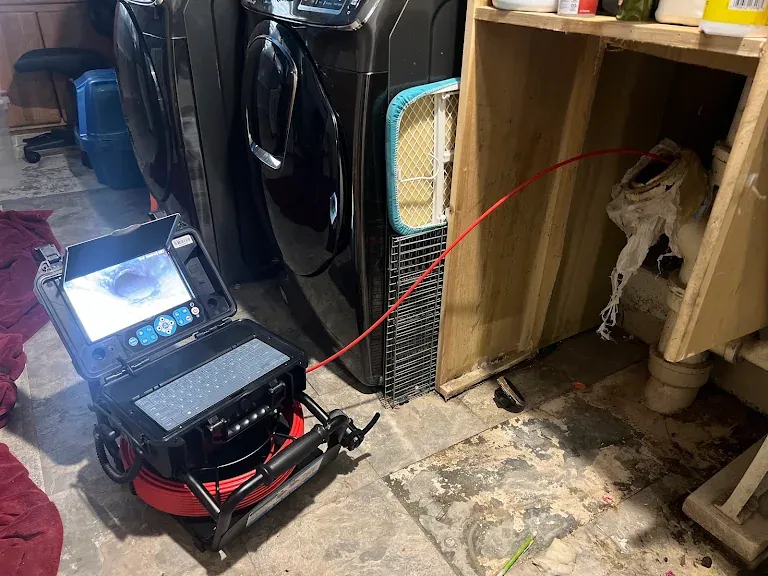
On lots with a footing drain, the outlet should be found and checked for flow. Many footing drains on 1970s and 80s homes were never maintained and are silted solid, which means they do nothing in a storm. A sewer camera fits those lines, and a jetter will clear them if the pipe is intact.
Driveway trench drains, area drains in low spots and the catch basins at the bottom of long gravel driveways in Mason County and the Key Peninsula fill with silt and needles every year. Clear them before the rain, not after the garage floods.
Sewer lines, roots and groundwater infiltration
A sewer line that drains fine in summer and backs up in November is one of the most common fall calls we get. Here is what is happening. Tree roots entered the line through a joint or crack months ago and have been growing into a mat. All summer, the line still passes water through the roots. When the rainy season raises the groundwater, water starts entering the pipe through the same openings, the roots swell, and solids catch on them. The line fills from the outside in.
Clay sewer pipe from the 1950s and 60s and Orangeburg from the same era are the usual culprits in the older neighborhoods of Bremerton, Port Orchard and Tacoma. Cedar and maple roots are relentless. If your main line has been cabled more than once, get it on camera before October and find out whether the problem is a maintenance item or a section of pipe that needs to be replaced.
Infiltration also matters if you are on Kitsap County Sewer or a Pierce County system. Groundwater entering private side sewers overloads the public mains and lift stations during storms, which is why some districts pressure owners to fix leaking laterals. A line that holds water in a camera inspection or shows water weeping in at joints is a line that needs attention.
Septic systems in a saturated drainfield
Thousands of homes in Kitsap, Mason and rural Pierce County are on septic, and a septic system in an atmospheric river is a system under stress. The drainfield works by letting effluent soak into unsaturated soil where bacteria finish the job. When the soil is saturated, the effluent has nowhere to go. It pools, backs up into the tank, and eventually backs up into the house or surfaces in the yard.
During a multi-day storm, give the system a break. Spread laundry across the week rather than doing five loads on Saturday. Keep showers short, fix running toilets, and do not run the dishwasher and the washing machine at the same time. Keep vehicles off the drainfield so the soil is not compacted.
If the house is on a pump system, with an effluent pump lifting from the tank to a mound or a drainfield uphill, check that the alarm works and that the pump chamber is not taking in surface water through a loose lid or a cracked riser. We service effluent pumps and alarms; tank pumping and drainfield work are a septic company's job, and we will tell you which one you need.
Crawlspace water lines, drains and the rust problem
A crawlspace that sits wet every winter ages the plumbing in it. Steel pipe hangers rust through and let drain lines sag, which creates bellies that hold water and clog. Galvanized water lines corrode from the outside as well as the inside. Cast iron drain pipe that has been sitting in damp air for sixty years develops the flaky scale that catches everything.
If you are under the house checking the sump, look at the pipes. Sagging drain lines, rust streaks, white mineral crust on copper fittings and any sign of dripping are all worth a call before the rain. Crawlspace drain and supply repipes are a large part of our winter work, and they are easier to do before the crawlspace is a pond.
Standing water also makes the freeze that often follows a storm much worse. A water line sitting in a few inches of cold water loses heat far faster than one in dry air. Getting the crawlspace dry in October protects the pipes in January.
Commercial lots, storm drains and catch basins
Restaurants, shopping centers and multifamily properties around Port Orchard, Bremerton and Gig Harbor have storm drainage systems that get ignored until the parking lot is underwater. Catch basins fill with sediment and leaves, the pipes between them collect silt and roots, and the outfall gets buried. The first atmospheric river of the season finds all of this.
We jet storm drain lines and clean catch basins with the same hydro jetting truck we use for sewer work. The right time is late summer, when the lines are dry and the sediment is loose. A camera run through the system afterward tells the property manager which sections are intact and which are crushed or separated.
Frequently asked
Why does my crawlspace flood when there is no plumbing leak?
Rising groundwater. The glacial till under most of our region stops water from draining down, so it moves sideways and comes up through the crawlspace floor in low spots. Fixing it is about drainage and a sump, not pipe repair, although wet crawlspaces do damage pipes over time.
Why does my sewer back up only in the fall and winter?
Groundwater is entering the line through root-damaged joints or cracks, swelling the root mass and adding flow the line cannot handle. A camera inspection before the rain tells you whether cleaning will keep it open or a section needs replacement.
How often should a sump pump be replaced?
Most residential pumps are worn out after seven to ten years of winter duty, sooner if they run constantly. We recommend replacing a pump before it fails rather than after, and testing it every September.
Can you do anything about a drowning septic drainfield?
Not directly. A drainfield that cannot take water needs a septic designer and installer. What we can do is service the effluent pump, alarm and plumbing between the house and the tank, and confirm the backup is not actually a clogged house drain line.
Should I run my sump pump discharge into the sewer?
No. Connecting a sump or footing drain to the sanitary sewer is prohibited by the sewer districts around here because it overloads the treatment system during storms. Discharge it to daylight, a dry well or the storm system where one exists.
What should I check during a storm itself?
Listen to the sump pump cycling and look at the discharge outside. Check that drains in the house are running normally. On septic, keep water use light. If a drain starts gurgling or the lowest fixture backs up, stop running water and call.
About the author. Gregory Lowe is the owner and lead plumber at Washington Plumbing & Drain, a veteran-owned company in Port Orchard serving Kitsap, Pierce and Mason counties. The guidance here comes from daily work in local homes, not from a content farm. Call (360) 812-1124 with questions.