
What it usually looks like
- A musty or earthy smell in the house, strongest near floor registers or the crawlspace hatch
- Water visible under the house, either in puddles or a sheet across the vapor barrier
- The vapor barrier is floating or has silt on top of it
- Floors feel cold or spongy, or hardwood is cupping
- The water bill rose and you cannot find a leak inside
- Mosquitoes or dampness around the foundation vents in spring
Likely causes, most common first
Groundwater during the wet season
Much of Kitsap, the Key Peninsula and Mason County sits on glacial till and clay that does not drain. From October through April the water table rises to within inches of the surface, and any crawlspace dug below grade becomes the lowest point around. Water seeps up through the soil, usually clear and cold, and disappears again by summer.
A leaking water supply line
A pinhole in copper, a failed PEX fitting or a hose bib that split in a freeze will spray or drip for weeks before anyone looks under the house. The giveaway is water that is present even in dry weather, concentrated near a pipe run, and a meter that moves when everything is off.
A leaking drain or sewer line
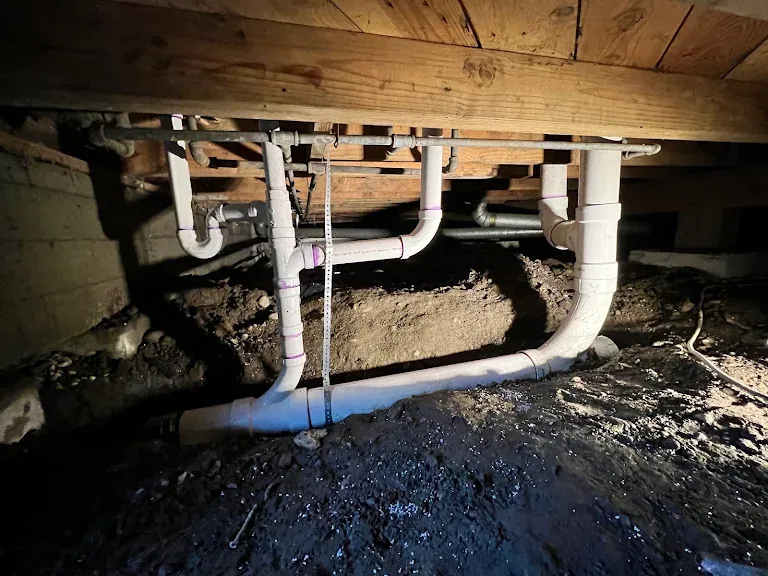
ABS and PVC joints that were never glued properly, cast iron that rusted through, or a toilet flange that leaks into the subfloor all put wastewater under the house. The smell is the clue, along with wet spots that grow when you run a specific fixture.
Downspouts and surface water
A downspout that dumps next to the foundation, or a yard that slopes toward the house, pushes rainwater through the vents and under the sill. This water arrives during storms and carries leaves and mud with it.
A failed or missing sump pump
Many crawlspaces around here were built with a sump pit for a reason. If the pump died, the float is stuck or the discharge line froze, the pit fills and overflows across the crawlspace.
Condensation and poor ventilation
A crawlspace with no vapor barrier and blocked vents can collect enough condensation on cold pipes and ducts to look like a leak. It is a film rather than a pool, but it causes the same mold and rot.
Safe things to check yourself first
- Read your water meter with every fixture off, wait 30 minutes without using water, and read it again. Movement means a supply leak somewhere.
- Note the weather. If the water only shows up after days of rain and is gone by July, groundwater is the likely source.
- Smell the water and look at it. Clear and odorless points to groundwater or supply; cloudy or foul points to a drain leak.
- Run each fixture for a few minutes while someone watches under the house with a flashlight, if it is safe to enter.
- Walk the outside of the house during a storm. Watch where the downspouts discharge and whether water is pooling against the foundation or running through a vent.
- If there is a sump pit, lift the float by hand. The pump should start within a second or two.
Stop and call if
- The water meter moves with everything off
- There is a sewage smell or visible waste under the house
- Water is touching the water heater, furnace, electrical junction boxes or outlets
- Standing water is more than a couple of inches deep or rising
- Floors upstairs are sagging, soft or stained
How we diagnose and fix it
- Perform a meter test and isolate the supply system to confirm or rule out a pressurized leak, then trace it under the house.
- Pressure-test and camera the drain lines when the water smells like waste or appears after fixture use.
- Repair the leaking copper, PEX, ABS or cast iron, and when the crawlspace plumbing is old and failing in several places, give you a repipe option instead of chasing leaks one at a time.
- Install or replace a sump pump in a proper basin with a check valve and a discharge routed well away from the foundation, with a battery backup where outages are common.
- Advise on drainage and vapor barrier work and connect you with a crawlspace contractor when the water is groundwater and the fix is grading or an interior drain, since that is outside plumbing.
- Document the damage with photos for your insurance file when the cause is a sudden pipe failure.
Around Kitsap, Pierce and Mason counties
Crawlspace water is practically a regional feature. Lots in Port Orchard off Sedgwick and Mullenix, the flats around Belfair, and the low ground on the Key Peninsula all sit on hardpan that holds water like a bowl. We have been under houses in Olalla where the crawlspace looked like a pond every February for decades and the owners assumed it was normal. The December 2022 and January 2024 freezes added a second cause: split pipes that leaked quietly under the house for weeks before anyone noticed the water bill.
Questions people ask
Is standing water in a crawlspace an emergency?
It is urgent if it is a supply leak, because it is running up your bill and rotting the framing by the hour. Groundwater is a slower problem but still damages insulation, invites mold and corrodes ductwork. Either way, do not ignore it.
Can a plumber fix groundwater in my crawlspace?
We can install the sump pump and discharge line, which handles most seasonal water. Grading, French drains, encapsulation and vapor barriers are crawlspace and drainage contractor work, and we will tell you when that is what you need.
Why is my vapor barrier floating?
Water is coming up from beneath it, which means groundwater, not a leak from above. A plumbing leak wets the top of the plastic.
Should I pump the water out myself?
You can use a utility pump to lower it, but if it is groundwater it will return. If it is a leak, pumping without finding the source just delays the repair. Find the cause first.
Will the water hurt my plumbing?
Over time, yes. Copper sitting in wet soil pits from the outside, galvanized rusts faster, and PEX fittings corrode if they are brass in acidic water. Getting the crawlspace dry protects the pipes as much as the house.