What it usually looks like
- Every faucet in the house is dry or sputters air
- The pressure gauge at the tank reads zero
- The pump breaker is tripped, or trips again right after you reset it
- You hear the pressure switch click but nothing happens
- Water came back briefly after you tapped the switch, then quit again
- The pump runs constantly but pressure never builds
Likely causes, most common first
Tripped breaker or lost power to the pump
The pump has its own two-pole breaker, often in a subpanel in the pump house or garage. Storm outages on Mason PUD and Peninsula Light are common, and a breaker that trips during a surge may not reset itself. If the house has power but the pump does not, this is the first place to look.
Pressure switch failed or stuck open
The switch senses tank pressure through a small nipple that clogs with iron sludge, scale or an insect nest. If the switch never sees low pressure, it never calls the pump. Burned contacts can also fail to close. Tapping the switch sometimes gets one more cycle out of it, which is a diagnosis, not a repair.
Frozen well house or supply line
An unheated pump house with a dead heat lamp, or a shallow line between the building and the home, freezes solid in a hard snap. The gauge may still hold pressure while nothing reaches the house, or the pump runs against ice until the overload trips. The December 2022 and January 2024 freezes produced a week of these calls each.
Failed check valve or waterlogged tank
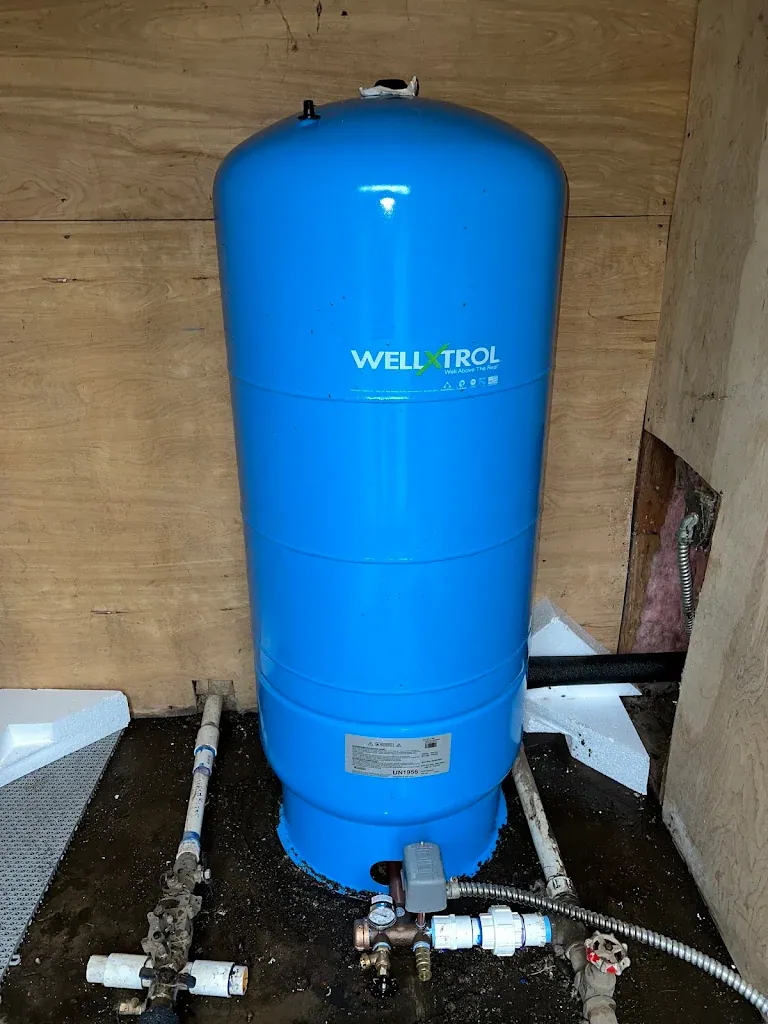
A check valve that lets pressure bleed back toward the well, or a tank with a torn bladder, will not always kill the water outright, but combined with a tired switch they can leave the system stalled at zero. Both are repairs we make in the well house.
The pump, motor or control box has failed
Submersible pumps last fifteen to twenty-five years, less with iron-heavy water or years of short cycling. A motor that has shorted to ground will trip the breaker instantly. A worn pump end will run and run without building pressure. A swollen capacitor in the control box leaves the pump humming but not starting. All of that is pump company territory.
The well has run low
Shallow wells near Hood Canal, on the Key Peninsula and in the gravel benches around Belfair can drop below the pump in late summer or during a long dry fall. The pump sucks air, the low-water cutoff trips, and water returns after the well recovers overnight.
Safe things to check yourself first
- Check the pump breaker in the main panel and any subpanel. Reset it once. If it trips again, stop and leave it off.
- Look at the pressure gauge. Zero with the switch clicked closed means the pump is not delivering. Zero with the switch open means the switch is not calling. Pressure on the gauge but nothing at the house means a frozen or broken line.
- With the breaker off, remove the pressure switch cover and look for burned, pitted or welded contacts and signs of insects or corrosion.
- Listen near the tank when the breaker is turned back on. A hum with no water means the motor is trying to start, which points past the well house.
- Note the weather. If it is below freezing, check for frost on pipes in the pump house or where the line enters the house, and make sure the heat lamp or heater is actually on.
- Open the well house door and look for water on the floor, a weeping relief valve or a split fitting.
Stop and call if
- The breaker trips every time it is reset
- The pressure switch contacts are welded, scorched or sparking
- The pump hums or buzzes but does not start
- Water comes out muddy or full of sand once it returns
- You smell something burning near the switch or control box
How we diagnose and fix it
- Test for voltage at the breaker and the switch to confirm whether the problem is electrical or on the water side.
- Replace failed pressure switches, clean or replace the sensing nipple, and replace a stuck gauge so you can read the system next time.
- Thaw and repair frozen or split lines in the well house and between the building and the home, then insulate and add thermostatic heat tape or a small heater so it does not happen again.
- Test the check valve and the tank bladder, and replace either when it is the reason the system cannot hold pressure.
- Tell you plainly when the problem is the pump, the control box, the drop pipe or the water level, refer you to a well pump company we trust, and coordinate with them so the well house side is ready when the new pump goes in.
- Add a storage tank and booster after the well house when a low-yield well is the real issue and the pump company confirms it.
Around Kitsap, Pierce and Mason counties
Wells are the water source for most of rural Mason County, Seabeck, Hansville, the Olalla and Burley hills, and much of the Key Peninsula, so no water from a well is a routine call for us. The pattern we see most is a pressure switch nipple packed solid with iron and manganese sludge, which is a water quality problem showing up as a no-water problem. Winter calls are frozen pump houses. Late summer calls around Hoodsport and Union often turn out to be wells that dropped below the pump in a dry year, and those we hand to a pump company. Knowing the season narrows it down before we arrive.
Questions people ask
Why do I have water again after turning the breaker off and on?
Something marginal reset itself, most often a pressure switch with worn contacts or a motor overload that cooled down. It will fail again, usually at a worse time. Treat it as a warning and get it looked at.
How do you know if it is the pump and not the well house?
If the breaker holds, the switch closes, the tank and check valve test fine and the gauge still will not climb, the problem is down the well. We stop there, explain what we found, and refer you to a well pump company rather than guessing at something we do not service.
Do you pull well pumps?
No. Pulling and replacing a pump, the drop pipe or the pitless adapter is a well pump company's job and we will say so as soon as the diagnosis points that way. We can coordinate the visit and finish the tank, switch and line work on our side so you are not juggling two schedules.
Can you fix a well house that froze?
Yes. We thaw and repair the split lines and fittings, replace a cracked tank or tee, and insulate and heat the building so the next cold snap passes without a call.
What about the water heater while the well is down?
Turn off the breaker or gas to an electric or gas tank heater if the house has been dry for more than a few hours. Heating elements burn out fast without water around them, and that is an avoidable second repair.