
What it usually looks like
- A red light on a small box outside the house, in the garage or on the control panel
- A loud buzzer or beep that may or may not have a silence button
- Drains in the house are slow or gurgling at the same time
- The pump breaker is tripped
- A sewage odor near the tank lids or pump chamber
- The alarm sounds only during heavy rain or heavy water use, then clears
Likely causes, most common first
Lost power to the pump
The alarm and the pump are often on separate circuits for exactly this reason. A tripped breaker, a GFCI that popped in the pump house, or a storm outage on Peninsula Light or Mason PUD leaves the pump dead while the alarm still screams. This is the first thing to check and the most common cause after a wind storm.
Stuck or failed float switch
Pumps are started by a tethered float in the chamber. Floats get fouled with grease and solids, tangle on the cord or the pipe, or the switch inside simply fails. The pump is fine but never gets told to run. Float replacement is routine work and far cheaper than a new pump.
The pump itself has failed
Effluent pumps last ten to fifteen years; grinder and ejector pumps often less because of what they handle. A burned motor, a jammed impeller from a wipe or a rag, or a seal that let water into the windings will trip the breaker or hum without pumping.
Blocked or frozen discharge line or check valve
The pump pushes through a check valve and a pressure line to the drainfield, a mound, or the public sewer. A check valve stuck shut, a crushed line or a frozen above-ground section means the pump runs against a wall. Pumps that cycle on and off quickly and never lower the chamber often have this problem.
Too much water coming in
A saturated drainfield in February, a leaking toilet flapper running all night, or groundwater infiltrating the tank can send more water into the chamber than the pump and the drainfield can handle. The alarm comes on during storms and clears afterward. That is a drainage or septic-system problem rather than a pump failure.
Safe things to check yourself first
- Press the silence or test button on the alarm box. The light stays on until the level drops, but the noise stops.
- Cut water use to the minimum. No laundry, no long showers, and spread flushes out. The chamber's reserve is what buys you time.
- Check the pump breaker in the panel and any GFCI outlet the pump is plugged into. Reset once. If it trips again, leave it off.
- Look at the control panel if there is one. Note any lights, the position of the switch, and whether it is set to manual, off or auto. Auto is the normal setting.
- Walk out to the tank and pump chamber lids. Do not open them unless they are designed to be opened safely; note odor, standing water or a lid that has lifted.
- If it is raining hard and the alarm has done this before in storms, note the pattern; it helps us and the septic company sort pump problems from drainfield problems.
Stop and call if
- The alarm is on and drains in the house are backing up
- The pump breaker trips again immediately after reset
- Sewage is surfacing around the tank, chamber or drainfield
- The alarm has been on for more than a few hours with the household unable to cut water use
- You smell sewage inside the house along with the alarm
How we diagnose and fix it
- Confirm power at the panel and the pump, test the floats and the alarm float, and read the chamber level to find out which component failed.
- Replace stuck or failed float switches and alarm floats, and set the on, off and alarm levels correctly for the chamber.
- Pull, test and replace effluent, sewage ejector and grinder pumps with the right pump for the head and the line, using Liberty and comparable units, with new check valves and unions so the next service is simple.
- Clear or replace a blocked check valve, repair a crushed or frozen discharge line, and insulate exposed sections that froze in the January 2024 cold.
- Diagnose control panel faults, replace relays and alarms, and add a visible alarm where the existing one is buried somewhere nobody hears it.
- Tell you plainly when the problem is a full tank, a flooded drainfield or a failing system, and refer you to a licensed septic pumper or designer, since we do not pump tanks or repair drainfields.
Around Kitsap, Pierce and Mason counties
A large share of homes in Mason County, the Key Peninsula and rural Kitsap depend on a pump somewhere in the system: an effluent pump lifting to a mound or a drainfield uphill, a grinder pump pushing to a community line, or a sewage ejector serving a bathroom below the sewer. Belfair's sewer system and the pressure sewers around Allyn and the Hood Canal shoreline run on grinder pumps at each house. Alarms go off most during storm outages and the wettest weeks of winter, when drainfields on clay soils are saturated and pumps have nowhere to push. Keep the alarm box where you can hear it.
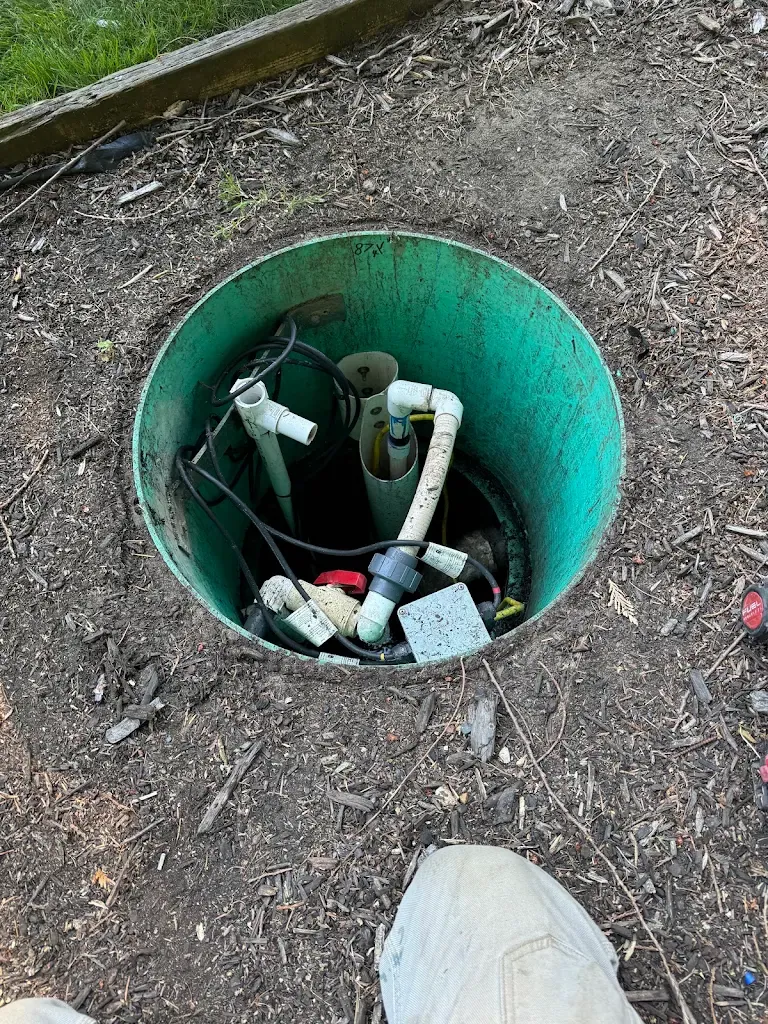
Questions people ask
How long can I wait after the alarm goes off?
Most chambers have several hours to a day of reserve at normal use, less with a full house. Cut water use hard and treat it as a same-day call. Waiting until it backs up turns a pump repair into a cleanup.
Does a plumber or a septic company fix a septic alarm?
It depends on the cause. We handle the pump, floats, check valve, discharge line, panel and anything plumbing-related in the pump chamber. A full tank, a saturated or failed drainfield, baffles and tank repairs are septic company work. We tell you which one you have after we look.
Can I turn the alarm off and ignore it if the drains still work?
You can silence the sound, but do not ignore the light. The system is telling you the pump is not keeping up. It will back up, usually at the worst possible time, and sewage backups are expensive to clean.
Why does my alarm only come on when it rains?
Rain is either flooding the drainfield so the pump cannot discharge, or leaking into the tank or chamber through lids and risers. Both are worth addressing before the pump wears out from running against the extra load.
What is the difference between an effluent pump and a grinder pump?
An effluent pump moves clarified liquid from the second compartment of a septic tank to a drainfield or mound. A grinder pump chews raw sewage into slurry and pushes it through a small pressure line to a sewer main. A sewage ejector lifts raw sewage from a basement bathroom to the house drain. They are sized and plumbed differently, and the right replacement matters.