Short answer
On a septic property, a plumber handles everything inside the house and the drain line from the house to the septic tank inlet, plus effluent and sewage pumps in a pump chamber. A licensed septic company handles the tank itself (pumping, baffles, lids, risers), the drainfield, and the inspections Kitsap Public Health District and Mason County require. The two overlap at the tank inlet and at pump chambers, and knowing which side of that line your problem sits on gets the right truck to your driveway the first time.
In this guide
Key takeaways
- Plumber: fixtures, drains, the main line to the tank, cleanouts, and pumps in effluent or ejector chambers.
- Septic company: tank pumping, baffle and lid repair, drainfield work, and county-certified inspections.
- Washington Plumbing & Drain does not pump septic tanks and does not inspect drainfields.
- Kitsap Public Health District recommends inspection every three years by a district-certified professional, and requires a Property Conveyance Inspection at sale.
- Mason County requires an O&M inspection report by a certified specialist within 12 months of a property transfer.
- A full tank mimics a clogged drain line. Ask when the tank was last pumped before anyone runs a cable.
Why so many homes here are on septic
Public sewer in our area follows density. Bremerton, Port Orchard proper, Silverdale, Poulsbo, Bainbridge's Winslow core, Gig Harbor, and the Tacoma side are sewered. Step outside those boundaries, into Olalla, Burley, Seabeck, the Key Peninsula, most of Hansville and Indianola, and nearly all of Mason County outside Shelton and the Belfair sewer area, and the house drains into a tank in the yard.
That tank changes how plumbing problems look and who fixes them. A sewered house has a lateral that runs to a main someone else maintains. A septic house has a complete private wastewater plant, and the homeowner owns all of it. Two different trades take care of the two halves, and the dividing line is the tank inlet.
What a plumber handles on a septic property
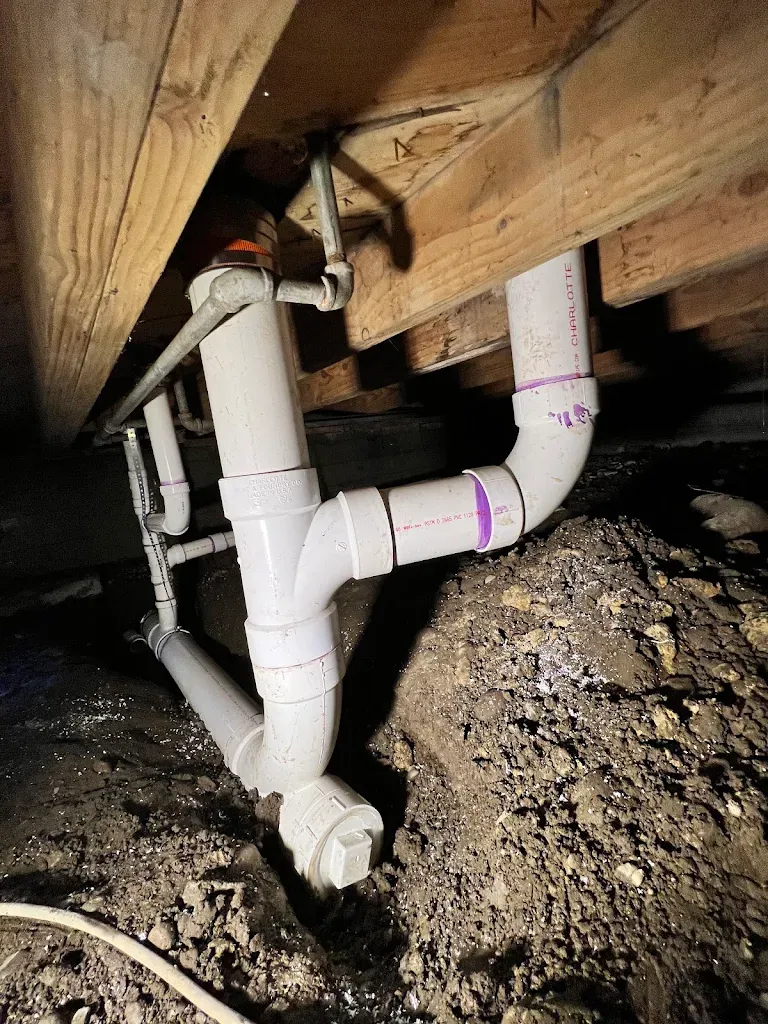
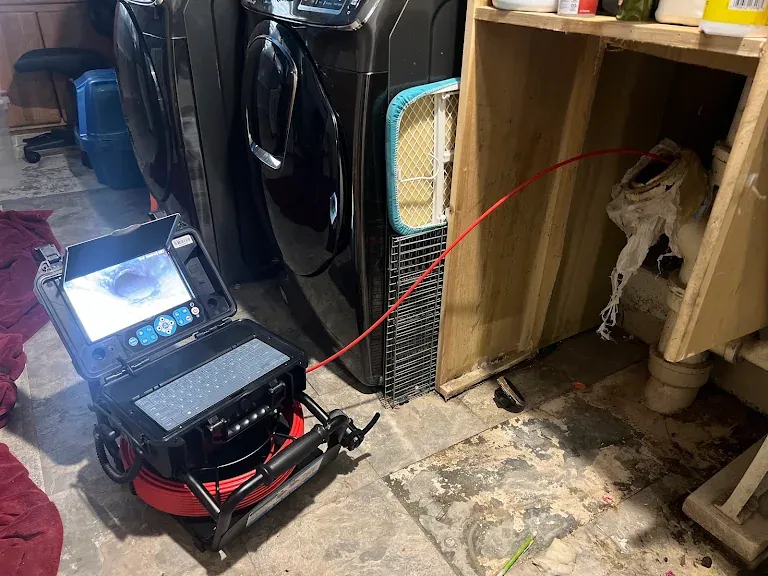
Everything that is plumbing in a sewered house is still plumbing in a septic house. Toilets, sinks, showers, water heaters, water lines, and drains inside the structure are ours. So is the building drain under the house and the main line running from the foundation across the yard to the tank. If that line is clogged, root-filled, bellied, or broken, we cable it, camera it, jet it when the pipe can take it, and repair or replace it by excavation.
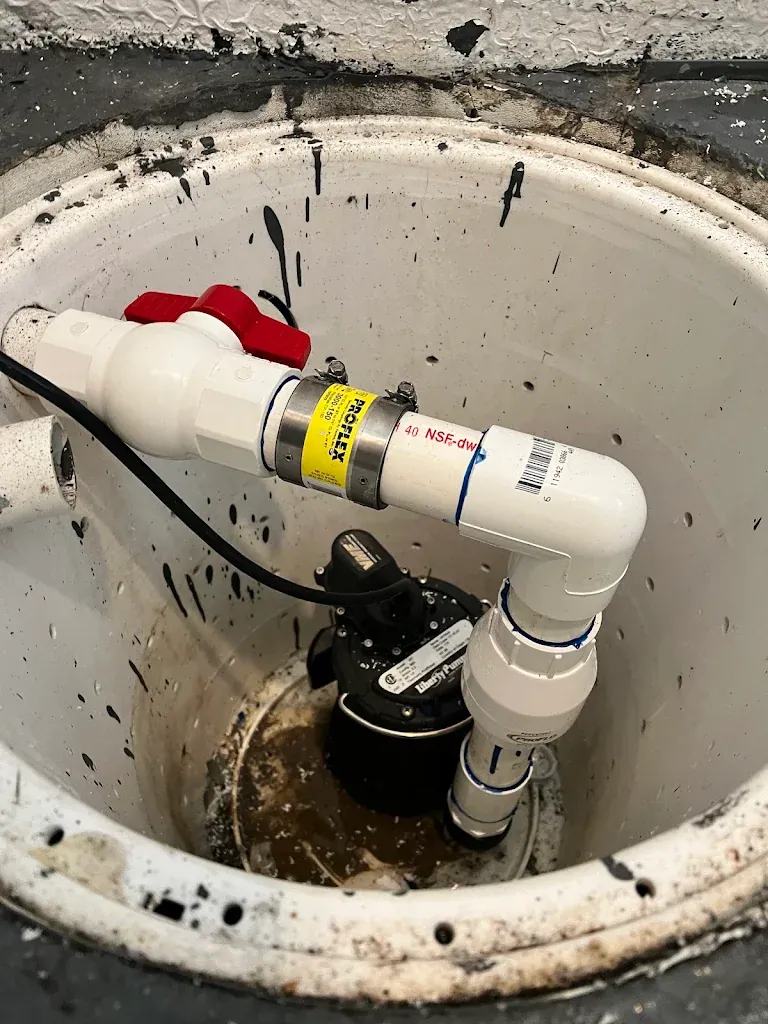
We also install and service the pumps that many septic systems rely on. A house that sits below its drainfield, which is common on the sloped lots around Hood Canal and the Olalla hills, uses an effluent pump in a chamber after the tank to lift treated liquid uphill. A basement bathroom below the main line uses a sewage ejector before the tank. Those pumps, their floats, check valves, and alarm panels are plumbing, and we replace a lot of them, Liberty pumps most often.
Cleanouts, backflow protection, and the pipe connection at the tank inlet round out our side. When a line has settled at the tank and separated from the inlet baffle, we excavate and reconnect it with proper fittings.
What a septic company handles
A licensed septic pumper removes the solids from the tank, and that is the single most important maintenance task on the property. We do not pump tanks. If you call us with a full tank, we will tell you so and give you the name of a pumper rather than run a cable that cannot fix it.
Septic service companies and certified operation and maintenance specialists also handle the tank structure: cracked or sunken lids, risers to bring access to grade, inlet and outlet baffles, effluent filters, and the distribution box. The drainfield, whether gravity trenches, a pressure-distribution field, a mound, or a sand filter, is entirely theirs, along with the inspections the counties require.
Alternative systems, which are common on the small waterfront lots and poor soils around Kitsap and Mason County, add aerobic treatment units, UV disinfection and other components that require a service contract with a certified specialist. A plumber is not the right call for any of that.
Where the two trades overlap
The gray areas are where homeowners most often call the wrong number. These are the situations where either trade may be involved and it helps to describe the symptom carefully.
- Pump chamber alarm: usually the pump, float, or control panel, which is plumbing; sometimes a flooded chamber from a failed drainfield, which is septic
- Slow drains throughout the house: either a clogged line to the tank (plumber) or a full tank or failed outlet (septic)
- Sewage surfacing near the tank: often the line or the inlet connection (plumber) but can be a cracked tank or surcharged field (septic)
- Line to the tank needs jetting: plumber, but the debris lands in the tank, so pumping may need to follow
- Tank lid is buried and cannot be found: a septic company with a locator, or the county's record drawing
- Property sale: the county inspection is the septic company's or the health district's; the sewer scope of the house line is the plumber's
What Kitsap Public Health District expects of owners
Kitsap Public Health District regulates onsite sewage systems in the county under its 2025 ordinance, and it is specific about owner responsibilities. Standard systems should be inspected every three years by a professional the district has certified. Alternative systems need an annual service contract with a certified monitoring and maintenance specialist. Inspections, not a calendar, determine when a tank needs pumping.
When a septic property sells, the district requires a Property Conveyance Inspection, a rule in effect since 2008. The district reviews records, inspects the system, and issues a written report, and it needs a record drawing of the system to do so; if none exists, the owner has to have one created. The district also lists plain-sense owner duties: walk the drainfield and look for wet spots or surfacing, keep lids secure, keep vehicles and structures off the field, and keep children and pets away from the components.
None of that is plumbing work, and we do not pretend otherwise. What we add is the condition of the line feeding the tank, which the county inspection may not camera.
Mason County's rules
Mason County Public Health runs its own program for the cabins and homes around Belfair, Allyn, Grapeview, Union, Tahuya and Hoodsport. For property transfers, the county requires an inspection service report from a certified operation and maintenance specialist dated within 12 months of the sale. Since 2022, a pumping receipt by itself no longer satisfies that requirement for a gravity system; the inspection has to cover all the components.
Mason County also allows homeowners to complete certain O&M reports themselves for some system types after training, a program worth asking the county about if you own a cabin you visit seasonally. Either way, the county contact is the authority on septic paperwork, and we are the call for the house side.
How a septic house changes drain cleaning
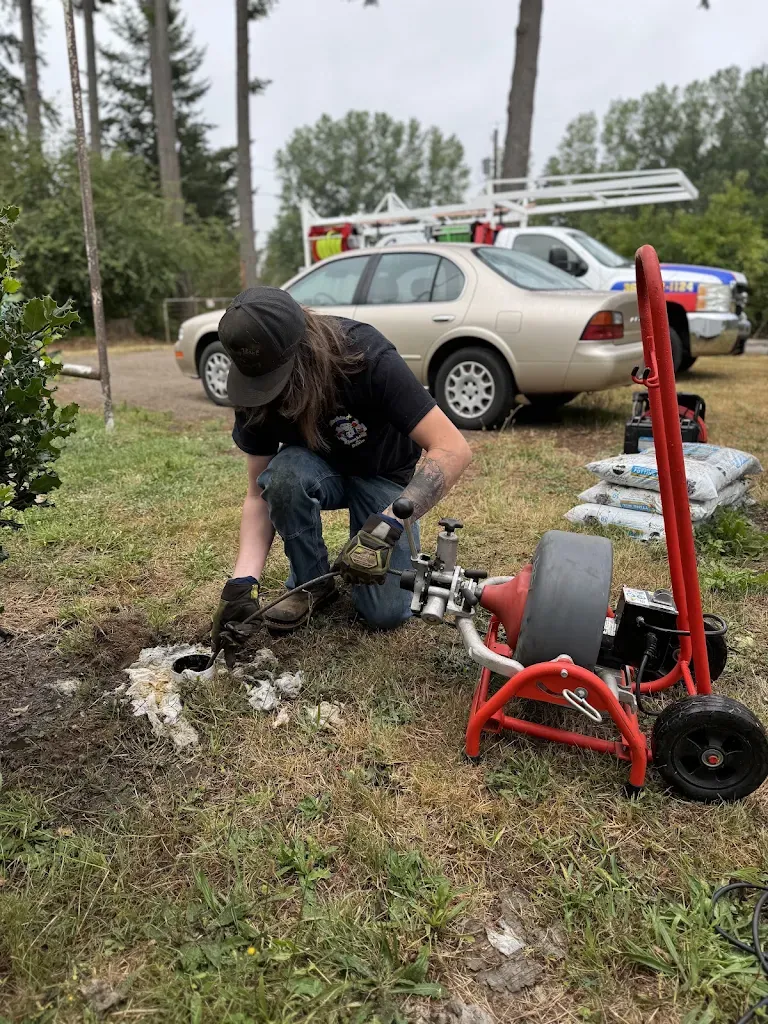
Before cabling a main line on a septic property we ask three questions: when was the tank last pumped, do all the drains back up together or just one, and is there an alarm. A tank full of solids pushes back on the house line and every fixture slows at once; cabling that line does nothing lasting. One slow fixture is a branch clog that has nothing to do with the tank. An alarm points at the pump chamber.
When the line to the tank does need jetting, the grease and sludge we flush out go into the tank. If the tank was due for pumping anyway, we suggest scheduling the pumper for just after our visit. And we never use copper sulfate or caustic drain products on a septic home's drains, since they kill the bacteria the tank depends on.
Septic homes also tend to have long main lines with shallow slope, especially on the big rural lots in South Kitsap and Mason County. Those lines reward an exterior cleanout near the foundation and periodic camera checks, so a problem shows up as a scheduled visit instead of a flooded crawlspace.
A simple way to decide who to call
If the trouble is inside the house, in the pipe between the house and the tank, or with a pump in a chamber, call a plumber. If the trouble is with the tank, the lids, the drainfield, or a county inspection, call a septic company. If you cannot tell, call either one and describe the symptoms; a good plumber or a good septic contractor will send you to the other without charging for the privilege. We do that regularly, and the septic companies we work alongside do the same for us.
Frequently asked
Do you pump septic tanks?
No. Washington Plumbing & Drain does not pump tanks or work on drainfields. We handle the plumbing in the house, the drain line to the tank, and effluent and ejector pumps. For pumping we refer you to a licensed septic company.
My drains are slow everywhere. Plumber or septic?
Start by finding out when the tank was last pumped. If it has been more than a few years, the tank may be full and a pumper is the first call. If the tank was pumped recently and drains are still slow, the line to the tank is likely restricted and that is our job.
Who fixes a septic pump that quit?
We do. Effluent pumps, sewage ejector pumps, floats, check valves and alarm panels in a pump chamber are plumbing work. We stock Liberty pumps and can usually replace one the same day.
Can you camera the line to my septic tank?
Yes, from a cleanout or the house to the tank inlet. It is the same inspection we do for sewered homes and it is useful before a sale or when a line keeps backing up. We do not inspect the tank interior or the drainfield.
What inspection do I need to sell a septic property in Kitsap County?
Kitsap Public Health District requires a Property Conveyance Inspection before sale and needs a record drawing of the system to complete it. In Mason County, a certified O&M specialist's inspection report within the previous 12 months is required. Your agent and the county can walk you through the forms.
Is it safe to hydro jet a drain line on a septic system?
Yes, with the understanding that what we flush out of the line ends up in the tank. We ask about pumping history first and coordinate with a pumper if the tank is near capacity.
About the author. Gregory Lowe is the owner and lead plumber at Washington Plumbing & Drain, a veteran-owned company in Port Orchard serving Kitsap, Pierce and Mason counties. The guidance here comes from daily work in local homes, not from a content farm. Call (360) 812-1124 with questions.