
What it usually looks like
- Pipes bang or thud when a faucet, washing machine or dishwasher shuts off
- The water heater's relief valve drips or discharges periodically
- Faucets spray hard enough to splash out of the sink and toilets refill with a roar
- Supply lines, hose bibs or fixtures develop leaks far sooner than they should
- A hose-bib gauge reads above 80 psi, or climbs overnight to well above its daytime reading
- Ice maker or dishwasher solenoid valves fail or leak
Likely causes, most common first
No pressure reducing valve on a high-pressure district
Water districts push pressure high enough to serve the top of every hill in the zone, which means homes at the bottom of the hill see far more than they need. Many older houses were plumbed before a PRV was required and have never had one installed. The house has simply lived with 90 or 100 psi for decades, and the fixtures have paid for it.
A pressure reducing valve that has failed open
A PRV wears out like any valve. When the seat erodes or the diaphragm tears, it can pass full street pressure through to the house. Pressure that used to be fine and is now high points to a PRV at the end of its life.
Thermal expansion in a closed system
When the meter has a check valve or the PRV does not allow backflow, water heated in the tank has nowhere to expand. Pressure can spike well past 100 psi for a few minutes every heating cycle. This is why a gauge reads normal in the afternoon and high first thing in the morning. An expansion tank absorbs that spike.
Well pressure switch set too high
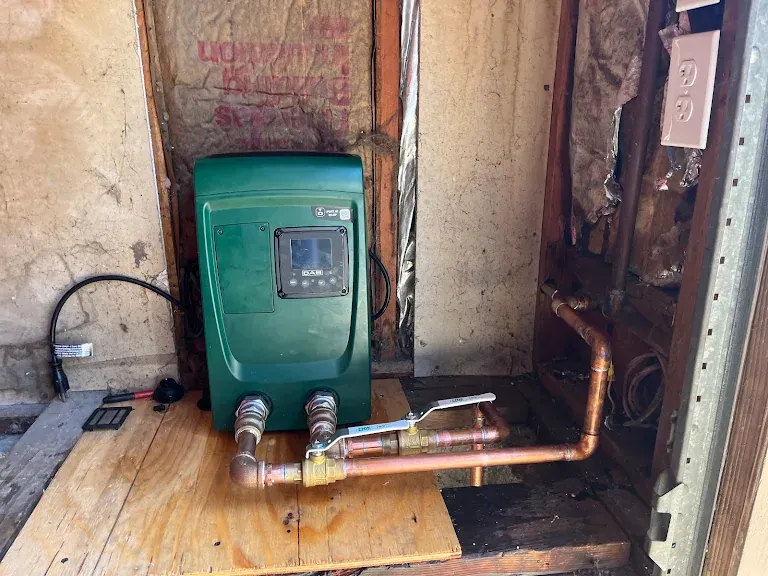
On a well the pressure switch sets the range. A switch adjusted to a high cut-out, or one with contacts welded shut, lets the pump run pressure well past normal. The relief valve on the tank is the only thing stopping it.
A booster pump without a working pressure control
Booster pumps need a properly set controller or switch. A pump that runs on a faulty sensor can drive pressure far higher than the house plumbing was built for.
Safe things to check yourself first
- Buy an inexpensive hose-bib pressure gauge, thread it onto an outdoor faucet, and read it with nothing running
- Leave the gauge on overnight and read it first thing in the morning; a big overnight rise means thermal expansion
- Look near the main shutoff for a bell-shaped valve, which is the PRV, and note whether it is present at all
- Check the end of the water heater relief valve discharge pipe for moisture
- Listen for banging when the washing machine fills and shuts off
Stop and call if
- The gauge reads over 100 psi
- The water heater relief valve is discharging regularly or a stream rather than a drip
- A supply line or hose bib has already burst
- Pipes shake visibly in the wall when a valve closes
- On a well, the pump runs and the gauge keeps climbing past the cut-out
How we diagnose and fix it
- Measure static pressure, then watch it through a water heater cycle to separate a supply problem from thermal expansion
- Install or replace a pressure reducing valve, set it to a sensible range for the house, and add a gauge port so it can be checked later
- Add a thermal expansion tank at the water heater, sized to the tank and the set pressure
- Install water hammer arrestors at washing machine and dishwasher valves where banging persists
- Adjust or replace a well pressure switch or booster controller that is overshooting
- Inspect supply lines, hose bibs and the water heater for damage that high pressure has already caused
Around Kitsap, Pierce and Mason counties
Several districts in our area run high static pressure by design because of the terrain. Homes at the base of hills in Port Orchard, in parts of Silverdale and Bremerton, and on the low side of Gig Harbor often see 90 psi or more at the meter. The 1990s tract homes in those zones were built with a PRV, and those valves are now failing in large numbers. Older shipyard-era houses frequently never had one, and the first clue is a washing machine hose that lets go on a Saturday night.
Questions people ask
What pressure should my house be set to?
Somewhere between 50 and 65 psi is comfortable and easy on fixtures. The code maximum is 80 psi. A PRV lets us dial it in.
Won't lower pressure make my shower weak?
Not noticeably. Modern fixtures are designed around 50 to 60 psi. What people notice is that the pipes stop banging and the faucets stop splashing.
Do I need an expansion tank if I get a PRV?
Yes, nearly always. A PRV closes the system off from the street, so heated water has to expand somewhere. Without a tank, the water heater relief valve becomes the expansion tank, and that is what wears it out.
How long does a pressure reducing valve last?
Ten to fifteen years in our water. If yours is original to a 1990s or 2000s house, it is due for a check.
Can high pressure damage a tankless water heater?
It stresses the heat exchanger and internal valves and can shorten its life. Most manufacturers specify a maximum inlet pressure, and we check it during any tankless install.