Short answer
In most of Western Washington, the property owner is responsible for the side sewer, the pipe that carries wastewater from the house to the public sewer main, and the utility is responsible for the main itself. The City of Tacoma and Pierce County both state that the owner maintains the side sewer from the building all the way to the main, including the portion under the street. Kitsap County's own materials assign the building sewer (property line to house) to the owner and define a separate side sewer lateral from the main to the property line; for that segment, confirm with Kitsap1 before assuming. Rules differ by city and district, so check your specific utility.
In this guide
Key takeaways
- Everywhere in our service area, the pipe from your house to at least the property line is yours to maintain and repair.
- Tacoma and Pierce County put the owner's responsibility all the way to the main, including under the street, and the utility maintains the main and its tees.
- Kitsap County distinguishes a building sewer (property line to house, owner's responsibility) from a side sewer lateral (main to property line); ask Kitsap1 how your utility handles the lateral.
- A backup caused by your side sewer is your repair; a backup caused by a surcharged or blocked main is the utility's. A camera inspection usually shows which.
- Work in the road right-of-way needs a permit from whoever owns the road, and some utilities require approved contractors.
- Insurance often excludes the buried line unless you carry service line or sewer backup coverage.
The vocabulary first: side sewer, lateral, building sewer, main
Utilities around Puget Sound use a few overlapping terms, and the differences matter when you are reading your own city's rules. The sewer main is the large public pipe, usually eight inches or bigger, running under the street or an easement, maintained by the utility. The side sewer or lateral is the smaller pipe, often four or six inches, that connects one property to the main. Some jurisdictions split that pipe at the property line and call the piece on your lot the building sewer.
Where the split falls, and who owns which piece, is the entire question. There is no single statewide rule that assigns side sewers to owners or utilities; each city, county utility, and sewer district sets its own policy in its code. The pattern across most of Western Washington is that the owner is responsible for the full run to the main, but the only way to be certain is to read your utility's rule or call them.
City of Tacoma
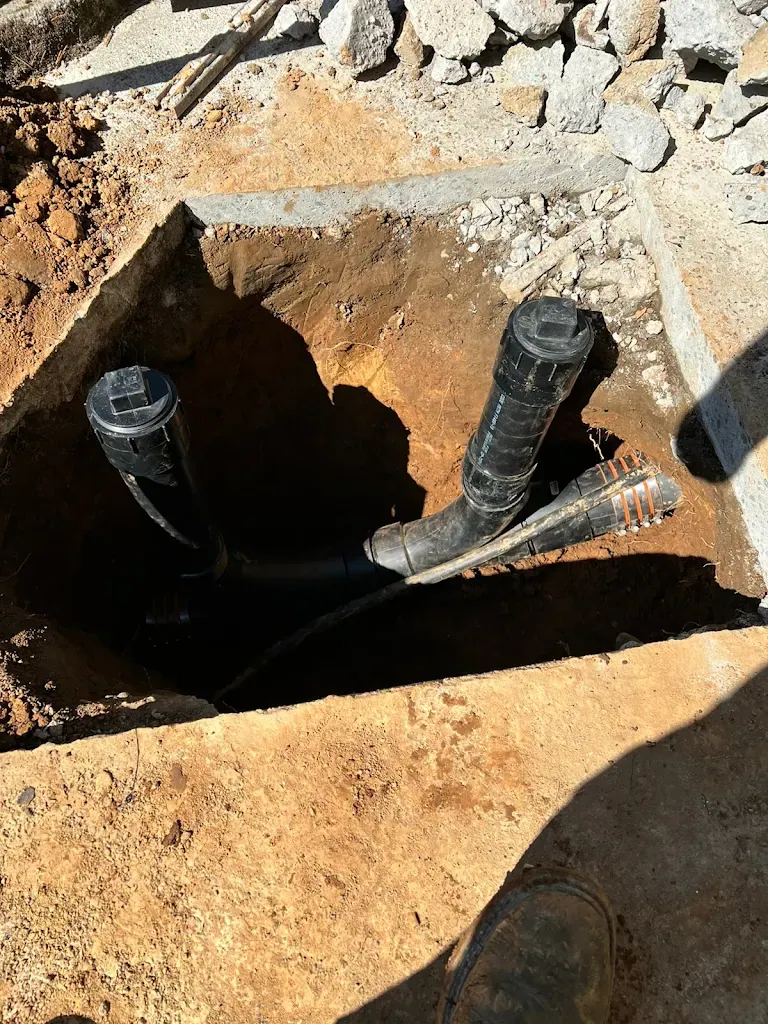
Tacoma's Environmental Services department is direct about it. The property owner is responsible for maintaining the side sewer from the building to the City main, and the City maintains the main, including the tees, wyes, and risers where side sewers connect. The City notes that side sewers almost always extend into the street, so the section under the pavement is still the owner's to maintain up to the main.
Tacoma keeps permit records for some properties, searchable through its online permit system or by calling Environmental Services, and it provides a side sewer flyer to anyone pulling a permit for an addition or major remodel, with the advice to locate and assess the line before building over it. We second that advice; a good share of the sewer repairs we do in Tacoma are under something that was built later.
Pierce County Sewer
Pierce County's sewer utility serves much of the unincorporated county, including parts of the Gig Harbor peninsula. Its published guidance says that if you own your home or building, you own your side sewer, and that maintenance from the building to the public sewer main is the owner's responsibility. The County maintains the main, including the tees.
The County recommends having a plumber or sewer inspector run a video camera through the side sewer to find root blockages or broken pipe before they cause a backup. That is the same advice we give, and the camera work is something we do in Gig Harbor, Purdy, Fox Island and the Key Peninsula regularly.
Kitsap County Sewer Utility
Kitsap County operates the sewer systems serving South Kitsap, Manchester, Kingston and Suquamish, and its materials use the two-part definition. The side sewer lateral runs from the connection at the sewer main to the property line, typically six inches in diameter. The building sewer runs from the property line to the building, and the County states that maintenance and repairs of the building sewer are the responsibility of the home or building owner.
The County's brochure does not spell out responsibility for the lateral segment between the main and the property line in the same explicit way, and policies in county code and public works standards can change. If you are in a Kitsap County sewer area and need to know who handles a problem under the street or in the right-of-way, call Kitsap1 at 360-337-5777 and ask the Sewer Utility directly. They can also pull the original sewer permit for your property at no charge, which shows where the building sewer runs.
Kitsap County requires a right-of-way permit when any part of the side sewer piping is installed in a county road, and recommends a county-approved licensed contractor for repairs. Fees must be paid before a new connection is made.
Bremerton, Port Orchard and the smaller districts
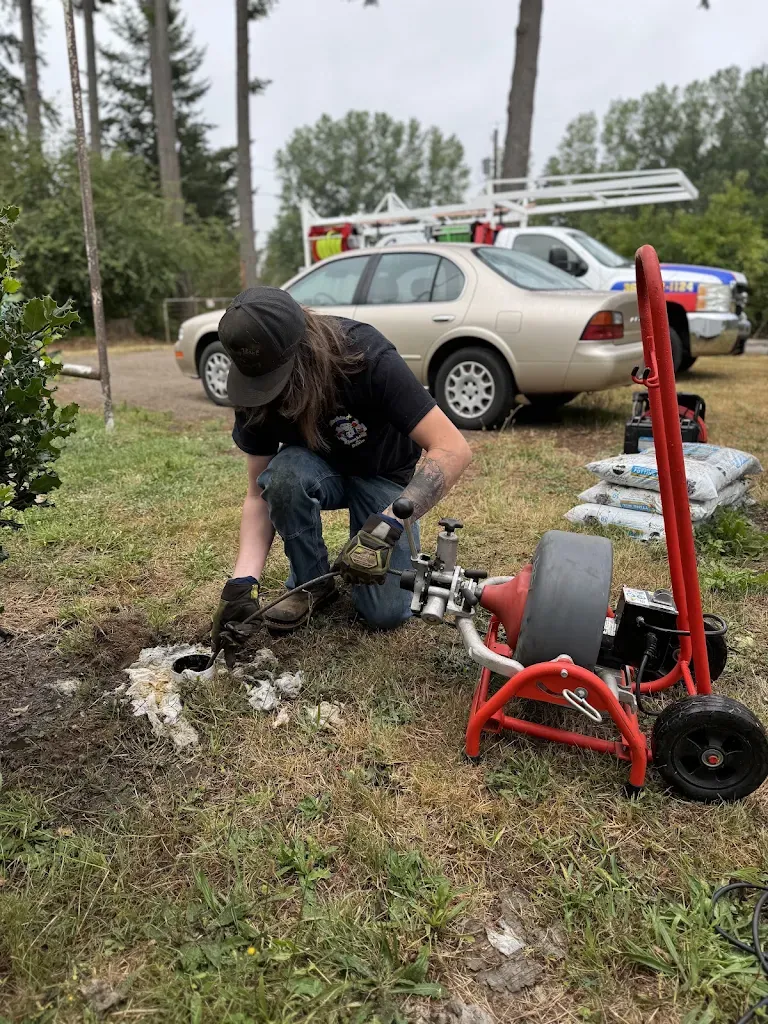
The City of Bremerton and the City of Port Orchard each run their own sewer utility within city limits, and West Sound Utility District serves part of the Port Orchard area. Each has its own code section on side sewers. We work in all of them, and in practice the owner has always been responsible at least to the property line and usually to the main, but we are not going to state a specific boundary for a utility whose current code we have not quoted here. Call the utility's public works or engineering desk and ask two questions: where does my responsibility end, and do you require a permit or a licensed side sewer contractor for repairs.
The same goes for the Belfair sewer system in Mason County, which is newer and has its own connection and maintenance rules. The answer is usually a short phone call, and it is worth making before anyone digs.
Who pays when there is a backup
The practical question behind all of this is who pays when sewage comes up the basement drain. The answer follows the pipe. If the blockage or break is in your side sewer, the repair and the cleanup are yours. If the public main is blocked or surcharged during a storm and sewage backs up through your lateral into the house, the utility is responsible for its main, and you may have a claim against it for the damage.
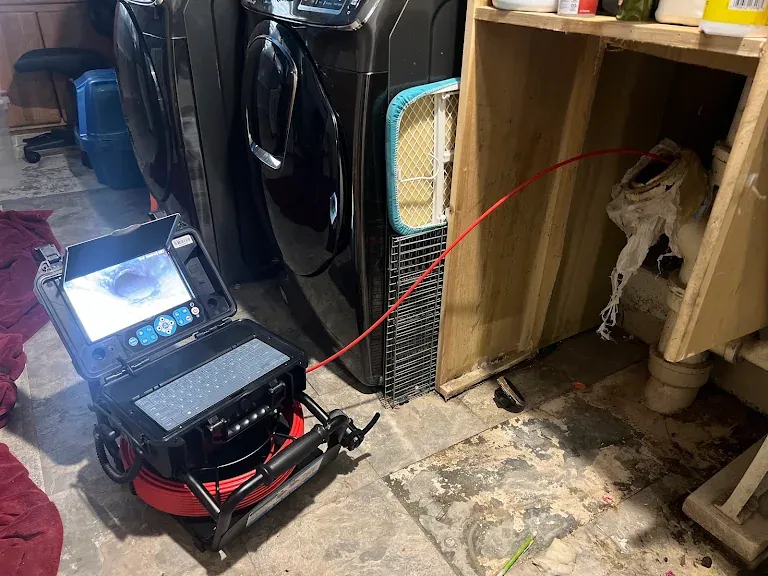
Finding out which is which is where the camera earns its keep. We run it from your cleanout toward the street; if your line is clear and flowing to a main that is full, that is documented on video. If the camera finds roots, a collapse, or a belly in your lateral, that is also documented, and the footage helps with an insurance claim either way. Standard homeowner policies frequently exclude the buried service line and the backup itself unless you have added service line coverage or a sewer backup endorsement. Those add-ons are modest, and anyone with a pre-1980 lateral should ask their agent about them.
Permits, contractors and work in the street
Any excavation in the public right-of-way needs a permit from the road's owner, which may be the city, the county, or the state for highways like 16, 3 and 303. Utilities may also require that side sewer work be done by a contractor they have approved or licensed, in addition to the state plumbing contractor license we hold. We pull the permits as part of the job, call for utility locates before digging, and restore the surface to the standard the permit requires.
Repairs on your own lot still generally need a plumbing or side sewer permit from the local jurisdiction, with an inspection before the trench is backfilled. A permitted, inspected repair also produces a record the next owner or buyer can find, which Tacoma and Kitsap both point out is useful when someone needs to locate the line years later.
A short checklist before you call anyone
Sewer responsibility questions usually come up in a hurry, during a backup or a home sale. Having these answers ready saves a day.
- Which utility bills you for sewer: city, county, a utility district, or none (septic)
- Whether you have an exterior cleanout, and where it is
- The year the house was built and any records of sewer work since
- Whether anything has been built over the sewer path: driveway, patio, addition, retaining wall
- Whether backups coincide with heavy rain, which points toward infiltration or a surcharged main
- Your insurance policy's language on service lines and sewer backup
Frequently asked
Is the sewer pipe under the street mine or the city's?
In Tacoma and Pierce County, the owner's responsibility extends from the building to the main, so the portion under the street is yours to maintain up to the main connection. In Kitsap County and other jurisdictions, confirm with the utility, because the split may fall at the property line.
The city main backed up into my house. Who pays?
The utility is responsible for its main. If a camera shows your lateral clear and flowing into a full main, you have documentation to bring to the utility's claims process. If your own line is blocked, the repair is yours. We provide the video either way.
Do I need a permit to repair my side sewer?
Almost always, yes, from the city or county, and a separate right-of-way permit if the work is in the street. We handle permits and the inspection as part of the job.
Can I find out where my side sewer runs?
Often, yes. Kitsap County and Tacoma both keep original sewer permits with locations for many properties. If no record exists, a camera with a locating transmitter traces the line from the surface in under an hour.
My neighbor and I share a side sewer. Who is responsible?
Shared side sewers exist in older neighborhoods, and Tacoma publishes guidance on them. Responsibility is typically shared by the connected properties, with details depending on the utility and any recorded easement. Check the property records and the utility before a dispute starts.
Does my homeowner's insurance cover a broken sewer line?
Frequently not, unless you have service line coverage. Damage inside the house from a backup is usually covered only with a sewer backup endorsement. Read the policy or ask your agent; we have helped many customers with the documentation side of a claim.
About the author. Gregory Lowe is the owner and lead plumber at Washington Plumbing & Drain, a veteran-owned company in Port Orchard serving Kitsap, Pierce and Mason counties. The guidance here comes from daily work in local homes, not from a content farm. Call (360) 812-1124 with questions.