
What it usually looks like
- The showerhead drips steadily for hours after the shower is off
- The tub spout keeps running a thin stream even with the handle fully closed
- You have to push the handle harder and harder to get the drip to stop
- The drip is warm or hot, which tells you which side of the valve is leaking
- A rust or mineral stain is forming in the tub below the spout
- The handle feels loose, grinds, or has more travel than it used to
Likely causes, most common first
Worn cartridge in a single-handle valve
Moen, Delta, Kohler and most other single-handle shower valves use a cartridge with rubber seals or a ceramic disc that shuts the water. After years of hot water, chlorine and mineral scale, the seals harden and shrink. The cartridge still turns, but it can no longer hold back the 50 to 70 psi behind it, and water sneaks past to the spout.
Worn seats and springs under the cartridge
Delta-style valves have two small rubber seats with springs under the cartridge. These are the parts that actually seal. They cost very little and wear out long before the cartridge body does. Replacing the cartridge without the seats is a common reason a drip comes right back.
Old two- or three-handle compression stems
Homes from the 1950s through the 1980s near the shipyard and in older Tacoma neighborhoods often still have separate hot and cold handles. Each stem has a washer that presses on a brass seat. When the washer is cupped or the seat is pitted, the stem will not seal no matter how hard you crank it, and cranking harder tears the washer faster.
Mineral scale or grit on the sealing surface
Well water in Mason County and parts of South Kitsap carries iron and manganese, and even municipal water leaves scale. A grain of scale stuck between the disc and the seat holds the valve open a hair. Sometimes cycling the handle clears it; usually the cartridge is scored and needs replacing.
Debris from recent plumbing work
If the drip started right after a water heater install, a repipe or the utility flushing the mains, a flake of solder, pipe scale or PEX shaving may have lodged in the valve. That one is quick to fix if it is caught early.
A cracked valve body
Rare, but after the December 2022 and January 2024 freezes we found a handful of valves in exterior walls that had hairline cracks. Those drip from the spout and also weep inside the wall, which is the dangerous version.
Safe things to check yourself first
- Time the drip. If it stops within a few minutes of shutting off, that is the shower arm draining and nothing is wrong.
- Feel the drip. Hot means the hot side is leaking; cold means the cold side. Lukewarm points to the mixing cartridge itself.
- Work the handle fully open and closed a dozen times. A speck of scale sometimes flushes through and the drip stops.
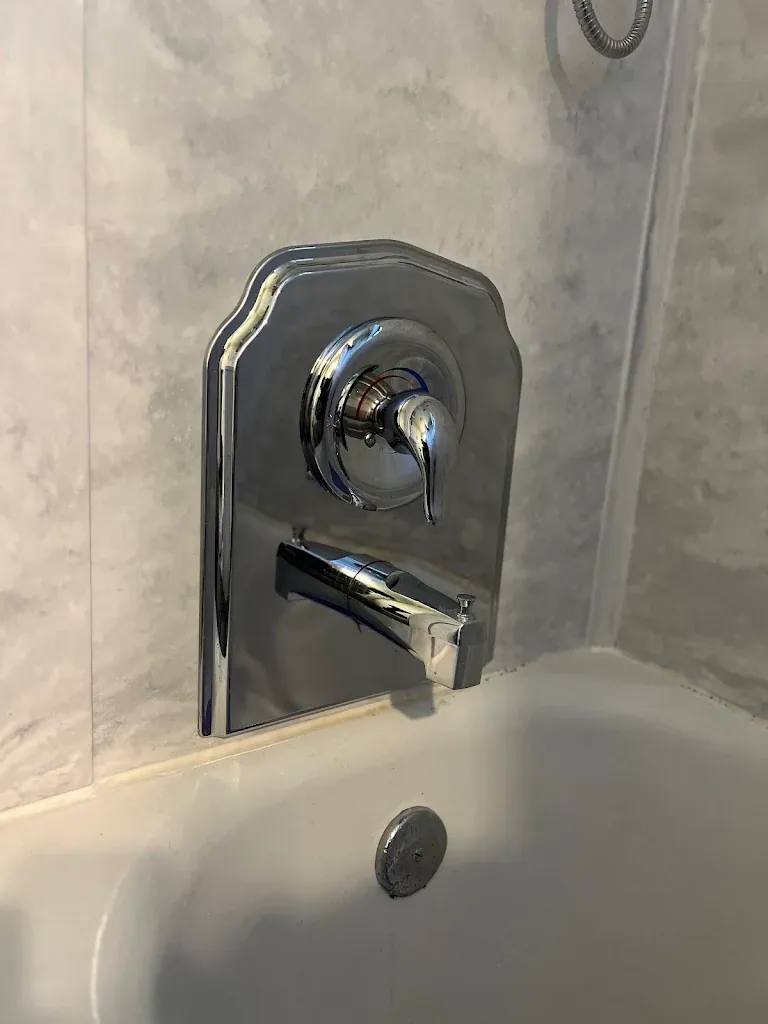
- Find the brand name on the trim plate or handle. Knowing it is a Moen 1225 or a Delta Monitor saves a trip to the supply house.
- Check the access panel behind the valve if there is one, and look for moisture, staining or a musty smell.
- Note whether the drip changes when you run other fixtures. If it gets worse at night, your house pressure may be high and worth testing.
Stop and call if
- Water is showing up on the ceiling below the bathroom or on the wall behind the valve
- The handle is spinning freely or has snapped off and water is running
- The drip is hot and heavy enough to steam up the enclosure with the shower off
- You already replaced the cartridge and the drip returned within days
- The valve is in an exterior wall and the drip began after a hard freeze
How we diagnose and fix it
- Shut off water at the valve stops or the main, pull the trim and identify the valve body and cartridge model.
- Inspect the cartridge, seats and springs, and the brass sealing surfaces inside the body for pitting or scoring.
- Replace the cartridge with the manufacturer's part, not a generic, and replace seats and springs at the same time on valves that use them.
- Clean scale from the body with the right tools and lubricate the new cartridge so the handle moves freely.
- If the body is cracked, corroded or an obsolete design with no parts, replace the whole valve with a pressure-balanced unit, usually through the existing opening or a small access panel.
- Test pressure at the house. If it reads high, we recommend a pressure reducing valve so the new cartridge lasts.
Around Kitsap, Pierce and Mason counties
A lot of the drips we see are in 1960s and 70s ramblers in Port Orchard, Bremerton and Lakewood that still have original two-handle tub valves, and the stems for those are getting hard to find. We carry the common ones and can rebuild a seat with a seat dresser, but when the body is tired we usually suggest a modern pressure-balanced valve. On well water from Belfair to Hoodsport the iron and manganese shorten cartridge life noticeably, so a whole-house filter often pays for itself in fewer valve repairs.
Questions people ask
Is a dripping shower an emergency?
Not usually. It wastes hot water and runs up your bill, but a slow drip into the tub drains harmlessly. It becomes urgent if the drip is also showing up inside the wall or on a ceiling below, or if the drip is hot enough to be a scald hazard for kids.
Can I just replace the cartridge myself?
Many people do. The catch is that cartridges in older valves often seize in the body and break during removal, and the shower will not shut off until the new one is in. If you try it, do it on a weekday morning with the water shut off at the main and a plan for getting parts.
Why does my shower drip only when the water heater is heating?
That points to thermal expansion. When the heater runs, the water in the closed system expands and pressure climbs, which pushes past a marginal cartridge. An expansion tank at the water heater usually fixes it and protects the rest of your fixtures.
Does replacing a shower valve mean opening the tile?
Often not. If the valve has an access panel on the back side, or if the new valve fits through the trim opening, we can do it without touching tile. When the wall has to be opened we tell you up front and quote it as a line item so you can decide.
Will a new cartridge fix low flow too?
Sometimes. If scale in the old cartridge was restricting flow, a new one helps. If the showerhead or the valve's inlet screens are clogged, those get cleaned at the same visit.