
Short answer
A sewer scope is a camera inspection of the drain line from the house to the municipal main or septic tank, done during the inspection period of a home purchase. A standard home inspection does not include it, and the sewer lateral is one of the most expensive single components a buyer can inherit. On homes built before about 1980 anywhere around Puget Sound, and on any home with large trees or a driveway over the line, it is the best few hundred dollars in the transaction.
In this guide
Key takeaways
- Home inspectors run water and watch drains; they do not look inside the sewer pipe. The scope is a separate service.
- Pre-1980 housing in Bremerton, Port Orchard, Tacoma and Gig Harbor often has cast iron, clay, concrete or Orangeburg laterals that are at or past their service life.
- The scope produces video and a locate, which tells you what the pipe is made of, where it runs, how deep it is, and what is wrong with it.
- Findings become negotiating leverage: a repair credit, a seller-paid repair, or a reason to walk.
- On septic properties, the scope covers the line to the tank; Kitsap and Mason County each require their own septic inspection at sale.
- Book the scope early in the inspection window so there is time to get a repair estimate if something turns up.
What a sewer scope is, and what a home inspection is not
A home inspector's job is broad. They look at the roof, the electrical panel, the furnace, the crawlspace, and they run water at every fixture to see that it drains. What they cannot do is see inside the pipe that carries all of that water away from the house. A lateral can be cracked, root-filled, or half collapsed and still drain fine during a thirty-minute inspection.
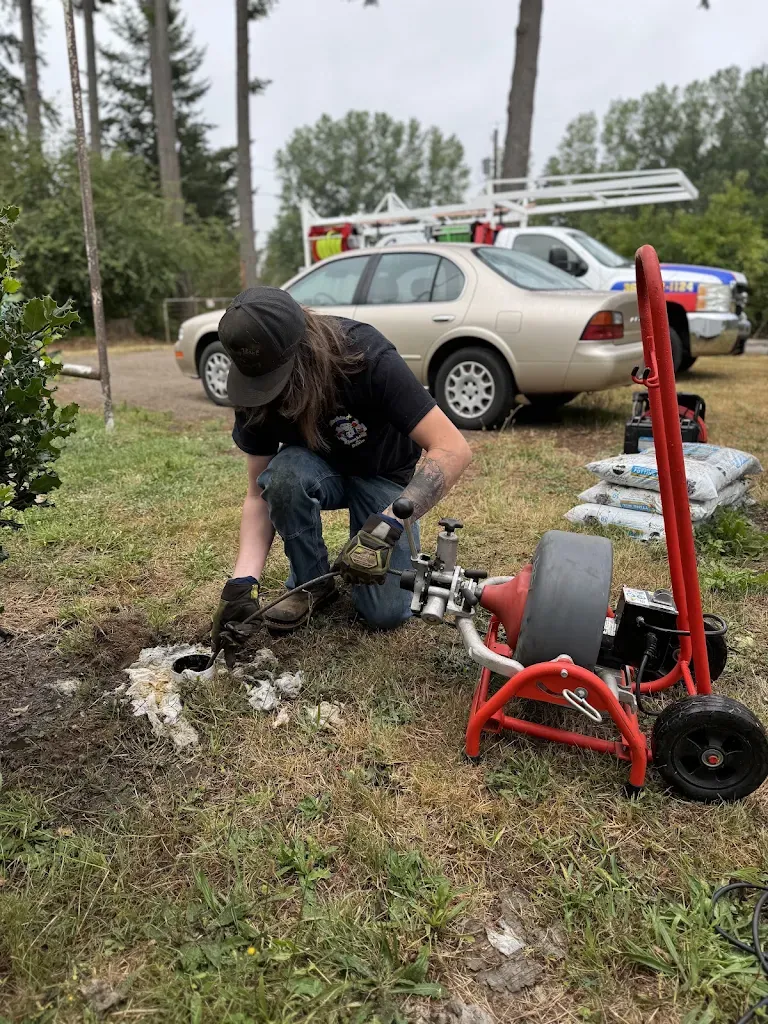
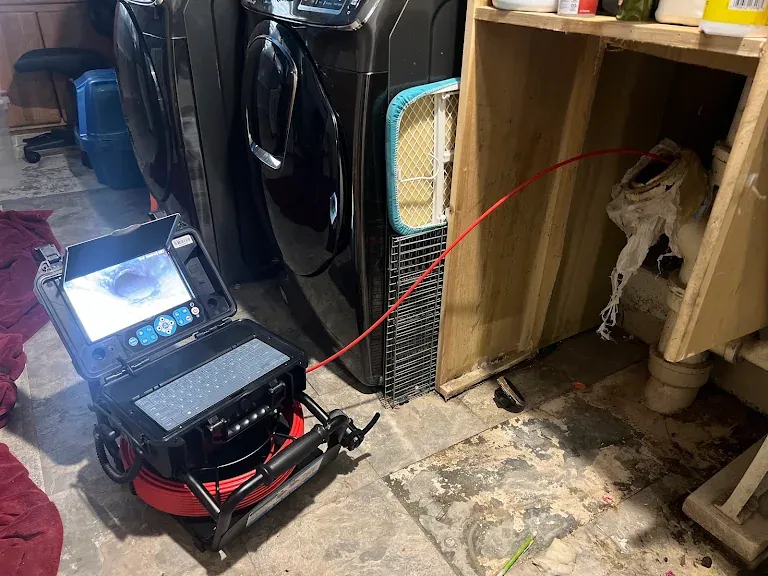
A sewer scope fills that gap. We push a color camera with a locating transmitter through the line, usually from an exterior cleanout, and record the full run to the street main or the septic tank. The video shows pipe material, every joint, roots, standing water, offsets, cracks, and debris. From the surface we trace the transmitter to mark where the line runs and how deep any defect sits.
The whole thing takes under an hour on most houses, longer if there is no cleanout and we have to pull a toilet or go in through a roof vent. You get the video and a plain-language summary of what we saw.
Why it matters so much around Puget Sound
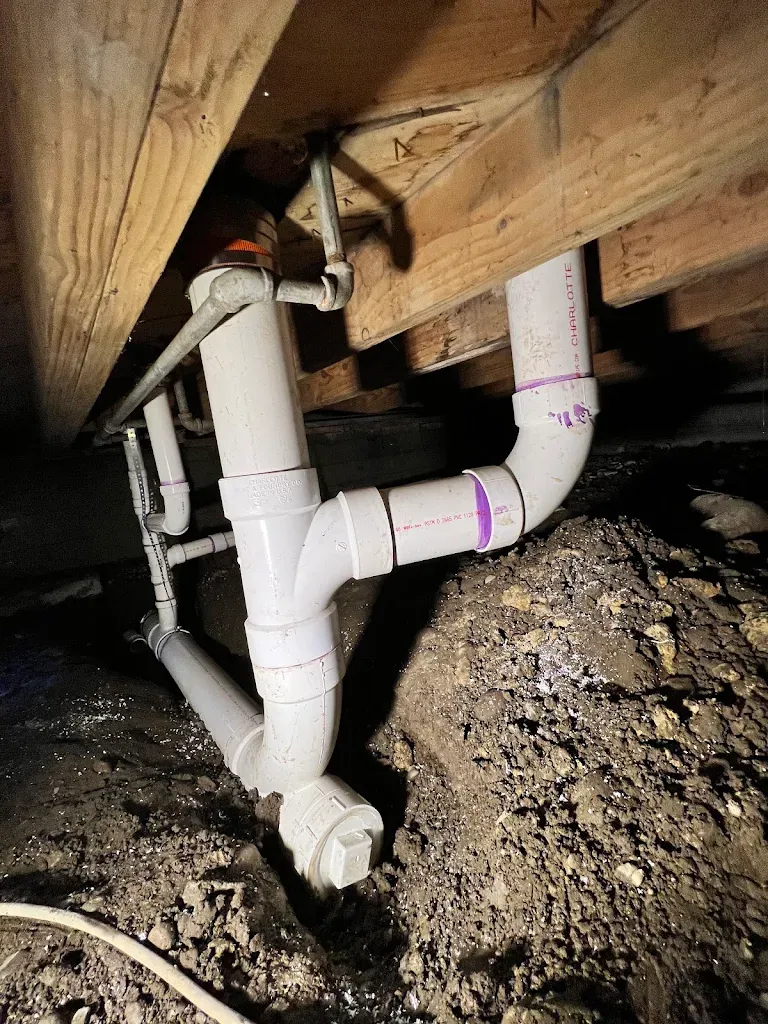
The housing stock here tells the story. Bremerton grew fast around the shipyard in the 1940s, and the neighborhoods that followed through the 1960s in Port Orchard, Manchester, East Bremerton, and across the Narrows in Tacoma's older districts were plumbed with the materials of their day: cast iron under the house, then clay, concrete, or Orangeburg out to the street. Those laterals are now sixty to eighty years old.
Then there are the trees. Douglas fir, cedar, bigleaf maple, and the ornamental willows and poplars people planted in the 1970s all send roots toward the water in a leaking sewer joint. A yard full of mature trees on an older lot is almost a guarantee of some root intrusion.
Finally, the ground moves. Steep waterfront lots on Bainbridge, in Gig Harbor, and along Hood Canal shift a little every wet season. Clay soils swell and shrink. A pipe joint pulled apart by that movement does not show up on a walk-through.
What we commonly find
Across hundreds of pre-purchase scopes in Kitsap, Pierce and Mason County, a handful of findings come up again and again. Not all of them are deal-breakers, and part of our job is telling you which ones matter.
- Root intrusion at clay or concrete joints, ranging from a few hairs to a full mass blocking the pipe
- Bellies, or sagged sections that hold standing water and collect sludge
- Offset joints where one section has dropped or shifted relative to the next
- Scaled, flaking cast iron with a rough or missing bottom channel
- Orangeburg pipe deformed into an oval, often with the top blistered or delaminating
- Crushed sections under driveways, patios, or retaining walls added after the house was built
- A line that runs under an addition or garage built over it without a cleanout
- No cleanout at all, meaning every future service means pulling a toilet
- On septic homes, a line to the tank that has settled or separated at the tank inlet
Reading the results like a plumber does
A few roots in a clay line are a maintenance item. A pipe can live for years with annual cabling or periodic jetting, and that is a reasonable thing for a buyer to accept with eyes open. A bellied PVC line that holds an inch of water is also usually a live-with-it finding, as long as it is not catching solids.
Deformed Orangeburg, a collapsed joint, a cast iron run with the bottom rusted out, or a crushed section under concrete are repairs, not maintenance. They will fail, and the question is whether it happens on the seller's watch or yours. For these we provide a written flat-rate repair estimate alongside the video so you have a number to bring to the negotiating table.
Depth and location shape the estimate more than the defect itself. A broken joint four feet down in the front lawn is a day of excavation. The same break eight feet deep under a driveway or next to a retaining wall is a different project. The locate tells you which one you are looking at.
Using the findings in your purchase
Washington purchase agreements typically include an inspection contingency with a defined window. The scope should happen inside that window, ideally the same week as the general inspection, so you have time to request a repair estimate and respond before the deadline. Your agent will know the dates; we work around them.
With a report in hand, buyers usually take one of three paths. They ask the seller to complete the repair before closing, with a licensed plumber and a post-repair video. They negotiate a credit at closing and handle the repair themselves after moving in, which gives them control over who does the work. Or, when the finding is severe and the seller will not move, they walk. All three are legitimate, and the scope is what makes the decision an informed one.
Sellers are increasingly having their own scope done before listing, and in competitive markets that video sometimes comes with the disclosure packet. Read it carefully, and if it is more than a few months old or was done by someone with an interest in the sale, consider a second look.
Septic properties and the county inspections
Roughly half the homes we see outside the sewer districts are on septic, and a sewer scope still matters: we camera the line from the house to the tank inlet, which is the part of the system a plumber handles. Settling at the tank connection and roots in that run are common.
The tank and drainfield are a separate inspection, and both counties regulate it. Kitsap Public Health District requires a Property Conveyance Inspection for septic properties before sale, prepared by the Health District, and a record drawing of the system must exist for that to happen. Mason County requires an inspection service report from a certified operation and maintenance specialist dated within 12 months of the transfer. Your agent and the county will walk you through the paperwork; we stay in our lane and look at the pipe.
Private wells have their own requirement in Kitsap, a Water Status Report from the Health District, which the district recommends applying for about 30 days before transfer. If you are buying a well property, that and a plumbing inspection of the pressure tank and well components belong on the same checklist.
How to book one during a purchase
Call us with the address and your inspection deadline. Corinne will find a slot, often within a day or two, and coordinate access with the listing agent. If the house has no visible cleanout we will tell you up front that we may need to pull a toilet, and we put it back properly with a new wax ring or seal.
You are welcome to be there. Most buyers find it worth the hour to watch the monitor and ask questions in real time. Afterward you get the video file, a written summary, and, if anything needs fixing, a flat-rate estimate with no obligation attached. Greg and the crew do these for out-of-state buyers regularly, with a phone call to walk through the footage.
Frequently asked
Does a standard home inspection include a sewer scope?
No. Home inspectors run water and confirm drains flow; they do not put a camera inside the sewer line. Some inspection companies offer a scope as an add-on, often subcontracted. Booking it directly with a plumber who also does the repairs gets you the camera work and a real estimate in one visit.
Is a sewer scope worth it on a newer home?
On a home built after about 1990 with no large trees and no driveway over the line, the odds of a serious finding are low, and some buyers skip it. We still recommend it on any lot with mature trees, a steep slope, an addition built over the sewer path, or a history of drain complaints in the disclosure.
What if there is no cleanout?
We go through a roof vent or pull a toilet to get the camera in. Either way, the lack of a cleanout goes in the report, because it means every future cleaning will be harder. Installing a two-way cleanout is a reasonable item to negotiate for.
Can the seller refuse to allow a sewer scope?
They can, but it is a red flag. The inspection is noninvasive and takes under an hour. Most sellers and listing agents accommodate it readily, especially when the buyer's agent explains it is standard practice on older homes.
How soon can you get the report to me?
Usually the same day. We send the video and a written summary, and a repair estimate when one applies, so you can respond to the seller before your contingency deadline.
Do you also scope the line on septic properties?
Yes, from the house to the tank inlet. The tank, pumps and drainfield are inspected separately under the county's property transfer rules by the health district or a certified septic specialist. We do not pump or inspect tanks.
About the author. Gregory Lowe is the owner and lead plumber at Washington Plumbing & Drain, a veteran-owned company in Port Orchard serving Kitsap, Pierce and Mason counties. The guidance here comes from daily work in local homes, not from a content farm. Call (360) 812-1124 with questions.